Frederic Clay Bartlett (1873-1953): The Chicago Renaissance Man
Frederic Clay Bartlett, born in Chicago on June 1, 1873, into a burgeoning era of American industrial prosperity, was more than simply an artist; he was a pivotal figure in establishing Chicago as a vibrant center for modern art. His story is one interwoven with the city’s own growth, from its dazzling display at the 1893 World's Columbian Exposition to its emergence as a haven for progressive artistic thought – a testament to his vision and unwavering dedication to fostering creativity within his adopted home. Born into privilege – his father, Adolphus Clay Bartlett, was a leading figure in the hardware industry and originator of the True Value label – Frederic possessed both the means and the inclination to pursue a life dedicated to aesthetic exploration. While he received early education at St. Paul’s School in Concord, New Hampshire, and Harvard School for Boys in Chicago, it was the immersive experience of the 1893 Exposition that truly ignited his passion for fine art. This grand spectacle, with its Beaux-Arts architecture and international collection of masterpieces, served as a catalyst, prompting him to abandon formal academic pursuits at nineteen and embark on an artistic pilgrimage to Europe.
European Foundations and Return to Artistic Exploration
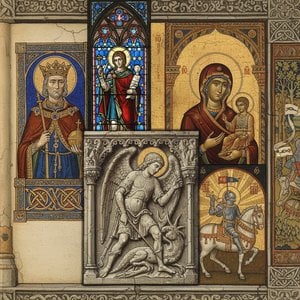
Bartlett’s European sojourn proved formative. He initially studied in Munich, Germany, before settling in Paris, where he honed his skills under the tutelage of Jean-Paul Laurens and later Edmond Aman-Jean and Raphaël Collin at École Collin. These masters instilled in him a strong foundation in drawing and painting techniques, while also exposing him to the evolving artistic currents of the time. The influence of Puvis de Chavannes – with his emphasis on monumental compositions and symbolic narratives – would particularly resonate in Bartlett’s later mural work; he sought to capture grandeur and emotion through scale and color, mirroring the stylistic ideals of his mentor. Returning to Chicago around 1900, he established a studio in the Fine Arts Building on Michigan Avenue, quickly gaining recognition for his talent. Early commissions, such as a portrait secured for just $75, signaled an immediate success, but it was his ambition that truly set him apart. He wasn’t content with merely replicating existing styles; Bartlett sought to create works of significant scale and artistic merit, leading him towards the realm of mural painting. His first major undertaking, a mural for Second Presbyterian Church in 1900 – tragically lost to fire – demonstrated his bold vision – an integration of fresco techniques depicting the Tree of Life and a heavenly choir rendered in a Byzantine style. This project foreshadowed his future endeavors, showcasing a willingness to embrace ambitious artistic challenges.
The Muralist’s Craft: Scale, Symbolism, and Technique
Bartlett's reputation as a muralist solidified with subsequent commissions. The stained-glass frieze he created for the Frank Dickinson Bartlett Memorial Gymnasium at the University of Chicago – dedicated to his brother – depicted a medieval tournament procession, blending narrative storytelling with decorative artistry. He meticulously researched historical costumes and heraldry, striving for accuracy while simultaneously conveying a sense of grandeur and solemnity. Furthermore, Bartlett’s masterful use of fresco technique—a method that involves applying pigment directly onto wet plaster—allowed him to achieve remarkable textural depth and luminosity. This painstaking process demanded considerable skill and patience, reflecting his unwavering commitment to artistic excellence. He wasn't merely decorating walls; he was crafting immersive experiences that transported viewers into another time and place. His work embodies a harmonious blend of classical compositional principles – reminiscent of Puvis de Chavannes’ monumental canvases – with an expressive palette informed by Impressionist influences.
A Patron of Modern Art and the Arts Club Legacy
Beyond his own artistic production, Bartlett became a passionate advocate for modern art and a generous patron of contemporary artists. He was a founding member of the Arts Club of Chicago—an organization instrumental in introducing avant-garde ideas and fostering a vibrant artistic community—where he championed the work of fellow painters like Robert Allerton and William W. Denslow. Recognizing the importance of dialogue between tradition and innovation, Bartlett actively encouraged experimentation while upholding aesthetic standards. His unwavering belief in the transformative power of art extended beyond his studio walls; he established The Museum of International Folk Art in New Mexico—a testament to his philanthropic spirit and dedication to preserving cultural heritage. He also funded free lectures at the Art Institute, held every Thursday evening, for those unable to attend during daytime hours – a gesture that underscored his commitment to making art accessible to all.
A Collection Shaped by Vision: Bartlett’s Artistic Legacy
Frederic Clay Bartlett amassed an impressive collection of French Post-Impressionist and modernist artworks—primarily paintings—which he generously donated to the Art Institute of Chicago through donations and support. His discerning eye favored artists who pushed boundaries while remaining grounded in aesthetic principles, reflecting his intellectual curiosity and artistic sensibility. Artists like Monet, Cézanne, and Van Gogh resonated deeply with Bartlett’s sensibilities – their innovative techniques and expressive palettes embodying a spirit of artistic exploration that mirrored his own lifelong pursuit of beauty and truth. Frederic Clay Bartlett passed away peacefully in Beverly Hills, Massachusetts, on June 25, 1953, leaving behind a legacy that extends far beyond his paintings and murals. He was instrumental in transforming Chicago into a significant center for modern art, fostering an environment where creativity could flourish—a testament to his enduring influence on American artistic culture. His story serves as a reminder that true artistic impact lies not only in creating beautiful objects but also in nurturing the creative spirit of a community.