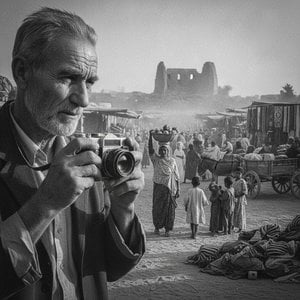
A Life Forged in Exile: The Story of Fred Stein
Fred Stein’s journey as a photographer was inextricably linked to the tumultuous currents of 20th-century history. Born on July 3, 1909, in Dresden, Germany, his early life unfolded amidst a burgeoning intellectual and political landscape. His father, Dr. Leopold Stein, served as rabbi for the Dresden Conservative community, while his mother, Eva Wollheim Stein, was a dedicated religion teacher. This upbringing instilled in young Fred a deep sense of social justice and an appreciation for learning, fostered by frequent visits to Dresden’s museums. However, the idyllic world of his youth would soon be shattered by the rising tide of Nazism. As a teenager, Stein became actively involved in the socialist youth movement, vehemently opposing Hitler's growing influence – a stance that ultimately led to his expulsion from law school after graduating from the University of Leipzig in 1933, denied admission to the bar due to his Jewish heritage and political convictions. This act of discrimination proved pivotal, setting him on an unforeseen path toward artistic expression. In August 1933, he married Liselotte (Lilo) Salzburg, a union that would become a partnership not only in life but also in navigating the perils ahead. Facing imminent danger under the Nazi regime, they fled Dresden for Paris in January 1934, cleverly disguising their escape as a honeymoon.Parisian Awakening: Finding a Voice Through the Lens
Paris in the 1930s was a haven for exiled intellectuals and artists, a vibrant crucible of creativity and dissent. It was within this dynamic environment that Fred Stein truly discovered his artistic calling. Unable to practice law, he embraced photography, initially sharing a Leica camera with Lilo. The streets of Paris became his studio, and the candid moments of everyday life his subject matter. He immersed himself in the city’s intellectual circles, engaging in stimulating discussions with figures like Hannah Arendt and Willy Brandt. Stein's photographic style began to take shape, influenced by the modernist movement’s emphasis on observation and authenticity. He favored natural lighting and eschewed staged compositions, striving to capture the essence of his subjects as they existed in their natural surroundings. This approach reflected a humanist sensibility – a desire to understand and portray the dignity and complexity of human experience. His early work reveals a keen eye for detail and an ability to find beauty in the mundane, foreshadowing the themes that would define his later career. He wasn’t merely documenting; he was bearing witness, preserving fragments of a world on the brink of profound change.- Early Influences: Stein's fascination with social justice and humanist ideals stemmed from his upbringing in Dresden, where he witnessed firsthand the impact of antisemitism and political repression.
- The Leica Camera: The acquisition of a Leica camera marked a turning point in Stein’s artistic life, providing him with the tool to capture spontaneous scenes of urban life with unprecedented immediacy.
- Social Engagement: Stein's commitment to social equality fueled his photographic endeavors, prompting him to explore marginalized communities and document their experiences.
New York City: Documenting a Nation, Defining a Style
The outbreak of World War II forced Stein and his family to flee Europe once more. In 1941, they embarked on a perilous journey aboard the SS Winnipeg, carrying with them only essential belongings – including, crucially, his Leica camera and some negatives. New York City offered both refuge and inspiration. The city’s energy, diversity, and relentless pace invigorated Stein's work. He photographed scenes ranging from the bustling streets of Harlem to the opulent avenues of Fifth Avenue, capturing the spirit of postwar America with an outsider’s perspective. While he continued his street photography, documenting the lives of ordinary people, Stein also gained recognition as a portraitist. His ability to capture the personality and inner life of his subjects attracted commissions from prominent figures such as Albert Einstein, Arthur Koestler, and Andre Malraux. He expanded his technical repertoire by adding a Rolleiflex camera to his equipment, allowing him to explore square-format images and further refine his artistic vision. This period marked a culmination of Stein’s development, solidifying his reputation as a sensitive observer and insightful chronicler of the human condition.- The Photo League: Stein joined the Photo League, an influential collective of photographers committed to social realism and documentary filmmaking.
- Portraiture Technique: He perfected his portrait technique by prioritizing natural lighting and avoiding elaborate setups, striving to capture subjects in their most authentic moments.
- Diverse Subjects: Stein’s photographic portfolio encompassed a wide range of subjects – from street scenes to portraits of intellectuals and artists – reflecting his intellectual curiosity and humanist worldview.
A Legacy of Humanism and Observation
Fred Stein's work stands as a testament to the power of photography to document social realities and celebrate the resilience of the human spirit. His photographs are characterized by their humanist perspective, capturing the dignity and vulnerability of individuals amidst challenging circumstances. He is rightly considered a pioneer of street photography, demonstrating the art of candid observation and its ability to reveal profound truths about society. His iconic portrait of Albert Einstein remains one of the most recognizable images of the 20th century, embodying both the intellectual brilliance and the quiet humanity of its subject. Stein’s enduring influence can be seen in the work of subsequent generations of street photographers who have embraced his commitment to honest observation and humanist storytelling. He died in 1967, leaving behind a body of work that continues to inspire and challenge viewers today. His photographs serve not only as historical documents but also as poignant reminders of our shared humanity. Stein’s legacy extends beyond his aesthetic achievements; it is a story of courage, resilience, and unwavering commitment to capturing the world as he saw it – with empathy, honesty, and an enduring belief in the power of the human spirit.Pytania i odpowiedzi
Czy mogę przeglądać dzieła Fred Stein według nurtów artystycznych?
Nurty, w których tworzył/a Fred Stein, można zobaczyć na stronie Wszystkie nurty artystyczne artysty, gdzie dzieła są pogrupowane według nurtów.
W jakim mieście i kraju urodził(a) się Fred Stein?
Fred Stein urodził się w Dresden w Niemcy.
Na jakie okresy dzieli się kariera Fred Stein?
Osiągnięcia artystyczne artysty Fred Stein to interaktywna oś czasu, która prezentuje dzieła w porządku chronologicznym, pogrupowane w rozdziały odpowiadające poszczególnym etapom jego kariery.