A Philosopher’s Brush: The Emerging Vision of Francesco Marabotti
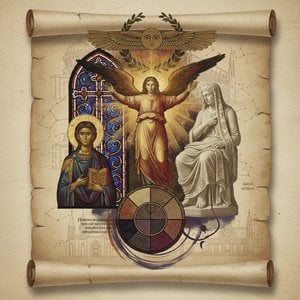
Francesco Marabotti, born in Milan, Italy, in 1992, represents a fascinating intersection of philosophical inquiry and artistic expression. He is not simply an artist who contemplates ideas; he *is* a philosopher whose chosen medium happens to be paint. This unique background profoundly shapes his work, imbuing it with a depth and introspective quality that sets him apart in the contemporary art landscape. Marabotti’s journey began with a rigorous academic foundation – earning his scientific maturity in 2011 followed by a degree in Philosophical Sciences from the University of Milan in 2018. This formal training wasn't merely an intellectual pursuit; it was, and continues to be, the bedrock upon which his artistic vision is built. He doesn’t approach painting as a purely aesthetic exercise but rather as a visual language for exploring complex existential themes.
The Influence of ‘Darsi Pace’ and Inner Landscapes
A pivotal element in understanding Marabotti's development is his association with 'Darsi Pace,' a group founded by Marco Guzzi. This collective, dedicated to self-exploration and inner transformation, has clearly had a significant impact on the artist’s thematic concerns. Marabotti’s work frequently delves into the realm of spirituality – not in a traditionally religious sense, but as a search for meaning, authenticity, and connection within oneself. He is deeply interested in the human condition, particularly the often-difficult process of confronting one's own ‘shadow,’ those hidden aspects of the psyche that we often suppress or ignore. This exploration isn’t presented through grand narratives or overt symbolism; instead, it manifests as a subtle yet powerful emotional resonance within his paintings. His contributions to publications like *La Fionda* and *Altra Scienza* further demonstrate his commitment to intellectual discourse alongside artistic creation, suggesting a desire to engage with broader philosophical conversations.
Portraiture as Psychological Revelation
While Marabotti’s work encompasses various subjects, portraiture has emerged as a central focus. However, these are not conventional portraits aimed at capturing mere physical likeness. His paintings seek to reveal the inner life of his sitters, their vulnerabilities, and their unspoken stories. The most notable example is ‘Ritratto di Carlo Felice,’ which serves as a compelling testament to this approach. It’s less about *who* Carlo Felice was and more about the emotional weight he carried, the complexities of his personality, and the traces of experience etched upon his face. Marabotti's technique often involves layering colors and textures, creating a sense of depth and ambiguity that mirrors the multifaceted nature of human identity. He doesn’t shy away from imperfections; in fact, they are often emphasized, suggesting an acceptance of flaws as integral to the human experience.
A Developing Legacy: Exhibitions and Artistic Exploration
Although still considered an emerging artist, Francesco Marabotti has already garnered attention through various exhibitions, demonstrating a growing interest in his unique perspective. His presence on platforms like Artnet further solidifies his position within the contemporary art market. His work is not easily categorized; it resists simple labels and draws from a diverse range of influences – from Renaissance portraiture to modern psychological theory. This refusal to conform to established norms is perhaps one of its most compelling qualities. He’s actively engaged in pushing the boundaries of traditional painting, using it as a tool for self-discovery and a means of inviting viewers to embark on their own introspective journeys.
Historical Significance: Bridging Philosophy and Art
Francesco Marabotti's significance lies not just in his technical skill or aesthetic sensibility but in his ability to bridge the gap between philosophy and art. In an era often characterized by superficiality, he offers a refreshing alternative – work that is deeply thoughtful, emotionally resonant, and intellectually stimulating. He reminds us that art can be more than just decoration; it can be a powerful vehicle for self-understanding, social commentary, and spiritual exploration. As his career continues to unfold, Marabotti promises to become an increasingly important voice in the contemporary art world, challenging conventional notions of beauty and inviting viewers to look beyond the surface and engage with the deeper questions of human existence.
Zespół Redakcyjny WahooArt.com
Quiz wiedzy o sztuce
Do każdego pytania dotyczy tylko jedna poprawna odpowiedź.
Pytanie 1:
Francesco Marabotti was born in which Italian city?
Pytanie 2:
In addition to being an artist, Francesco Marabotti is also a…?
Pytanie 3:
Marabotti is associated with which artistic group?
Embark on a profound journey through art history with our exploration of spiritual artworks. Discover the deep symbolism, emotional resonance, and transcendent power found in sacred Renaissance, Baroque, and Nabis masterpieces curated for the true classical art enthusiast.
Explore the profound impact of spiritual themes in fine art. From Renaissance iconography to Baroque drama, discover how sacred symbolism and divine visions have shaped art history through a scholarly and reflective lens.