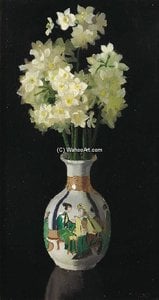
Elioth Gruner, 1882 – 1939

Elioth Gruner: 72 najsłynniejszych obrazów

Murrumbidgee Ranges, Canberra to najsłynniejszy obraz autorstwa Elioth Gruner. Weetangera, Canberra i A Summer's Day to dwa kolejne dzieła, które świat zna najlepiej. Z 75 dzieł Elioth Gruner w naszym katalogu, oto 72 najczęściej wybieranych przez kolekcjonerów i zwiedzających muzea, wraz z rokiem powstania, informacją o muzeum oraz historią każdego z nich.

Ranking oparty na naszym wskaźniku popularności, który łączy liczbę wyszukiwań, wizyt oraz zamówień dla każdego dzieła. Aktualizacja: Listopad 2026. Każde arcydzieło na tej stronie można zamówić jako ręcznie malowaną reprodukcję olejną o jakości muzealnej lub jako wysokiej jakości wydruk artystyczny, w wybranym przez Ciebie rozmiarze.

Portret Elioth Gruner
Elioth Gruner · 1882 – 1939
Urodzony · zmarł
1882 – 1939, Gisborne
Nurt
Impressionism
Dzieła w naszym katalogu
75
Najsłynniejsze
Murrumbidgee Ranges, Canberra
Najwięcej dzieł w
Art Gallery of New South Wales

Top 10: najsłynniejsze obrazy artysty Elioth Gruner

Murrumbidgee Ranges, Canberra autorstwa Elioth Gruner
1

Murrumbidgee Ranges, Canberra

Oil

The sun hangs suspended over the Murrumbidgee Ranges, casting a soft, steady light across the Australian landscape. A large tree dominates the foreground, its green leaves catching the light while its roots anchor the scene amidst a field of dry, golden grass. In the distance, the mountains rise in soft silhouettes, adding a sense of depth to the rolling terrain. The air feels still, as if the wind has paused…

Ręcznie malowana reprodukcja olejowa od $181 42 × 24 cm
Weetangera, Canberra autorstwa Elioth Gruner
2

Weetangera, Canberra

Oil On Canvas · Art Gallery of New South Wales, Sydney

is an oil on canvas painting by the artist Elioth Gruner. Created in 1937, the work captures the Murrumbidgee River at Weetangera. The landscape settles into the frame through a series of quiet, terrestrial layers. It is a study of a specific place where the water meets the earth.

Ręcznie malowana reprodukcja olejowa od $181 35 × 29 cm
A Summer's Day autorstwa Elioth Gruner
3

A Summer's Day

Oil

The scene unfolds in "A Summer's Day," a work by Elioth Gruner. This painting captures a quiet, sun-drenched moment within a park-like setting, where the warmth of the season seems to radiate from the very canvas. A figure in pink rests upon a bench, tucked beneath the shade of lush, green trees, while a meandering path invites the eye deeper into the landscape. The light filters through the foliage in…

Ręcznie malowana reprodukcja olejowa od $181 34 × 29 cm
Snapdragons autorstwa Elioth Gruner
4

Snapdragons

Oil

In this still life, the viewer is invited into a quiet moment of observation. A bouquet of snapdragons occupies the center of the frame, their distinctive, dragon-like petals unfurled in shades of red, pink, yellow, and white. These blooms emerge from a dark, shadowed background, a choice that pushes the colors forward and gives the arrangement a sense of physical weight. The vase itself is a study in detail, featuring…

Ręcznie malowana reprodukcja olejowa od $181 27 × 36 cm
Savana autorstwa Elioth Gruner
5

Savana

Oil On Canvas · Art Gallery of New South Wales, Sydney

Savana is a painting by Elioth Gruner. The artist was born in Gisborne, New Zealand, on December 16, 1882. He later lived in Australia, passing away at his home in Waverley on October 17, 1939.

Ręcznie malowana reprodukcja olejowa od $181 36 × 28 cm

Pozostała część rankingu Elioth Gruner, od 11 do 72

Landscape autorstwa Elioth Gruner
#70

Landscape

Canberra Museum and Gallery

Elioth Gruner was born in New Zealand and arrived in Australia. He studied with Julian Ashton at the Art Society of New South Wales where he met the…

Zabierz ją do domu od $181 →
Spring frost (1919) autorstwa Elioth Gruner
#71

Spring frost

1919 · Art Gallery of New South Wales

Elioth Gruner's "Spring Frost," painted in 1919, isn’t merely a depiction of a rural scene; it’s an immersion into the very essence of Australian light and landscape. This…

Zamów reprodukcję od $181 →

Tematy, które najczęściej malował Elioth Gruner

Cztery tematy najczęściej powracające w tych arcydziełach, wraz z najdoskonalszym przykładem każdego z nich.

Gdzie można zobaczyć obrazy Elioth Gruner

2 muzeów, w których znajduje się najwięcej obrazów z tej strony.

Muzea Miasto Dzieła artysty Elioth Gruner Obrazy z tej listy
Art Gallery of New South Wales, SydneyArt Gallery of New South Wales Sydney 10 Weetangera, Canberra, Savana, Bondi Beach
Canberra Museum and Gallery, CanberraCanberra Museum and Gallery Canberra 1 Landscape

Elioth Gruner na przestrzeni lat: arcydzieła każdego roku

Kariera Elioth Gruner przedstawiona na tej stronie obejmuje 7 lata, od 1915 do 1921: krótki okres, przedstawiony tutaj rok po roku poprzez jego/jej najbardziej znane obrazy.

  1. 1915
  2. 1917
    Frosty sunrise (1917) autorstwa Elioth Gruner
    Nr 23 z 72

    Frosty sunrise

    Wiek: 35 · Art Gallery of New South Wales
  3. 1919
    Spring frost (1919) autorstwa Elioth Gruner
    71 z 72

    Spring frost

    Wiek: 37 · Art Gallery of New South Wales

    Elioth Gruner's "Spring Frost," painted in 1919, isn’t merely a depiction of a rural scene; it’s an immersion into the very essence of Australian light and landscape. This…

  4. 1921

Obrazy artysty Elioth Gruner: najczęściej zadawane pytania

Który obraz Elioth Gruner jest najbardziej znany?Pokaż odpowiedź

Murrumbidgee Ranges, Canberra. Następnie Weetangera, Canberra i A Summer's Day.

Które są 10 najsłynniejszych obrazów, których autorem jest Elioth Gruner?Pokaż odpowiedź

Murrumbidgee Ranges, Canberra, Weetangera, Canberra, A Summer's Day, Snapdragons, Savana, The Fountain, Cotter And Murrumbidgee Rivers, Bellingen Pastoral, Scene At Maiden Head, New England i Mingoola Valley. Powyższy ranking zawiera rok oraz muzeum dla każdego z nich.

Ile obrazów autorstwa Elioth Gruner znajduje się w kolekcji?Pokaż odpowiedź

Nasz katalog obejmuje 75 dzieł autorstwa Elioth Gruner, datowanych od 1915 do 1921.

Gdzie mogę zobaczyć najsłynniejsze obrazy, których autorem jest Elioth Gruner?Pokaż odpowiedź

Większość z nich znajduje się w Art Gallery of New South Wales (Sydney) i Canberra Museum and Gallery (Canberra). Powyższa tabela zawiera listę muzeów po kolei.

Jakie jest najwcześniejsze i najpóźniejsze słynne dzieło, którego autorem jest Elioth Gruner?Pokaż odpowiedź

Najwcześniejszy na tej stronie to Afternoon, Bondi (1915), najpóźniejszy Valley of the Tweed (1921).

Jakie tematy malował Elioth Gruner?Pokaż odpowiedź

Landscape (9), Beach (6) i Rural landscape (5), spośród 72 dzieł na tej stronie.

Na czym i czym malował Elioth Gruner?Pokaż odpowiedź

Oil: 3 z 72 dzieł na tej stronie.

Do jakiego nurtu należy twórczość Elioth Gruner?Pokaż odpowiedź

Impressionism, co pokazują obrazy na tej stronie.

Jakie obrazy Elioth Gruner znajdują się w zbiorach Art Gallery of New South Wales?Pokaż odpowiedź

Weetangera, Canberra, Savana i Bondi Beach to jedne z 10 dzieł na tej stronie znajdujących się w zbiorach Art Gallery of New South Wales, Sydney.

Gdzie mogę kupić reprodukcję Elioth Gruner?Pokaż odpowiedź

Tak. Każdy obraz na tej stronie można zamówić jako ręcznie malowaną reprodukcję olejną o jakości muzealnej lub jako wysokiej jakości wydruk artystyczny w wybranym przez Ciebie rozmiarze, bezpośrednio ze strony danego dzieła.

Elioth Gruner: biografia

Elioth Gruner - Biographical Overview

Elioth Lauritz Leganyer Gruner (1882-1939) stands as one of Australia’s most revered landscape painters, a figure inextricably linked to the Heidelberg School movement and celebrated for his profound ability to distill the essence of rural New South Wales onto canvas. Born December 16, 1882, in Gisborne, New Zealand—a region steeped in Māori heritage—Gruner descended from Norwegian-born bailiff Elliott Grüner and Irish mother Mary Ann Brennan. This familial grounding instilled within him a core belief in resilience and an intimate connection to the land – values that would become central themes throughout his artistic oeuvre. His early life was marked by considerable upheaval when his family relocated to Sydney shortly after Elioth’s birth, immersing him in an environment buzzing with burgeoning artistic activity. Recognizing his innate talent for drawing from a young age—a passion nurtured by his mother who secured lessons with Julian Ashton around twelve—Gruner embarked on a formative artistic journey. However, tragedy struck swiftly when both his father and older brother succumbed to illness, thrusting him into the daunting role of caregiver at just fourteen years old. Demonstrating remarkable fortitude, he persevered through arduous labor to provide for his family while simultaneously nurturing his artistic pursuits during weekends—sending works to exhibitions organized by the Society of Artists in Sydney around 1901—a testament to his unwavering dedication.

Developing an Impressionistic Vision

Gruner’s artistic style is undeniably rooted in Impressionism, though it evolved over time and absorbed influences from diverse sources. He possessed a singular gift for capturing the ephemeral effects of light and atmosphere within the Australian landscape, imbuing his paintings with a palpable serenity and poetic beauty. The encouragement he received from fellow artist Norman Lindsay proved pivotal in shaping his artistic trajectory, bolstering his confidence and refining his vision. Lindsay’s admiration—expressed as “painted the purest light that ever has been seen on a bit of canvas”—served as an enduring inspiration. A transformative period unfolded between 1923 and 1925 when Gruner undertook an extended sojourn in Europe, profoundly impacting his artistic sensibilities. This experience spurred him to simplify his compositions—reducing unnecessary detail—and prioritizing pattern and brushwork—allowing for greater expressive freedom. Critiques from Sir William Orpen during this time challenged Gruner to hone his technique and approach, pushing him toward a more nuanced understanding of artistic expression. He embraced the challenge with gusto, experimenting with new palettes and techniques that reflected the influence of European Impressionists.

Recognition & Major Achievements: The Wynne Prize Legacy

Gruner’s unwavering commitment to capturing the sublime beauty of the Australian bush culminated in unparalleled success at the prestigious Wynne Prize for landscape painting—a distinction he achieved seven times consecutively – an unprecedented accomplishment that cemented his place as Australia's foremost landscape artist alongside Hans Heysen. His crowning achievement, “Spring Frost” (1919)—depicting Jim Innes and his cattle bathed in the golden light of dawn—became arguably the most beloved Australian landscape painting of its time. The Art Gallery of New South Wales acquired this masterpiece, recognizing its artistic merit and enduring appeal. Furthermore, Gruner’s contribution to art education was substantial; he served as an assistant instructor at Sydney Art School during Ashton's illness, overseeing classes for approximately three months—a period that solidified his role as a mentor and champion of aspiring artists.

Later Life & Artistic Legacy

Gruner’s life was tragically curtailed by chronic nephritis—a debilitating ailment—which ultimately claimed his life on October 17, 1939, at his home in Waverley. He was cremated with Anglican rites, leaving behind a legacy of breathtaking landscapes that continue to inspire awe and admiration decades after his passing. Elioth Gruner’s paintings transcend mere representation; they embody the spirit of Australia—its vastness, its beauty, and its profound connection to nature—making him an enduring icon within Australian art history. His masterful technique—characterized by luminous color palettes and delicate brushstrokes—continues to captivate audiences today, ensuring that his artistic vision persists as a beacon of inspiration for generations to come.