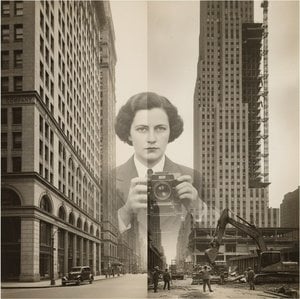
Duane Michals: The Poet of Photography
Duane Stephen Michals (born February 18, 1932, McKeesport, Pennsylvania) stands as a monumental figure in the history of photography—a pioneer who fundamentally reshaped the medium’s expressive capabilities and secured his place among its most influential innovators. He transcends mere documentation; instead, Michals undertakes a profound interrogation of reality, distilling emotion, philosophy, and human experience into meticulously crafted photo-sequences that seamlessly integrate text and visual elements into a singular artistic statement. Unlike contemporaries like Richard Avedon and Irving Penn who prioritized stylistic precision and formal beauty, Michals championed narrative depth and psychological complexity—a distinction that underscores his unwavering commitment to forging an independent artistic path.
Early Influences & Education
Michals’s artistic sensibilities blossomed early in life, nurtured by watercolor classes at Carnegie Institute of Pittsburgh during his formative years. This initial immersion into visual arts instilled a foundational appreciation for composition and color theory—elements that would subsequently permeate his photographic oeuvre. Recognizing the importance of intellectual grounding alongside creative exploration, he pursued formal education diligently, earning a Bachelor’s degree from the University of Denver in 1953. His deliberate decision not to complete his Parsons School of Design studies represents a conscious rejection of mainstream artistic conventions—a testament to his conviction that true artistry demanded an uncompromising pursuit of personal vision.
The Emergence of Photo-Sequences & Narrative Photography
Michals’s breakthrough arrived in 1958 during a transformative journey to the Soviet Union, where he encountered the profound influence of cinema—specifically its masterful use of montage—inspiring him to adopt a similar technique within his photographic practice. This daring innovation involved structuring images as multi-frame compositions, mirroring film's sequential storytelling and layering visuals with text captions that transcended simple description. Michals’s pioneering approach challenged prevailing aesthetic standards and established him as the herald of narrative photography—a genre devoted to conveying complex ideas through carefully orchestrated visual narratives. His early photographs captured the essence of everyday life—the quiet dignity of ordinary people—often imbued with subtle emotional resonance.
Notable Works & Artistic Legacy
Michals achieved international acclaim for his iconic 1949 photograph “Homage to Puvis de Chavannes,” a seminal piece that exemplifies his distinctive style: combining image and text to convey profound philosophical concepts. This work, alongside the cover artwork of *In The Flat Field*, solidified Michals’s reputation as a visionary artist who pushed the boundaries of photographic expression—demonstrating an unparalleled ability to synthesize visual and literary elements into cohesive artistic narratives. Collaborations with writers like Walt Whitman and Julia Warhola further enriched his oeuvre, producing evocative images that captured moments of intimacy and contemplation—underscoring his conviction that photography could serve as a conduit for exploring universal themes such as mortality, sexuality, memory, and the human condition. His enduring influence can be seen in subsequent generations of photographers who embraced Michals’s pioneering techniques and championed the exploration of emotion and thought within the photographic medium.
Michals received ICP's Infinity Award for Art in 1989—a recognition of his unparalleled contribution to photography and cementing his status as one of America’s most celebrated conceptual artists. Throughout his prolific career, he consistently engaged with challenging subjects—often confronting uncomfortable truths about human existence—while maintaining an unwavering dedication to exploring the expressive potential of photography and furthering his singular vision of art as a vehicle for philosophical inquiry. His work continues to inspire artists today, securing Michals's legacy as a true innovator who irrevocably altered the landscape of photographic art.