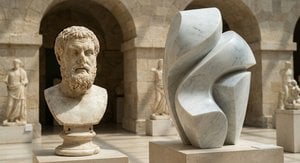
Dora Salazar: Sculpting the Feminine Ideal
Born in Altsasu, Navarre, Spain, in 1963, Dora Salazar’s artistic journey is deeply rooted in her Basque heritage and a profound fascination with classical sculpture. Her work, primarily focused on figurative sculpture, explores themes of femininity, the human form, and the enduring power of ancient Greek ideals, seamlessly blending them with contemporary sensibilities.
Salazar's formal training began at the University of the Basque Country, where she earned a degree in Fine Art before pursuing a doctorate in Sculpture. This rigorous academic foundation provided her with a strong understanding of sculptural techniques and principles, which she skillfully employs to bring her visions to life. Early influences are evident in her exploration of Greek mythology and its representation of beauty and strength – particularly the idealized female figures of antiquity. However, Salazar’s work transcends mere imitation; she imbues these classical forms with a distinctly modern perspective, often imbuing them with a sense of vulnerability and quiet contemplation.
A Dialogue with Antiquity
Salazar's sculptures frequently draw inspiration from the Greek tradition, particularly the works of Praxiteles and other masters known for their graceful depictions of the human body. She doesn’t simply replicate these ancient forms but rather engages in a dialogue with them, reinterpreting their symbolism and applying it to her own artistic concerns. The use of marble – a material historically associated with classical sculpture – is central to her practice, lending an air of timelessness and gravitas to her creations. However, she isn’t confined by the limitations of the past; her work often incorporates subtle, contemporary elements, reflecting on the evolving role of women in society.
The artist's exploration of femininity is a recurring motif throughout her oeuvre. Her figures are rarely overtly sexualized but rather presented as embodiments of strength, resilience, and inner beauty. There’s a deliberate softness to their forms, a suggestion of vulnerability that invites viewers to connect with them on an emotional level. The titles of many of her works – such as “Princesa Roja” (Red Princess) – further emphasize this theme, hinting at both regal power and inherent fragility.
Recognition and Exhibition
Salazar’s talent has been widely recognized through numerous awards and accolades. She received the prestigious Gure Artea First Prize for Sculpture in 2008, a testament to her skill and artistic vision. Furthermore, she was awarded the “L’Art Contemporain” International Salon Prize in Strasbourg in 2011, solidifying her position as a significant contemporary sculptor. Her work has been exhibited extensively throughout Spain and internationally, gracing galleries and public spaces from Altsasu to museums across Europe.
Notable exhibitions include solo shows at various venues, showcasing the breadth of her artistic exploration. Pieces like “Princesa Roja, de la serie Princesas” (Red Princess from the series Princesses) and "Sin titulo" (Untitled) have garnered critical acclaim for their evocative power and technical mastery. These works are not merely static objects but rather dynamic representations of human experience, inviting viewers to contemplate themes of identity, beauty, and mortality.
Legacy and Significance
Dora Salazar’s sculptures represent a compelling synthesis of classical tradition and contemporary concerns. Her ability to reinterpret ancient Greek ideals through a distinctly modern lens has established her as a leading figure in the field of sculpture today. Her work speaks to the enduring relevance of human form, the complexities of femininity, and the power of art to transcend time and culture. As an artist deeply rooted in her Basque heritage, Salazar’s sculptures offer a unique perspective on both local traditions and universal themes, ensuring her continued recognition as a significant voice in the contemporary art world.