DARMOWA KONSULTACJA ARTYSTYCZNA

x

Krótka biografia

  • Nationality: Netherlands
  • Died: 1791
  • Copyright status: Public domain
  • Lifespan: 22 years
  • Born: 1769, Leeuwarden, Netherlands
  • Rozwiń…

Quiz o sztuce

Na każde pytanie istnieje tylko jedna poprawna odpowiedź.

Pytanie 1:
Dirk Jacobs Ploegsma was born in which city?
Pytanie 2:
What is a defining characteristic of Dirk Jacobs Ploegsma's artistic style?
Pytanie 3:
In what year did Dirk Jacobs Ploegsma die?
Pytanie 4:
Which museum houses some of Dirk Jacobs Ploegsma's paintings?
Pytanie 5:
Dirk Jacobs Ploegsma is most known for his depictions of:

Dirk Jacobs Ploegsma: A Fleeting Brilliance of the Dutch Golden Age

Dirk Jacobs Ploegsma, a name perhaps less familiar than those of his contemporaries Rembrandt or Vermeer, nevertheless represents a significant, if tragically short-lived, voice within the vibrant artistic landscape of 18th-century Holland. Born in Leeuwarden on February 19th, 1769, and passing away at the young age of twenty-two on May 21st, 1791, Ploegsma’s life was a whirlwind of creative energy, leaving behind a collection of paintings that reveal an exceptional talent for capturing the essence of everyday Dutch life with remarkable detail and sensitivity. Despite his brief career, his work stands as a testament to his skill and offers a poignant glimpse into a period of artistic flourishing.

Early Life and Artistic Training

Information regarding Ploegsma’s early years remains scarce, shrouded in the mists of history. What is known suggests he was born into a family rooted in Leeuwarden, a city nestled within the northern provinces of Holland. While specific details about his formal training are elusive – likely lacking the structured curriculum afforded to artists in larger urban centers – it’s reasonable to assume he received instruction from local masters or through apprenticeships within the region's artistic community. The prevailing atmosphere of artistic production in Leeuwarden during this era, characterized by a strong tradition of portraiture and genre scenes, undoubtedly provided fertile ground for his development. His early works likely focused on replicating established styles before developing his own unique voice.

A Style Defined by Realism and Detail

Ploegsma’s artistic style is immediately recognizable through its meticulous realism and profound attention to detail. He eschewed the grandiosity often associated with Dutch painting of the time, instead focusing on portraying scenes from ordinary life – domestic interiors, bustling market squares, portraits of individuals engaged in their daily routines. His paintings are not merely representations; they’re imbued with a palpable sense of atmosphere and character. He possessed an extraordinary ability to render textures—the rough weave of linen clothing, the weathered surface of wooden furniture, the glistening sheen of water—with astonishing accuracy. Light and shadow play a crucial role in his work, creating depth and volume that bring his subjects to life. The use of color is restrained yet effective, contributing to the overall sense of realism and immediacy. His compositions are carefully balanced, guiding the viewer’s eye through each scene with subtle grace.

Notable Works and Subjects

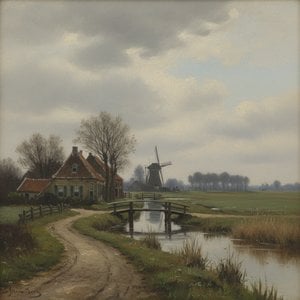
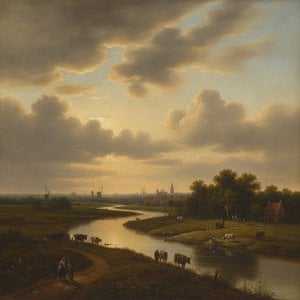
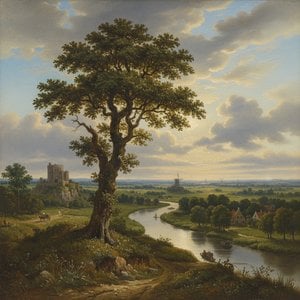
Ploegsma's oeuvre encompasses a diverse range of subjects, including landscapes, still lifes, and portraits. Several notable paintings have survived to this day, offering valuable insights into his artistic practice. A particularly striking example is the “Familieportret van Albertus Snetlage,” (Family Portrait of Albertus Snethlage) housed at the Museum Catharijneconvent in Utrecht, which showcases his skill in capturing familial relationships and conveying a sense of domestic tranquility. Other works depict scenes from market life, intimate interiors filled with everyday objects, and portraits that reveal not just physical likeness but also subtle expressions of personality. His ability to capture fleeting moments—a child’s laughter, a merchant haggling over prices—is particularly captivating.

Influences and Legacy

Ploegsma's artistic development was undoubtedly shaped by the giants of Dutch art history. The influence of Rembrandt van Rijn is evident in his masterful use of light and shadow, while Willem Kooking’s attention to detail and realism served as a model for his own work. However, Ploegsma forged his own distinct style, blending these influences with a uniquely personal sensibility. His legacy extends beyond the individual paintings he created; he represents a vital link in the chain of Dutch artistic tradition. Artists who followed in his footsteps, such as Hendrik Arends Lodewijk (also from Leeuwarden), benefited from the groundwork laid by Ploegsma’s dedication to realism and meticulous observation. His work continues to be studied and appreciated for its quiet beauty and intimate portrayal of everyday life.

Concluding Thoughts

Dirk Jacobs Ploegsma's artistic journey, though tragically brief, left an indelible mark on the art world. Despite his untimely death at just twenty-two, he produced a body of work that demonstrates remarkable talent and a deep understanding of his craft. His paintings offer a poignant reminder of the fleeting nature of genius and the enduring power of observation. His legacy resides not only in the surviving artworks but also in the inspiration he provided to subsequent generations of Dutch artists, ensuring that his contribution to the rich tapestry of Dutch art history remains vibrant and relevant today.