
1
The Parrot Addresses Khujasta at the Beginning of the Sixth Night, from a Tuti-nama (Tales of a Parrot)
Ręcznie malowana reprodukcja olejowa od $199 26 × 39 cm

The Parrot Addresses Khujasta at the Beginning of the Sixth Night, from a Tuti-nama (Tales of a Parrot) (1560) to najsłynniejszy obraz autorstwa Daswanth, znajdujący się w Cleveland Museum of Art w Cleveland. The wounded monkey bites the hand of the prince, his chessmate, in the presence of guests, from a Tuti-nama (Tales of a Parrot): Fifth Night (1560) i The parrot mother cautions her young on the danger of playing with foxes, from a Tuti-nama (Tales of a Parrot): Fifth Night (1560) to dwa kolejne dzieła, które świat zna najlepiej. Z 4 dzieł Daswanth w naszym katalogu, oto 4 najczęściej wybieranych przez kolekcjonerów i zwiedzających muzea, wraz z rokiem powstania, informacją o muzeum oraz historią każdego z nich.
Ranking oparty na naszym wskaźniku popularności, który łączy liczbę wyszukiwań, wizyt oraz zamówień dla każdego dzieła. Aktualizacja: Listopad 2026. Każde arcydzieło na tej stronie można zamówić jako ręcznie malowaną reprodukcję olejną o jakości muzealnej lub jako wysokiej jakości wydruk artystyczny, w wybranym przez Ciebie rozmiarze.


2 muzeów, w których znajduje się najwięcej obrazów z tej strony.
| Muzea | Miasto | Dzieła artysty Daswanth | Obrazy z tej listy |
|---|---|---|---|
 Cleveland Museum of Art |
Cleveland | 3 | The Parrot Addresses Khujasta at the Beginning of the Sixth Night, from a Tuti-nama (Tales of a Parrot), The wounded monkey bites the hand of the prince, his chessmate, in the presence of guests, from a Tuti-nama (Tales of a Parrot): Fifth Night, The parrot mother cautions her young on the danger of playing with foxes, from a Tuti-nama (Tales of a Parrot): Fifth Night |
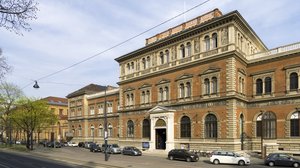 MAK – Muzeum Sztuki Dekoracyjnej i Projektowania w Wiedniu |
Wiedeń | 1 | Umar Defeats a Dragon |
Daswanth tworzył przez 18 lat, od 1560 do 1577: oto podsumowanie tej długiej kariery rok po roku, poprzez jego najsłynniejsze obrazy.


The Parrot Addresses Khujasta at the Beginning of the Sixth Night, from a Tuti-nama (Tales of a Parrot) (1560), Cleveland Museum of Art, Cleveland. Następnie pojawiają się The wounded monkey bites the hand of the prince, his chessmate, in the presence of guests, from a Tuti-nama (Tales of a Parrot): Fifth Night (1560) oraz The parrot mother cautions her young on the danger of playing with foxes, from a Tuti-nama (Tales of a Parrot): Fifth Night (1560).
60 lat: The Parrot Addresses Khujasta at the Beginning of the Sixth Night, from a Tuti-nama (Tales of a Parrot) pochodzi z 1560, a Daswanth urodził(a) się w 1500.
Nasz katalog obejmuje 4 dzieł autorstwa Daswanth, datowanych od 1560 do 1577.
Większość z nich znajduje się w Cleveland Museum of Art (Cleveland) i MAK – Muzeum Sztuki Dekoracyjnej i Projektowania w Wiedniu (Wiedeń). Powyższa tabela zawiera listę muzeów po kolei.
W okresie 1560: 3 z 4 dzieł na tej stronie pochodzi z tego czasu, w tym The Parrot Addresses Khujasta at the Beginning of the Sixth Night, from a Tuti-nama (Tales of a Parrot).
Najwcześniejszy na tej stronie to The Parrot Addresses Khujasta at the Beginning of the Sixth Night, from a Tuti-nama (Tales of a Parrot) (1560), najpóźniejszy Umar Defeats a Dragon (1577).
The Parrot Addresses Khujasta at the Beginning of the Sixth Night, from a Tuti-nama (Tales of a Parrot), The wounded monkey bites the hand of the prince, his chessmate, in the presence of guests, from a Tuti-nama (Tales of a Parrot): Fifth Night i The parrot mother cautions her young on the danger of playing with foxes, from a Tuti-nama (Tales of a Parrot): Fifth Night to jedne z 3 dzieł na tej stronie znajdujących się w zbiorach Cleveland Museum of Art, Cleveland.
Tak. Każdy obraz na tej stronie można zamówić jako ręcznie malowaną reprodukcję olejną o jakości muzealnej lub jako wysokiej jakości wydruk artystyczny w wybranym przez Ciebie rozmiarze, bezpośrednio ze strony danego dzieła.
Daswanth was a Mughal-era painter serving under the emperor Akbar. Born the son of a palanquin-bearer, he was a Hindu who demonstrated a natural talent for painting and drawing on walls. This talent led him to be taught by the Persian master painter Khwāja 'Abd al-Samad. While 'Abd al-Samad's work was traditional and conservative, Daswanth's own works were noted for being imaginative and original. He was recognized in the Ain-i-Akbari as one of the three most important artists of his period, and the Akbarnama also credited him with great artistic talent.
His artistic style was characterized by a chaotic and creative energy that distinguished him from his contemporaries. His illustrations often appeared otherworldly, sometimes described as scary, with figures that were proportionally inconsistent and weightless. He possessed a unique technique involving the free application of wet pigment and a beautiful understanding of perspective through the use of character size, architectural details, and backgrounds. His work often focused on storytelling, depicting gods, demigods, courtly figures, and warriors, frequently portraying scenes of battle and gory violence.
Daswanth contributed significantly to several major works, including the Hamzanama and the Tarikh e Khandan e Timuriyah. He is also associated with the Razmnama, a Persian translation of the Hindu epic the Mahabharata, where he drew as many as 31 full-page miniatures. His work in this collection included diverse compositions, such as:
His repertoire also included illustrations for the Tūtīnāma, such as The Wounded Monkey Bites the Hand of the Prince. His style occasionally incorporated elements from other traditions, such as Chinese-style clouds or Western techniques and idioms. His life ended in 1584 after he wounded himself with a dagger.