Early Life and Education
Daniel Maclise, a name synonymous with the grandeur of Victorian history painting, was born on January 25th, 1806, in Cork, Ireland – a city steeped in artistic tradition yet far removed from the bustling art world of London. His father, Alexander McLish, was a tanner and shoemaker, providing a modest but stable foundation for his son’s burgeoning talent. From an early age, Daniel displayed a remarkable aptitude for drawing, a gift nurtured during his formative years in Cork. He received his initial artistic training at the Cork School of Art, diligently studying drawing techniques and anatomy – skills that would prove indispensable throughout his career. It was here that the seeds of his future success were sown, revealing an innate ability to capture both the physical likeness and the emotional essence of his subjects. A self-funded journey to London in 1827 marked a pivotal moment, propelling him towards the heart of the British art scene and setting the stage for a lifetime dedicated to artistic pursuit.Career and Major Works – A Royal Recognition
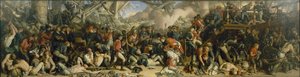
London proved to be fertile ground for Maclise’s ambition. He quickly established himself as a portraitist, rapidly gaining recognition for his ability to capture the personalities of prominent figures. His early commissions included portraits of celebrated actors like Charles Kean and renowned musicians such as Niccolò Paganini – works that showcased both technical skill and an astute understanding of character. However, Maclise’s artistic identity was further shaped by his contributions to *Fraser's Magazine*, where he adopted the pseudonym "Alfred Croquis." Under this guise, he created a series of captivating character portraits, injecting wit and social commentary into his work and significantly elevating his reputation within the art community. In 1835, he officially embraced the name Daniel Maclise, solidifying his artistic persona. His ascent continued with an election as an Associate of the Royal Academy in 1835 and a full membership in 1840 – prestigious honors that acknowledged his growing influence and mastery of the craft. Among his most celebrated achievements are monumental murals adorning Westminster Palace: *The Meeting of Wellington and Blücher after the Battle of Waterloo* (a breathtaking depiction of this pivotal moment in European history) and *The Death of Nelson*, a profoundly moving fresco capturing the tragic demise of the British naval hero. These works, executed with meticulous detail and imbued with dramatic intensity, stand as enduring testaments to Maclise’s artistic vision. Beyond these grand commissions, he also lent his talents to illustrating Charles Dickens' beloved Christmas books, further cementing his place in Victorian popular culture.Artistic Style and Influences – A Blend of Tradition and Innovation
Maclise’s artistic style was a fascinating synthesis of historical narrative, realism, and portraiture. He drew inspiration from both the classical traditions of French and Italian art, particularly after a visit to Paris in 1830, where he immersed himself in the works of masters like Ingres and Delacroix. Yet, his work never succumbed to mere imitation; instead, he skillfully integrated these influences into a distinctly British style, characterized by a keen eye for detail and a masterful command of composition. His historical paintings were not simply static representations of past events but vibrant narratives brimming with life and emotion. He possessed an extraordinary ability to capture the essence of his subjects – whether regal figures or common people – imbuing them with psychological depth and immediacy. Maclise’s portraits, too, were remarkable for their nuanced portrayals of character, revealing not just physical likenesses but also the inner lives of his sitters.Later Life and Legacy – A Price Paid in Dedication
Maclise's unwavering dedication to his art took a significant toll on his health throughout his later years. Despite achieving considerable acclaim and wealth, he struggled with chronic illness, exacerbated by the immense physical demands of creating his monumental murals. In 1865, he declined the presidency of the Royal Academy – a decision that reflected his declining health and a sense of exhaustion. Daniel Maclise passed away on April 25th, 1870, in Chelsea, London, leaving behind a legacy as one of the most important figures in Victorian art. His murals at Westminster Palace remain iconic landmarks, attracting visitors from around the world and serving as powerful reminders of Britain’s military history and artistic heritage. Furthermore, his illustrations for Dickens helped to popularize the author's works, introducing them to a wider audience and solidifying Maclise’s contribution to Victorian literature and culture. He is remembered not only for his technical brilliance but also for his ability to capture the spirit of an era – the grandeur, the drama, and the social complexities of Victorian England. His work continues to inspire artists and scholars alike, ensuring that Daniel Maclise's name will endure as a symbol of artistic excellence and historical significance.Pytania i odpowiedzi
Gdzie można znaleźć dzieła Daniel Maclise pogrupowane według słów kluczowych?
Dzieła artysty Daniel Maclise można przeglądać według słów kluczowych na stronie Według słów kluczowych. Każde słowo kluczowe grupuje powiązane ze sobą dzieła.
Gdzie można znaleźć dzieła Daniel Maclise pogrupowane według tematów?
Strona Atlas tematów prezentuje dzieła Daniel Maclise pogrupowane według tematów.
Jak popularne są dzieła artysty Daniel Maclise?
Dla artysty Daniel Maclise dostępna jest strona Statystyki odwiedzin, która prezentuje statystyki dotyczące jego dzieł w serwisie niniejsza strona.