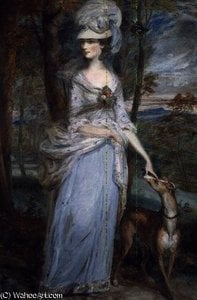
Daniel Gardner, 1750 – 1805

50 najsłynniejszych obrazów autorstwa Daniel Gardner

Obrazem, który przyniósł sławę Daniel Gardner, jest Henry Greswolde Lewis (1776); znajduje się on w Detroit Institute of Arts, Detroit. Elizabeth Lewis (1776) oraz The Hon. Mrs. Gray (1790) podążają za nimi w sercach kolekcjonerów i odwiedzających muzea. Z 50 dzieł Daniel Gardner w naszym katalogu, tych 50 jest najbardziej podziwianych – każde z nich zostało przedstawione wraz z datą powstania, muzeum oraz cechami wyróżniającymi.

Ranking oparty na naszym wskaźniku popularności, który łączy liczbę wyszukiwań, wizyt oraz zamówień dla każdego dzieła. Aktualizacja: Listopad 2026. Każde arcydzieło na tej stronie można zamówić jako ręcznie malowaną reprodukcję olejną o jakości muzealnej lub jako wysokiej jakości wydruk artystyczny, w wybranym przez Ciebie rozmiarze.

Portret Daniel Gardner
Daniel Gardner · 1750 – 1805
Urodzony · zmarł
1750 – 1805, Kendal
Nurt
Neoclassicism
Dzieła w naszym katalogu
50
Najsłynniejsze
Henry Greswolde Lewis (1776)
Najwięcej dzieł w
Detroit Institute of Arts

Daniel Gardner: dziesięć arcydzieł

Henry Greswolde Lewis (1776) autorstwa Daniel Gardner
1

Henry Greswolde Lewis

1776 · Watercolor · Detroit Institute of Arts, Detroit

This 18th-century portrait miniature depicts Henry Greswolde Lewis. Executed by Daniel Gardner, the work dates to about 1776. It presents the sitter in an oval format, a characteristic scale for intimate portraiture of this period.

Ręcznie malowana reprodukcja olejowa od $181 37 × 27 cm
Elizabeth Lewis (1776) autorstwa Daniel Gardner
2

Elizabeth Lewis

1776 · Oil · Detroit Institute of Arts, Detroit

In Elizabeth Lewis, Daniel Gardner centers the composition on a single female figure. Positioned slightly off-center, the subject appears to be walking through a wooded landscape, creating a sense of movement within the frame. The perspective is a medium shot, focusing on the subject from the waist up against a receding backdrop of trees that provides spatial dimension.

Ręcznie malowana reprodukcja olejowa od $181 37 × 27 cm
The Hon. Mrs. Gray (1790) autorstwa Daniel Gardner
3

The Hon. Mrs. Gray

1790 · Oil On Canvas · National Gallery of Art, Waszyngton

Daniel Gardner painted The Hon. Mrs. Gray in 1790. The portrait captures a woman in a three-quarter view, seated in a manner that emphasizes her presence within a quiet, intimate space. This work belongs to the tradition of late 18th-century British portraiture, focusing on the likeness and character of the sitter.

Ręcznie malowana reprodukcja olejowa od $181 29 × 35 cm Rozmiar zgodny z oryginałem $299 64 × 76 cm Zamów w oryginalnym rozmiarze →
Miss Alice Bullock Of Wigan autorstwa Daniel Gardner
4

Miss Alice Bullock Of Wigan

In this intimate encounter, Miss Alice Bullock Of Wigan meets the viewer through the steady, direct gaze of Daniel Gardner. The subject sits poised, her presence defined by a soft pink flush upon her cheeks and the gentle adornment of a blue ribbon nestled in her brown hair. She exists in a space of quiet stillness, her features emerging from a dark, shadowed background that pushes her forward into the…

Ręcznie malowana reprodukcja olejowa od $181 27 × 37 cm

Więcej arcydzieł artysty Daniel Gardner, od 11 do 50

Tematy, które najczęściej malował Daniel Gardner

Cztery tematy najczęściej powracające w tych arcydziełach, wraz z najdoskonalszym przykładem każdego z nich.

Gdzie można zobaczyć obrazy Daniel Gardner

5 muzeów, w których znajduje się najwięcej obrazów z tej strony.

Muzea Miasto Dzieła artysty Daniel Gardner Obrazy z tej listy
Detroit Institute of Arts, DetroitDetroit Institute of Arts Detroit 2 Henry Greswolde Lewis, Elizabeth Lewis
National Gallery of Art, WaszyngtonNational Gallery of Art Waszyngton 1 The Hon. Mrs. Gray
National Portrait Gallery, LondynNational Portrait Gallery Londyn 1 Untitled
Montacute HouseMontacute House 1 Sir William Heathcote
Abbot Hall Art Gallery, KendalAbbot Hall Art Gallery Kendal 1 Portrait Portret Aktu

Daniel Gardner, rok po roku: najważniejsze obrazy

Daniel Gardner tworzył przez 15 lat, od 1776 do 1790: oto najwspanialsze obrazy z każdego roku.

  1. 1776
    Henry Greswolde Lewis (1776) autorstwa Daniel Gardner
    1 z 50

    Henry Greswolde Lewis

    Wiek: 26 · Detroit Institute of Arts

    This 18th-century portrait miniature depicts Henry Greswolde Lewis. Executed by Daniel Gardner, the work dates to about 1776. It presents the sitter in an oval format, a characteristic…

  2. 1776
    Elizabeth Lewis (1776) autorstwa Daniel Gardner
    Miejsce 2 / 50

    Elizabeth Lewis

    Wiek: 26 · Detroit Institute of Arts

    In Elizabeth Lewis, Daniel Gardner centers the composition on a single female figure. Positioned slightly off-center, the subject appears to be walking through a wooded landscape, creating a…

  3. 1790
    The Hon. Mrs. Gray (1790) autorstwa Daniel Gardner
    3 z 50

    The Hon. Mrs. Gray

    Wiek: 40 · National Gallery of Art

    Daniel Gardner painted The Hon. Mrs. Gray in 1790. The portrait captures a woman in a three-quarter view, seated in a manner that emphasizes her presence within a…

Arcydzieła Daniel Gardner: pytania i odpowiedzi

Z jakiego obrazu najbardziej znany jest Daniel Gardner?Pokaż odpowiedź

Henry Greswolde Lewis (1776), Detroit Institute of Arts, Detroit. Następnie pojawiają się Elizabeth Lewis (1776) oraz The Hon. Mrs. Gray (1790).

Ile lat miał(a) Daniel Gardner, malując Henry Greswolde Lewis?Pokaż odpowiedź

26 lat: Henry Greswolde Lewis pochodzi z 1776, a Daniel Gardner urodził(a) się w 1750.

Jakie są dziesięć najwspanialszych obrazów Daniel Gardner?Pokaż odpowiedź

Henry Greswolde Lewis, Elizabeth Lewis, The Hon. Mrs. Gray, Miss Alice Bullock Of Wigan, William Cornwallis As Admiral, Portrait of Mrs. Paul Prickett, Lady Watkin Williams-wynn, James Lambert, Three Young Girls On A Terrace With A Dog i Thomas Jones -. Powyższy ranking zawiera rok oraz muzeum dla każdego z nich.

Ile dzieł namalował/a Daniel Gardner?Pokaż odpowiedź

Nasz katalog obejmuje 50 dzieł autorstwa Daniel Gardner, datowanych od 1776 do 1790.

W których muzeach można zobaczyć arcydzieła Daniel Gardner?Pokaż odpowiedź

Większość z nich znajduje się w Detroit Institute of Arts (Detroit), National Gallery of Art (Waszyngton) i National Portrait Gallery (Londyn). Powyższa tabela zawiera listę muzeów po kolei.

Kiedy Daniel Gardner namalował swoje arcydzieła?Pokaż odpowiedź

W okresie 1776: 2 z 50 dzieł na tej stronie pochodzi z tego czasu, w tym Henry Greswolde Lewis.

Jakie są pierwsze i ostatnie słynne obrazy artysty Daniel Gardner?Pokaż odpowiedź

Najwcześniejszy na tej stronie to Henry Greswolde Lewis (1776), najpóźniejszy The Hon. Mrs. Gray (1790).

Jakie tematy były ulubione dla Daniel Gardner?Pokaż odpowiedź

Portraits (7), Portrait (7) i 18th century (5), spośród 50 dzieł na tej stronie.

Do jakiego nurtu artystycznego należy Daniel Gardner?Pokaż odpowiedź

Neoclassicism, co pokazują obrazy na tej stronie.

Które arcydzieła Daniel Gardner znajdują się w Detroit Institute of Arts?Pokaż odpowiedź

Henry Greswolde Lewis i Elizabeth Lewis to jedne z 2 dzieł na tej stronie znajdujących się w zbiorach Detroit Institute of Arts, Detroit.

Czy mogę stać się właścicielem reprodukcji arcydzieła, którego autorem jest Daniel Gardner?Pokaż odpowiedź

Tak. Każdy obraz na tej stronie można zamówić jako ręcznie malowaną reprodukcję olejną o jakości muzealnej lub jako wysokiej jakości wydruk artystyczny w wybranym przez Ciebie rozmiarze, bezpośrednio ze strony danego dzieła.

Życie artysty Daniel Gardner

A Life Dedicated to Portraiture

Daniel Gardner, born in Kendal, Westmorland in 1750, and passing away in London in 1805, carved a distinctive niche for himself within the vibrant British art scene of the late 18th century. Though perhaps not as widely celebrated as his contemporary, Joshua Reynolds, Gardner established a successful practice specializing in intimate portraits that captured the essence of aristocratic society. His story is one of humble beginnings – the son of a master baker – coupled with an unexpected artistic talent and a keen eye for capturing the nuances of human character. Early indications of his future path were subtle; familial connections proved pivotal, linking him to George Romney’s father through an upholsterer relative, opening doors to initial artistic instruction from the renowned painter himself. While Gardner later admitted to learning relatively little directly from Romney, this early exposure undoubtedly provided a crucial foundation for his subsequent endeavors.

From Apprenticeship to Royal Academy Recognition

Gardner's journey into formal art training began in 1767 when he moved to London. He enrolled at the prestigious Royal Academy of Arts in 1770, immersing himself in a rigorous curriculum under the tutelage of prominent artists including Johann Zoffany, Nathaniel Dance-Holland, Benjamin West, Giovanni Battista Cipriani, and Francesco Bartolozzi. This period was critical for honing his skills and developing his artistic sensibilities. A significant early achievement came in 1771 when Gardner won a silver medal at the Royal Academy for a portrait of an old man – likely executed in pastel, a medium he would later master. This recognition signaled the emergence of a promising talent, though Gardner’s subsequent exhibition record remained relatively limited, suggesting a preference for private commissions over public displays. He quickly established a fashionable studio in Bond Street, London, catering to a discerning clientele eager for expertly crafted portraits. The location itself reflected his ambition – a prestigious address synonymous with artistic excellence and social standing.

Style and Influences: A Delicate Balance

Gardner’s artistic style was deeply influenced by Joshua Reynolds, particularly in terms of composition and the conception of his figures. He frequently borrowed poses and arrangements from Reynolds’ work, demonstrating an astute understanding of successful portraiture conventions. However, critics often noted that Gardner lacked the same level of anatomical precision as his more celebrated counterpart. This perceived deficiency, however, did not diminish his popularity; rather, it contributed to a unique aesthetic characterized by a certain *facile elegance*. Gardner excelled in capturing likeness and personality, prioritizing charm and grace over strict realism. He became renowned for his skill with pastels, crayons, and gouache, often combining these mediums to create luminous effects and delicate textures. His innovative technique involved using dry pastel for faces while employing scumbled gouache for the rest of the picture, allowing him to work quickly and achieve a distinctive visual quality. Some art historians even suggest that Gardner’s loose style and vibrant use of color foreshadowed elements of later Impressionist painting, marking him as an artist ahead of his time. The influence of Reynolds is undeniable, yet Gardner managed to forge his own distinct voice within this established framework.

Patronage and Legacy: Capturing Aristocratic Society

Gardner’s clientele read like a who’s who of British aristocracy. He painted portraits of prominent figures such as Jane Gordon, Duchess of Gordon; Georgiana Cavendish, Duchess of Devonshire – famed for her beauty and political influence; Charles Cornwallis, 1st Marquess Cornwallis; Elizabeth Lamb, Viscountess Melbourne; Frances Villiers, Countess of Jersey; the celebrated artist Angelica Kauffman; and Lord George Gordon. He was particularly sought after for family portraits, often depicting families with their children and pets in idyllic woodland settings – scenes that reflected both the wealth and sentimental values of his patrons. Beyond portraiture, Gardner demonstrated his versatility with an early oil painting depicting Philip Egerton of Oulton, showcasing his developing skills in this more traditional medium. A shrewd businessman, Gardner wisely invested the considerable wealth generated from his commissions into land and property around Kendal, securing his financial future. He eventually retired from painting to focus on these ventures, passing away in London in 1805, reportedly due to a liver complaint. While perhaps not achieving the same level of enduring fame as some of his contemporaries, Daniel Gardner’s unique style, technical innovation, and ability to capture the character of his sitters secured him a significant place within the history of British portraiture. His work continues to offer a fascinating glimpse into the lives and tastes of the late 18th-century aristocracy, and his subtle anticipation of Impressionistic techniques ensures his lasting interest among art historians today.

Key Works

  • Portrait of an Old Man (c. 1771): This early pastel portrait, awarded a silver medal at the Royal Academy, established Gardner’s reputation and showcased his emerging talent.
  • Family Portraits: Numerous portraits depicting aristocratic families in idyllic settings, reflecting both wealth and sentimental values. These works are particularly valued for their intimate portrayal of family life.
  • Portrait of Philip Egerton of Oulton (c. 1780s): An oil painting demonstrating Gardner’s developing skills beyond pastel portraiture.

Further Research

For more detailed information, consider exploring these resources: * Daniel Gardner - Government Art Collection: https://artcollection.dcms.gov.uk/person/gardner-daniel/ * Daniel Gardner - Tate: https://www.tate.org.uk/art/artists/daniel-gardner-201 * Daniel Gardner - Wikipedia: https://en.wikipedia.org/wiki/Daniel_Gardner