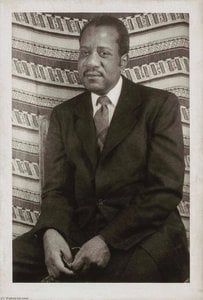
Carl Van Vechten (1880-1964): A Life Intertwined with the Avant-Garde
Carl Van Vechten, a name resonating through the annals of early 20th-century American culture, was far more than simply a writer or photographer. He was a cultural catalyst, a passionate patron, and an astute observer who navigated the vibrant currents of modernism with remarkable energy. Born in Cedar Rapids, Iowa, in 1880, into a family that valued both intellectual pursuits and artistic expression—his mother founded the local library and possessed musical talent—Van Vechten’s early life laid the foundation for his multifaceted career. His initial passions leaned towards music and theatre, but it was through writing that he first found his voice, initially as “The Chaperone,” a columnist known for its semi-autobiographical gossip and sharp criticism in Chicago. This marked the beginning of a lifelong engagement with public discourse and artistic commentary.Early Life and Literary Beginnings
Born on June 17, 1880, Carl Van Vechten descended from a family steeped in intellectual tradition. His father, Charles Duane Van Vechten, was a prosperous banker who instilled in his son a deep appreciation for financial stability alongside scholarly pursuits. Ada Amanda Van Vechten (née Fitch), Carl’s mother, established Cedar Rapids Public Library and cultivated her own musical talent—a legacy that profoundly shaped Carl's formative years. From a young age, he demonstrated an exceptional aptitude for music and theatre, immersing himself in performances and honing his artistic sensibilities. These early influences would continue to permeate his subsequent endeavors throughout his life. He graduated from Washington High School in 1898 with honors, showcasing his dedication to education and preparing him for the challenges ahead. His formative years were marked by a yearning for intellectual stimulation beyond his hometown’s confines—he famously described Cedar Rapids as “that unloved town”—driving him to pursue higher learning at the University of Chicago. There he studied music, art, and opera, broadening his horizons and fostering connections that would prove crucial to his artistic development. As a student journalist, he honed his writing skills and cultivated an inquisitive spirit—a characteristic that would define his career as a writer and critic.Literary Critic and Advocate for Modernism
Van Vechten’s intellectual curiosity propelled him beyond conventional literary criticism. He embarked on journeys to Europe, immersing himself in the world of opera and forging connections with influential artists and thinkers. It was during this period that he encountered Mabel Dodge Luhan, a pivotal figure who introduced him to the heart of the avant-garde movement—a transformative experience that would reshape his artistic worldview. This encounter ignited his passion for experimentation and challenged him to question established conventions. He became particularly captivated by Gertrude Stein’s innovative prose style, recognizing its radical departure from traditional literary norms. Recognizing Stein's genius, Van Vechten championed her work tirelessly, penning “How to Read Gertrude Stein” in an attempt to demystify her complex language for a wider audience—a testament to his intellectual integrity and dedication to artistic discourse. His involvement extended beyond Stein’s writings; he actively supported artists like Isadora Duncan, Anna Pavlova, and Loie Fuller, fostering dialogue and promoting the exploration of new artistic expressions. He wasn't merely observing these movements; he was actively participating in their evolution, shaping their trajectory through his patronage and advocacy.Photography: Capturing Modernity’s Essence
A pivotal shift occurred in Van Vechten’s artistic life during the 1930s when he embraced photography—a medium that allowed him to translate his observations of modernism into visual form. Initially drawn to the art form as a means of documenting musical performances, he quickly discovered its capacity for capturing portraits with unparalleled intimacy and immediacy. He acquired a Leica camera—a revolutionary tool at the time—and began photographing prominent figures in the performing arts, literature, and graphic design—artists who embodied the spirit of their era. His photographs are characterized by meticulous composition and subtle tonal nuances—techniques honed through years of artistic practice—reflecting his profound understanding of visual aesthetics. He documented the lives and creative energies of luminaries like Marian Anderson, Pearl Bailey, James Baldwin, Truman Capote, and Georgia O’Keeffe, preserving their likenesses for posterity. These portraits are not merely representations of individuals; they convey a sense of character and emotion—a testament to Van Vechten's artistic skill and sensitivity.Legacy and Influence
Carl Van Vechten’s impact on American art and culture extends far beyond his individual achievements. He served as Gertrude Stein’s literary executor, ensuring her groundbreaking work reached a wider audience and safeguarding her legacy for future generations—a role that underscored his commitment to artistic preservation and intellectual discourse. His unwavering support for artists during the Harlem Renaissance cemented his place in history as a champion of African American creativity and cultural expression. Furthermore, he challenged societal norms through his writing and photography—embracing controversial themes and questioning conventional perspectives—inspiring subsequent artists to push boundaries and explore uncharted territories. Today, Van Vechten’s photographs reside in prestigious collections worldwide—a tangible reminder of his artistic vision and enduring influence on the visual arts. He remains a pivotal figure in understanding the cultural landscape of early 20th-century America—a man whose life was inextricably intertwined with the avant-garde movements that continue to inspire artists and thinkers today. His legacy is one of intellectual curiosity, artistic innovation, and courageous advocacy—a testament to his remarkable contribution to American culture.Pytania i odpowiedzi
Czy mogę przeglądać dzieła Carl Van Vechten według słów kluczowych?
Aby znaleźć dzieła artysty Carl Van Vechten o konkretnej tematyce, skorzystaj ze strony Według słów kluczowych, która grupuje prace według słów kluczowych.
Gdzie mogę zobaczyć dzieła Carl Van Vechten w wirtualnej galerii 3D?
Zapraszamy na wirtualny spacer: strona Wirtualna Galeria 3D artysty Carl Van Vechten prezentuje jego dzieła w galerii trójwymiarowej.
Ile dzieł Carl Van Vechten można przejrzeć w katalogu?
Możesz przeglądać 41 dzieł sztuki dzieł autorstwa Carl Van Vechten na stronie Wszystkie dzieła.