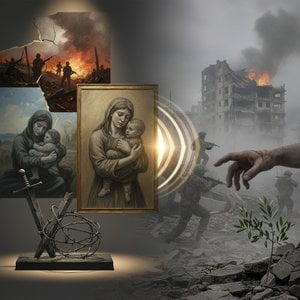
Brian Wilgos: A Visionary of War and Landscape
Brian Wilgos (active 1985–2010) emerged as a significant figure in British landscape painting during the late 1980s, establishing himself as a distinctive voice within the contemporary art scene. His artistic journey was marked by an unwavering dedication to capturing both the grandeur of the English countryside and the visceral realities of conflict—themes that would permeate his oeuvre throughout his career. Born in Hereford, Wilgos’s formative years instilled in him a deep appreciation for rural traditions and visual storytelling. This early influence profoundly shaped his artistic sensibilities, propelling him toward a style characterized by meticulous observation and expressive brushwork. He honed his skills at Hereford College of Art before embarking on independent explorations that solidified his reputation as an artist committed to conveying complex narratives through evocative imagery. Early Influences: Wilgos’s artistic vision drew inspiration from luminaries such as Turner and Constable, whose mastery of light and atmosphere served as models for his own compositions. He particularly admired the Romantic tradition's emphasis on emotion and imagination—values that resonated deeply with his creative impulse. The sublime landscapes of Turner captivated him, urging him to translate similar feelings into his paintings. Similarly, Constable’s meticulous depiction of rural life instilled in him a desire for accuracy alongside artistic expression. Style Development: Initially focused on idyllic landscapes imbued with pastoral charm, Wilgos gradually transitioned toward confronting darker subjects—primarily depictions of World War I battles. His technique evolved to incorporate elements of Action Painting, prioritizing spontaneity and textural richness to convey the intensity of combat experience. He sought to capture not just what he saw but also how it *felt*, mirroring the turbulent emotions experienced by soldiers during wartime. This stylistic shift reflected a broader artistic trend toward experimentation and emotional honesty. Notable Achievements: Among Wilgos’s most notable accomplishments were commissions for prestigious institutions such as The ‘Devil’s Porridge’ Museum, where his paintings—particularly “Over the Top”—became integral to exhibitions exploring themes of heroism and remembrance. His artwork continues to resonate with audiences worldwide. These monumental canvases powerfully conveyed the horrors of trench warfare while simultaneously honoring the courage and resilience of those who fought for Britain during the Great War. Legacy: Brian Wilgos's contribution to British art extends beyond individual masterpieces; he championed a distinctive artistic approach that prioritized emotional depth and visual precision—a legacy that inspires artists today to confront challenging subjects with courage and conviction. His enduring fascination with the interplay between light, color, and texture—combined with his unwavering commitment to conveying historical narratives—solidified Wilgos’s place as a pivotal figure in British landscape painting and military art. He remains an exemplar of artistic integrity and a testament to the transformative power of confronting difficult truths through visual expression.His monumental canvases portraying scenes from Verdun and Passchendaele that garnered particular acclaim—works celebrated for their unflinching realism and poignant portrayal of human suffering.