Early Life and Artistic Foundations
Berenice Abbott, born Berenice Alice Abbott on July 17, 1898, in Springfield, Ohio, began her life amidst a quiet yet formative period of transition. Her parents, Charles E. Abbott and Alice Bunn, divorced shortly after her birth, leading to an upbringing primarily shaped by her mother’s resilience and determination. This early experience instilled within her a sense of independence and a keen awareness of the complexities of human relationships – qualities that would later inform her artistic perspective. Following a brief enrollment at The Ohio State University in 1918, she felt drawn to the vibrant pulse of New York City, seeking not just an education but a creative outlet and a chance to forge her own path. Initially intending to pursue journalism, she found herself immersed in the city’s burgeoning artistic circles, encountering figures like Marcel Duchamp and Man Ray – individuals who would profoundly influence her artistic trajectory. These encounters weren't merely social; they were gateways into a world of experimentation, challenging conventional notions of art and pushing boundaries of creative expression. Her early studies in sculpture at the Académie de la Grande Chaumière in Paris and later with Emile Bourdelle provided her with a foundational understanding of form and technique, while her time in Berlin honed her skills and exposed her to diverse artistic traditions. It was during this period that she adopted the French spelling of her first name, “Berenice,” at the suggestion of the writer Djuna Barnes – a subtle yet significant step in solidifying her identity within the Parisian art scene.
Parisian Awakening and Photographic Development
The move to Paris in 1921 marked a pivotal moment in Berenice Abbott’s artistic journey, transforming her from an aspiring journalist into a dedicated photographer. She quickly found work as a studio assistant for Man Ray, a position that proved invaluable in mastering the intricacies of darkroom techniques and photographic processes. This apprenticeship wasn't merely a job; it was an immersive education, allowing her to witness firsthand the innovative methods employed by one of the era’s most influential artists. It was through Man Ray that she first encountered the work of Eugène Atget, a largely unrecognized French photographer whose meticulous documentation of Parisian street life captivated Abbott with its unique blend of observation and artistry. Recognizing the importance of preserving Atget's legacy, Abbott embarked on a remarkable undertaking: purchasing his entire photographic archive – a testament to her dedication and appreciation for this unsung master. Returning to New York in 1929, she established her own studio, determined to continue her exploration of photography as a means of capturing the essence of urban life. This period saw the emergence of her distinctive style, characterized by a keen eye for detail, a commitment to realism, and an ability to convey both the beauty and the grit of the city.
Documenting a Changing City: New York Transformed
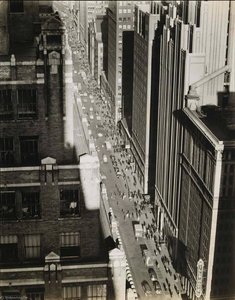
Upon returning to New York City in 1929, Berenice Abbott was immediately struck by the dramatic transformation unfolding around her – a rapid influx of immigrants, the rise of skyscrapers, and the burgeoning energy of a metropolis on the cusp of modernity. Recognizing the urgency of documenting this dynamic period, she initiated a monumental project: “Changing New York.” Supported by funding from the Works Progress Administration (WPA), Abbott spent years meticulously photographing the city’s architecture, street scenes, and social life. Her approach was revolutionary for its time – she employed both bird's-eye and worm's-eye perspectives, capturing the city from dizzying heights and intimate ground levels alike. This innovative technique allowed her to reveal the complex layers of urban space, highlighting the interplay between old and new, tradition and progress. The resulting collection, “Changing New York,” became a landmark achievement in documentary photography, offering a comprehensive visual record of the city’s transformation and solidifying Abbott's reputation as a visionary artist with a unique ability to capture the spirit of a place.
Legacy and Enduring Influence
Berenice Abbott’s legacy extends far beyond her stunning photographs. She is celebrated not only for her technical mastery but also for her pioneering role in shaping documentary photography as an art form. Her portraits offer intimate glimpses into the lives of influential cultural figures, while her New York City photographs serve as a valuable historical record of the city's evolution – a testament to her keen observation and artistic vision. Crucially, Abbott played a vital role in preserving and promoting the work of Eugène Atget, bringing his artistry to wider recognition and ensuring his place in photographic history. Her influence can be seen in the works of countless photographers who followed, demonstrating her lasting impact on the field. Beyond her artistic practice, she contributed significantly to the development of photography through her writings and illustrations on photographic techniques, furthering its understanding as a sophisticated art form. Berenice Abbott’s photographs remain exhibited in prestigious collections worldwide, including the Smithsonian American Art Museum and the Philadelphia Museum of Art, a lasting tribute to her remarkable talent and enduring legacy.
Key Influences and Artistic Style
Berenice Abbott's artistic vision was shaped by a confluence of influences. Her apprenticeship with Man Ray provided her with invaluable experience in avant-garde techniques and introduced her to a network of influential artists. The rediscovery and promotion of Eugène Atget’s work profoundly impacted her approach to documentary photography, inspiring her meticulous documentation of urban environments. Abbott's photographs often reflect the aesthetic sensibilities of the Art Deco Movement, characterized by geometric forms and a sense of modernity. Her style aligned with the principles of “straight photography,” emphasizing sharp focus and unmanipulated images to present a realistic depiction of her subjects, devoid of artificiality or romanticism. This commitment to clarity and authenticity became a hallmark of her work, allowing viewers to connect directly with the scenes she captured and appreciate the beauty inherent in everyday life.