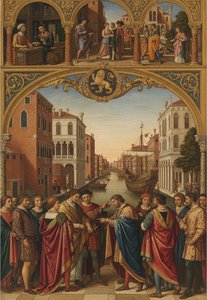
Benedetto Diana: A Venetian Master of Subtle Emotion
Benedetto Diana, a name perhaps less familiar than some of his contemporaries, nevertheless represents a significant and quietly compelling figure within the vibrant artistic landscape of 15th and early 16th-century Venice. Born around 1460 – though the precise date remains elusive – in the heart of the lagoon city, Diana’s life was inextricably linked to its bustling art scene, where he honed his craft as a painter, companion, and ultimately, a skilled interpreter of religious narratives. Initially known as Benedetto Rusconi, he adopted the moniker “Diana” later in his career, a testament to his growing reputation and perhaps a subtle nod to the Roman moon goddess – an association that speaks volumes about his ability to capture ethereal beauty and delicate emotion.
Diana’s early artistic development is intertwined with the influential figures of Vittore Carpaccio and Giovanni di Niccolò Mansueti. These masters, renowned for their meticulous detail and dramatic storytelling within religious scenes, undoubtedly shaped Diana's approach to composition and narrative. He apprenticed under Lazzaro Bastiani, a Venetian painter known for his elaborate altar pieces and decorative frescoes, further solidifying his training in tempera techniques and the conventions of Venetian painting. His early works demonstrate a clear debt to these predecessors, yet he quickly established a distinctive style characterized by a remarkable sensitivity to light, color, and human expression – qualities that set him apart from many of his contemporaries.
A Palette of Subtle Grace: Diana’s Style and Techniques
Diana's artistic signature lies in his masterful use of tempera and oil paints. He possessed an exceptional ability to render textures with astonishing realism, from the folds of drapery to the delicate sheen of skin. His palette was notably restrained, favoring muted earth tones – ochres, siennas, and umbers – which he skillfully layered to create a sense of atmospheric depth and luminosity. Unlike some of his more flamboyant colleagues, Diana avoided excessive ornamentation or dramatic gestures; instead, he focused on conveying subtle nuances of emotion through carefully observed details and understated compositions.
Consider, for example, his “Virgin and Child with St. Jerome,” now housed in the Accademia Gallery in Venice. The painting is not a grand, imposing depiction of the Madonna but rather a quiet, intimate scene filled with tenderness and serenity. Diana’s attention to detail—the delicate folds of the Virgin's robe, the gentle expression on her face, and the humble dignity of St. Jerome – speaks volumes about his artistic philosophy: to capture the essence of faith through subtle observation and profound empathy.
Notable Works and Venetian Connections
Diana’s output, while not as voluminous as some of his contemporaries, includes a number of significant works that have secured his place in Venetian art history. The “Brethren Distributing Alms” in San Giovanni Evangelista, Venice, is a prime example of his ability to imbue a seemingly simple scene with profound spiritual meaning. His assistance on the elaborate standards for the Piazza of San Marco – alongside Lazzaro Bastiani – showcases his skill in large-scale decorative projects and his understanding of Venetian civic pride.
Beyond Venice, Diana’s influence extends as far as Crema, Italy, where he created an altarpiece depicting the “Gift of the Miraculous Girdle to St. Thomas.” This work further demonstrates his versatility and his ability to adapt his style to different contexts and religious traditions. The Lowe Art Museum in Coral Gables, Florida, houses a "Madonna and Child with St. Jerome" that offers another glimpse into Diana’s artistic sensibilities.
Legacy and Historical Context
Benedetto Diana died in Venice around 1525, leaving behind a body of work that reflects the evolving artistic trends of his time. He operated within a vibrant and competitive art scene, influenced by both the established traditions of Venetian painting and the emerging innovations of Renaissance masters like Leonardo da Vinci and Michelangelo. While often overshadowed by more celebrated figures, Diana’s quiet grace, subtle emotion, and masterful technique have earned him recognition as a significant contributor to the rich artistic heritage of Venice.
His work serves as a poignant reminder that true artistry lies not always in grand gestures or dramatic displays but in the ability to capture the essence of human experience with sensitivity, intelligence, and unwavering skill. Diana’s legacy endures through his paintings—testaments to a Venetian master who quietly shaped the visual language of his time.