


Augustus Earle (1793–1838)
Augustus Earle was a pioneering British travel artist known for his vivid watercolors & lithographs documenting 19thC colonization, landscapes, portraits, and Aboriginal life in Australia, New Zealand & beyond. A significant historical record of the era’s encounters with indigenous cultures and artistic expression, his oeuvre stands as testament to an ambitious spirit and remarkable observational skill.- Early Life & Training: Born in London on June 1, 1793, Augustus Earle descended from a distinguished American family—his father, James Earle, was an artist himself, and his mother, Georgiana Caroline Smyth, daughter of John Carteret Pilkington—a lineage that instilled within him a deep appreciation for artistic pursuits. He received formal training at the Royal Academy, demonstrating prodigious talent early in his career and quickly establishing himself as a respected painter.
- The Mediterranean Voyage (1815–1817): Earle’s formative journey commenced in 1815 when he embarked on an expedition to the Mediterranean aboard HMS *Scylla*, commanded by Admiral Edward Pellew, under Lord Exmouth's patronage. This voyage encompassed visits to Sicily, Malta and Gibraltar, offering unparalleled opportunities for artistic observation and documentation.
- The American Expedition (1818–1820): Driven by a desire to explore the United States and further hone his artistic abilities, Earle undertook another ambitious undertaking in 1818. He traveled extensively across America, showcasing his paintings at the Pennsylvania Academy of Fine Arts and capturing the essence of American landscapes and society.
- Australia & New Zealand (1820–1829): Earle’s most celebrated artistic achievements unfolded during his residency in Australia and New Zealand between 1820 and 1829. Recognizing the potential for groundbreaking research into Aboriginal culture, he travelled to Sydney, Hokianga and Auckland, producing a prolific body of work that captured the beauty of the Australian wilderness and documented Māori traditions.
- Legacy & Artistic Style: Earle’s artistic style was characterized by meticulous detail and an unwavering commitment to realism. His watercolors and lithographs—particularly those depicting Aboriginal subjects—remain invaluable visual records of 19thC exploration and cultural exchange, cementing his place as one of the foremost travel artists of his time.
- A Man-of-War’s Boat Cutting Out a French Barque
- View From The Sydney Hotel
- Government House, Tristan D'acunha (i.e. Da Cunha)
- Portrait of Bungaree
- June Park, Van Diemen’s Land
Pytania i odpowiedzi
Jakie inne pseudonimy lub nazwy stosuje Augustus Earl?
Augustus Earl występuje również pod innymi nazwiskami: Augustus Earle, Augustus Francis Earle.
Czy istnieje zestawienie wszystkich tematów, które malował Augustus Earl?
Atlas tematów artysty Augustus Earl to strona, która grupuje dzieła artysty według ich tematyki.
Gdzie mogę zobaczyć wszystkie dzieła Augustus Earl?
Wszystkie dzieła Augustus Earl dostępne w niniejsza strona można przeglądać na stronie Wszystkie dzieła artysty.
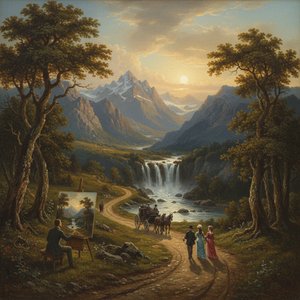


![Port Jackson, New South Wales [picture] / [augustus Earle] — Augustus Earl](/media/artworks/images-thumb/fb/08/fb08b9cec7c051c607c62da47c6f4247.jpg)

