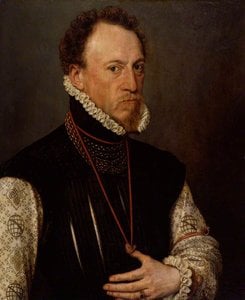
Antonis Mor, 1519 – 1575

Antonis Mor: 71 najsłynniejszych obrazów

Cardinal Granvelle's Dwarf (1560) to najsłynniejszy obraz autorstwa Antonis Mor, znajdujący się w Luwr w Paryż. Portrait of Mary, Queen of England (1554) i Queen Mary Tudor of England (1554) to dwa kolejne dzieła, które świat zna najlepiej. Z 75 dzieł Antonis Mor w naszym katalogu, oto 71 najczęściej wybieranych przez kolekcjonerów i zwiedzających muzea, wraz z rokiem powstania, informacją o muzeum oraz historią każdego z nich.

Ranking oparty na naszym wskaźniku popularności, który łączy liczbę wyszukiwań, wizyt oraz zamówień dla każdego dzieła. Aktualizacja: Październik 2026. Każde arcydzieło na tej stronie można zamówić jako ręcznie malowaną reprodukcję olejną o jakości muzealnej lub jako wysokiej jakości wydruk artystyczny, w wybranym przez Ciebie rozmiarze.

Portret Antonis Mor
Antonis Mor · 1519 – 1575
Urodzony · zmarł
1519 – 1575, Utrecht
Nurt
Northern renaissance
Dzieła w naszym katalogu
75
Najsłynniejsze
Cardinal Granvelle's Dwarf (1560)
Najwięcej dzieł w
Museo del Prado

Top 10: najsłynniejsze obrazy artysty Antonis Mor

Cardinal Granvelle's Dwarf (1560) autorstwa Antonis Mor
1

Cardinal Granvelle's Dwarf

1560 · Oil On Panel · Luwr, Paryż

To stand before Anthonis Mor Van Dashorst’s Cardinal Granvelle's Dwarf is to step directly into the opulent, richly textured world of the sixteenth-century Dutch aristocracy. This oil on panel painting, executed in 1560, transcends a mere portrait; it is a meticulously crafted tableau vivant, whispering tales of power, lineage, and social standing. The subject—a young boy with dwarfism, adorned in clothing of breathtaking extravagance—is presented not just as an individual,…

Hand-painted oil reproduction from $181 27 × 38 cm Same size as the original $502 92 × 126 cm Order at original size →
Portrait of Mary, Queen of England (1554) autorstwa Antonis Mor
2

Portrait of Mary, Queen of England

1554 · Oil On Panel · Szépművészeti Múzeum, Budapeszt

Anthonis Mor van Dashorst captured the likeness of Mary Tudor in 1554, a period defined by the shifting religious and political tides of the Northern Renaissance. The subject sits with a stern, direct gaze that meets the viewer without hesitation. Her red hair is framed by a structured, ruffled collar, a detail rendered with meticulous precision. Through the use of chiaroscuro, Mor employs a controlled interplay of light and shadow…

Hand-painted oil reproduction from $181 27 × 38 cm
Queen Mary Tudor of England (1554) autorstwa Antonis Mor
3

Queen Mary Tudor of England

1554 · Oil On Panel · Museo del Prado, Madryt

The portrait of Queen Mary Tudor of England, executed by Antonis Mor in 1554, captures a sovereign at a threshold of history. She sits as the sole surviving child of Henry VIII and Catherine of Aragon, a figure of singular lineage. The oil on panel preserves her likeness during a season of profound political and religious shifts. Her presence is fixed, a quiet anchor amidst the changing tides of the…

Hand-painted oil reproduction from $181 27 × 37 cm Same size as the original $429 84 × 109 cm Order at original size →
Portrait of William of Orange (1555) autorstwa Antonis Mor
4

Portrait of William of Orange

1555 · Oil On Panel · Staatliche Museen, Kassel

To stand before this portrait of William of Orange is to encounter not merely a likeness, but an embodiment of nascent authority. Rendered in the meticulous vein of the Northern Renaissance, the work captures the sitter in a moment of profound stillness, yet one charged with palpable resolve. The composition immediately draws the eye into the three-quarter view, presenting a figure encased in elaborate armor against a background so deep…

Hand-painted oil reproduction from $181 28 × 36 cm Same size as the original $353 62 × 107 cm Order at original size →
Joanna of Austria (1560) autorstwa Antonis Mor
5

Joanna of Austria

1560 · Oil On Canvas · Museo del Prado, Madryt

Antonis Mor's Joanna of Austria presents a formal likeness of the princess, who was the daughter of Emperor Charles V and sister to King Philip II of Spain. The subject commissioned this portrait personally, seeking a representation that reflected her specific station and history. In 1552, she married the Portuguese Prince John Manuel, a union that defined her political and personal landscape during the mid-sixteenth century.

Hand-painted oil reproduction from $181 23 × 44 cm Same size as the original $768 105 × 195 cm Order at original size →
Jane Dormer, Duchess of Feria (?) (1558) autorstwa Antonis Mor
6

Jane Dormer, Duchess of Feria (?)

1558 · Oil On Canvas · Museo del Prado, Madryt

The portrait of Jane Dormer, Duchess of Feria (?) captures a high-status female figure in a moment of quiet, aristocratic stillness. Painted by Antonis Mor, the work emerged around 1558. The subject gazes toward the viewer, her presence defined by the weight of her station and the gravity of her social standing.

Hand-painted oil reproduction from $181 28 × 35 cm Same size as the original $370 76 × 95 cm Order at original size →
Portrait of a lady (1557) autorstwa Antonis Mor
7

Portrait of a lady

1557 · Oil On Canvas · National Gallery of Victoria, Melbourne

A single light source from the upper left carves the subject out of a dark, indeterminate void. She is a presence of quietude, a three-quarter length figure caught in a moment of poised introspection. The darkness behind her pushes her forward, making the pale skin of her forehead and cheek feel immediate, almost tactile. Her expression is calm, a mask of high social status that hides the pulse of the…

Hand-painted oil reproduction from $181 27 × 38 cm Same size as the original $385 72 × 107 cm Order at original size →
Catherine of Hapsburg, the Wife of King John III of Portugal (1552) autorstwa Antonis Mor
8

Catherine of Hapsburg, the Wife of King John III of Portugal

1552 · Oil On Panel · Museo del Prado, Madryt

The gaze of Catherine of Hapsburg, the Wife of King John III of Portugal, meets the viewer from within this formal portrait. Painted by Antonis Mor, the work captures the presence of Catherine of Austria in a moment of quiet, regal composure. She occupies the space with a heavy, dignified stillness that speaks to her high station and the weight of her lineage.

Hand-painted oil reproduction from $181 28 × 36 cm Same size as the original $424 84 × 107 cm Order at original size →
Portrait of Anton Perrenot de Granvelle (1549) autorstwa Antonis Mor
9

Portrait of Anton Perrenot de Granvelle

1549 · Oil On Canvas · Kunsthistorisches Museum, Wiedeń

This portrait of Anton Perrenot de Granvelle, also known as Antoine Perrenot, called Granvelle, was executed by the Dutch Renaissance painter Antonis Mor. Painted in 1549, the work captures a man of significant stature, presented with the quiet dignity often found in the courtly portraiture of the mid-sixteenth century.

Hand-painted oil reproduction from $181 28 × 36 cm Same size as the original $417 82 × 107 cm Order at original size →
Margaret Duchess of Parma / Mary of Portugal Wife of Alessandro Farnesse (1565) autorstwa Antonis Mor
10

Margaret Duchess of Parma / Mary of Portugal Wife of Alessandro Farnesse

1565 · Oil On Panel · Museo del Prado, Madryt

Two women exist in a state of perpetual prayer, suspended within the dark, velvet silence of a Renaissance interior. Margaret, Duchess of Parma, and Mary of Portugal appear as twin pillars of piety, their profiles or three-quarter views turned toward an unseen divine presence. The air around them feels heavy, thick with the solemnity of their task. They do not look at the viewer; instead, their gazes drift downward or…

Hand-painted oil reproduction from $206 28 × 36 cm Same size as the original $211 30 × 39 cm Order at original size →

Pozostała część rankingu Antonis Mor, od 11 do 71

Philip II (1555) autorstwa Antonis Mor
#12

Philip II

1555 · Museo del Prado

The air in the room seems to thicken around the figure of Philip II. He sits in a three-quarter view, his gaze meeting the viewer with a steady,…

Zamów reprodukcję from $181 →
Emperor Maximilian II (1550) autorstwa Antonis Mor
#18

Emperor Maximilian II

1550 · Museo del Prado

In this vertical, three-quarter length portrait from 1550, Emperor Maximilian II is presented against a dark, near-black background. The subject stands slightly off-center, positioned with a calm and…

Zamów reprodukcję from $181 →
Portrait of a Man (1550) autorstwa Antonis Mor
#36

Portrait of a Man

1550 · Hispanic Society Museum - Library

Portrait of a Man is an oil on canvas painting by the artist Antonis Mor. Executed around 1550, the work presents a middle-aged man positioned in a three-quarter…

Zabierz ją do domu from $206 →
Portrait of a Man (1561) autorstwa Antonis Mor
#62

Portrait of a Man

1561 · Mauritshuis

Anthonis Mor van Dashorst came from Utrecht and specialised in portraits. He received commissions from various members of the Habsburg court, for which he travelled extensively in Europe.…

Zabierz ją do domu from $181 →

Tematy, które najczęściej malował Antonis Mor

Cztery tematy najczęściej powracające w tych arcydziełach, wraz z najdoskonalszym przykładem każdego z nich.

Gdzie można zobaczyć obrazy Antonis Mor

8 muzeów, w których znajduje się najwięcej obrazów z tej strony.

Muzea Miasto Dzieła artysty Antonis Mor Obrazy z tej listy
Museo del Prado, MadrytMuseo del Prado Madryt 13 Queen Mary Tudor of England, Joanna of Austria, Jane Dormer, Duchess of Feria (?)
Rijksmuseum, AmsterdamRijksmuseum Amsterdam 5 Portrait of Philippe de Montmorency, Count of Horne, Admiral of the Netherlands, Member of the Council of State, Anthonis Mor (copy after), 1540 - 1650, Sir Thomas Gresham, Anne Fernel, the Wife of Sir Thomas Gresham
Szépművészeti Múzeum, BudapesztSzépművészeti Múzeum Budapeszt 3 Portrait of Mary, Queen of England, Knight of the Spanish St James Order, Portrait of the Philip II, King of Spain
Kunsthistorisches Museum, WiedeńKunsthistorisches Museum Wiedeń 3 Portrait of Anton Perrenot de Granvelle, Portrait of a man, Anne of Austria, Queen of Spain
Gemäldegalerie Alte Meister im Schloss Wilhelmshöhe, KasselGemäldegalerie Alte Meister im Schloss Wilhelmshöhe Kassel 2 Portrait of a young prince, Portrait of Jean Lecocq (1559)
Gemäldegalerie, BerlinGemäldegalerie Berlin 2 The Utrecht canons Cornelius van Horn and Anthonis Taets van Ameronghen, The Corpse of Christ
Hispanic Society Museum - Library, Nowy JorkHispanic Society Museum - Library Nowy Jork 2 Fernando Álvarez de Toledo, Third Duke of Alba, Portrait of a Man
Muzeum Narodowe w Warszawie, WarszawaMuzeum Narodowe w Warszawie Warszawa 2 Portrait of a man with narcissus and a hyacinth., Portrait of two boys.

Antonis Mor na przestrzeni dekad: jedno arcydzieło na każde dziesięciolecie

  1. 1530s
    Portrait of a Lady (1538) autorstwa Antonis Mor
    23 z 71

    Portrait of a Lady

    Wiek 11 – 20 · Museo del Prado

    The artwork titled Portrait of a Lady is an oil on canvas painting by the artist Antonis Mor. This portrait depicts a noblewoman, presented in a three-quarter length…

  2. 1540s
    Portrait of Anton Perrenot de Granvelle (1549) autorstwa Antonis Mor
    Miejsce 9 / 71

    Portrait of Anton Perrenot de Granvelle

    Wiek 21 – 30 · Kunsthistorisches Museum

    This portrait of Anton Perrenot de Granvelle, also known as Antoine Perrenot, called Granvelle, was executed by the Dutch Renaissance painter Antonis Mor. Painted in 1549, the work…

  3. 1550s
    Portrait of Mary, Queen of England (1554) autorstwa Antonis Mor
    Miejsce 2 / 71

    Portrait of Mary, Queen of England

    Wiek 31 – 40 · Szépművészeti Múzeum

    Anthonis Mor van Dashorst captured the likeness of Mary Tudor in 1554, a period defined by the shifting religious and political tides of the Northern Renaissance. The subject…

  4. 1560s
    Cardinal Granvelle's Dwarf (1560) autorstwa Antonis Mor
    Nr 1 z 71

    Cardinal Granvelle's Dwarf

    Wiek 41 – 50 · Luwr

    To stand before Anthonis Mor Van Dashorst’s Cardinal Granvelle's Dwarf is to step directly into the opulent, richly textured world of the sixteenth-century Dutch aristocracy. This oil on…

  5. 1570s
    Portrait of two boys. (1570) autorstwa Antonis Mor
    Nr 39 z 71

    Portrait of two boys.

    Wiek 51 – 56 · Muzeum Narodowe w Warszawie

    The gaze of the viewer meets the quiet presence of Portrait of two boys., a work that captures a fleeting moment of childhood dignity. This oil on canvas…

Obrazy artysty Antonis Mor: najczęściej zadawane pytania

Który obraz Antonis Mor jest najbardziej znany?Pokaż odpowiedź

Cardinal Granvelle's Dwarf (1560), Luwr, Paryż. Następnie pojawiają się Portrait of Mary, Queen of England (1554) oraz Queen Mary Tudor of England (1554).

W jakim wieku Antonis Mor namalował/a Cardinal Granvelle's Dwarf?Pokaż odpowiedź

41 lat: Cardinal Granvelle's Dwarf pochodzi z 1560, a Antonis Mor urodził(a) się w 1519.

Które są 10 najsłynniejszych obrazów, których autorem jest Antonis Mor?Pokaż odpowiedź

Cardinal Granvelle's Dwarf, Portrait of Mary, Queen of England, Queen Mary Tudor of England, Portrait of William of Orange, Joanna of Austria, Jane Dormer, Duchess of Feria (?), Portrait of a lady, Catherine of Hapsburg, the Wife of King John III of Portugal, Portrait of Anton Perrenot de Granvelle i Margaret Duchess of Parma / Mary of Portugal Wife of Alessandro Farnesse. Powyższy ranking zawiera rok oraz muzeum dla każdego z nich.

Ile obrazów autorstwa Antonis Mor znajduje się w kolekcji?Pokaż odpowiedź

Nasz katalog obejmuje 75 dzieł autorstwa Antonis Mor, datowanych od 1538 do 1574.

Gdzie mogę zobaczyć najsłynniejsze obrazy, których autorem jest Antonis Mor?Pokaż odpowiedź

Większość z nich znajduje się w Museo del Prado (Madryt), Rijksmuseum (Amsterdam) i Szépművészeti Múzeum (Budapeszt). Powyższa tabela zawiera listę muzeów po kolei.

W jakim okresie Antonis Mor namalował swoje najsłynniejsze dzieła?Pokaż odpowiedź

W okresie 1550s: 30 z 71 dzieł na tej stronie pochodzi z tego czasu, w tym Portrait of Mary, Queen of England.

Jakie jest najwcześniejsze i najpóźniejsze słynne dzieło, którego autorem jest Antonis Mor?Pokaż odpowiedź

Najwcześniejszy na tej stronie to Portrait of a Lady (1538), najpóźniejszy Portrait of Hubert Goltzius (1574).

Jakie tematy malował Antonis Mor?Pokaż odpowiedź

Man (19), Woman (18) i Dark background (17), spośród 71 dzieł na tej stronie.

Na czym i czym malował Antonis Mor?Pokaż odpowiedź

Oil On Canvas: 25 z 71 dzieł na tej stronie.

Do jakiego nurtu należy twórczość Antonis Mor?Pokaż odpowiedź

Northern renaissance i Renaissance, co pokazują obrazy na tej stronie.

Jakie obrazy Antonis Mor znajdują się w zbiorach Museo del Prado?Pokaż odpowiedź

Queen Mary Tudor of England, Joanna of Austria i Jane Dormer, Duchess of Feria (?) to jedne z 13 dzieł na tej stronie znajdujących się w zbiorach Museo del Prado, Madryt.

Gdzie mogę kupić reprodukcję Antonis Mor?Pokaż odpowiedź

Tak. Każdy obraz na tej stronie można zamówić jako ręcznie malowaną reprodukcję olejną o jakości muzealnej lub jako wysokiej jakości wydruk artystyczny w wybranym przez Ciebie rozmiarze, bezpośrednio ze strony danego dzieła.

Antonis Mor: biografia

Antonis Mor: Malarz Królewskiej Godności

Antonis Mor van Dashorst (1517-1577) zajmuje miejsce jako fundament niderlandzkiego portretu renesansowego, ucieleśniając drobiazgowy realizm i symboliczną głębię charakterystyczną dla jego epoki. Urodzony w Utrechcie, w Holandii, wywodził się z rodziny głęboko zakorzenionej w tradycji artystycznej – jego ojciec był rzeźbiarzem, co ustanowiło rodowód poświęcony wizualnej reprezentacji świata. Choć szczegóły biograficzne pozostają dość skąpe, niezwykle płodna twórczość Mora mówi wiele o jego talencie i niezłomnym dążeniu do uchwycenia samej esencji swoich podmiotów. Szybko zyskał sławę dzięki zdolności portretowania szlachty z niespotykaną dokładnością, co zaowocowało licznymi zamówieniami od wpływowych postaci z całej Europy.

O formacyjnych latach Mora, poza jego wychowaniem w Utrechcie, wiemy niewiele. Niemniej jednak, studiując w Antwerpii pod okiem Pietera Bruegla Starszego, chłonął on mistrzowską obserwację natury ludzkiej i krajobrazu – wpływy te przeniknęły do własnej wizji artystycznej Mora. Okres spędzony w Antwerpii okazał się kluczowy dla jego artystycznego dojrzewania. Szlifował swoje umiejętności u boku takich artystów jak Quentin Massys czy Hendrik Golse, zanurzając się w tętniącym życiem środowisku artystycznym Republiki Flandryjskiej. To doświadczenie zaowocowało wyrafinowanym zrozumieniem perspektywy oraz techniki chiaroscuro – metod, które po mistrzowsku wykorzystywał, by rozświetlać swoje portrety dramatyczną grą światła i cienia.

Panowanie Mary Tudor: Arcydzieło Północnorenesansowego Portretu

Sława Mora wzrosła gwałtownie po ukończeniu portretu Mary Tudor, Królowej Anglii (1554). To monumentalne płótno stanowi szczytowe osiągnięcie jego artystycznego kunsztu. Wykonany z niezwykłą dbałością o szczegóły, obraz ten oddaje królewskie postawienie i wewnętrzny spokój Mary – jest to świadectwo zdolności Mora do przekazywania niuansów psychologicznych obok fizycznego podobieństwa. Kompozycja jest skrupulatnie zrównoważona, wykorzystująca strukturę piramidalną oraz subtelne fałdy draperii, aby podkreślić status i godność królowej. Co więcej, zastosowanie chiaroscuro tworzy urzekającą interakcję światła i mroku, która wyostrza rysy twarzy Mary i emanuje aurą uroczystego majestatu. Portret ten ugruntował reputację Mora jako jednego z najważniejszych portrecistów swoich czasów i pozostaje celebrowanym przykładem sztuki renesansu północnego.

Mor korzystał w ogromnym stopniu z mecenatu królewskiego, otrzymując zamówienia od monarchów z całej Europy – w tym od Filipa II Hiszpańskiego. Te zobowiązania pozwoliły mu na realizację ambitnych projektów i dopracowanie własnego stylu, co umocniło jego dziedzictwo jako artysty dworskiego. Poza portretem Mary Tudor, Mor podejmował liczne zlecenia przedstawiające wybitnych mężów stanu, dyplomatów i arystokratów. Jego charakterystyczny styl – cechujący się drobiazgowym realizmem, mistrzowską perspektywą i ekspresyjnym światłocieniem – stał się natychmiast rozpoznawalny. Konsekwentnie przedkładał przekazywanie nie tylko wyglądu zewnętrznego, ale także charakteru i emocji, wynosząc swoje portrety ponad zwykłe podobizny w stronę głębokich wypowiedzi o ludzkiej godności.

Wpływ i Dziedzictwo

Wpływ Mora wykraczał daleko poza krąg jego bezpośrednich współczesnych. Jego skrupulatne podejście do portretu ustanowiło precedens dla kolejnych pokoleń artystów, inspirując ich do dążenia do większej dokładności i wglądu psychologicznego. Był rzecznikiem idei humanistycznych dominujących w renesansie, odzwierciedlając niezachwianą wiarę w moc sztuki zdolnej do oświetlania ludzkiego doświadczenia. Dziś obrazy Mor van Dashorst nadal zachwycają odbiorców na całym świecie, służąc jako trwałe przypomnienie o artystycznym geniuszu osiągniętym podczas Złotego Wieku Niderlandów – epoki zdefiniowanej przez innowację, ambicję i głębokie uwielbienie dla piękna.