Anton Dorph, 1831 – 1914

Obrazy: 5 najsłynniejszych dzieł artysty Anton Dorph, zestawienie

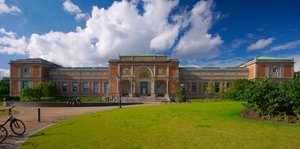
Najsłynniejszym obrazem Anton Dorph jest En bondepige (1854), znajdujący się w Statens Museum for Kunst w Kopenhaga. Wraz z Småpiger som leger i klitterne på vej hjem fra skole (1863) i Oil sketch for the Road to Emmaus (1878) tworzy to zestaw trzech dzieł, które zna każdy. Nasz katalog zawiera 5 dzieł autorstwa Anton Dorph; poniższych 5 to te, na które świat patrzy najczęściej – każde z podaniem roku powstania, muzeum, w którym się znajduje, oraz uzasadnieniem jego znaczenia.

Ranking oparty na naszym wskaźniku popularności, który łączy liczbę wyszukiwań, wizyt oraz zamówień dla każdego dzieła. Aktualizacja: Listopad 2026. Każde arcydzieło na tej stronie można zamówić jako ręcznie malowaną reprodukcję olejną o jakości muzealnej lub jako wysokiej jakości wydruk artystyczny, w wybranym przez Ciebie rozmiarze.

Portret Anton Dorph
Anton Dorph · 1831 – 1914
Urodzony · zmarł
1831 – 1914, Horsens
Dzieła w naszym katalogu
5
Najsłynniejsze
En bondepige (1854)
Najwięcej dzieł w
Statens Museum for Kunst

10 najsłynniejszych obrazów artysty Anton Dorph

En bondepige (1854) autorstwa Anton Dorph
1

En bondepige

1854 · Oil On Canvas · Statens Museum for Kunst, Kopenhaga

A young woman stands within the frame of a rustic doorway, her attention anchored to the delicate movement of needlework. The light enters from the upper right, brushing against the rough texture of a stone wall and the soft folds of her apron. To her side, white garlic hangs in silent clusters, a pale contrast to the deep greens of the climbing rose bush that winds around the entrance. At…

Ręcznie malowana reprodukcja olejowa od $199 28 × 36 cm
Catching Garfish. Early Morning autorstwa Anton Dorph
5

Catching Garfish. Early Morning

· Parlament Danii, Kopenhaga

The painting is a scene from the early morning in calm weather where a fisherman with outstretched arms is about the throw a stone to frighten the fish so that they swim into a drift net floating on the surface of the sea. The fisherman is also suggestive of a religious motif depicting a Christ figure. This was probably also the artist

Ręcznie malowana reprodukcja olejowa od $199 38 × 26 cm Rozmiar zgodny z oryginałem $730 156 × 109 cm Zamów w oryginalnym rozmiarze →

Gdzie można zobaczyć obrazy Anton Dorph

2 muzeów, w których znajduje się najwięcej obrazów z tej strony.

Muzea Miasto Dzieła artysty Anton Dorph Obrazy z tej listy
Statens Museum for Kunst, KopenhagaStatens Museum for Kunst Kopenhaga 4 En bondepige, Småpiger som leger i klitterne på vej hjem fra skole, Oil sketch for the Road to Emmaus
Parlament Danii, KopenhagaParlament Danii Kopenhaga 1 Catching Garfish. Early Morning

Najsłynniejsze obrazy Anton Dorph z każdej dekady

  1. 1850s
    En bondepige (1854) autorstwa Anton Dorph
    1 z 5

    En bondepige

    Wiek 19 – 28 · Statens Museum for Kunst

    A young woman stands within the frame of a rustic doorway, her attention anchored to the delicate movement of needlework. The light enters from the upper right, brushing…

  2. 1860s
  3. 1870s
  4. 1890s

Pytania o obrazy Anton Dorph

Jakie jest najsłynniejsze dzieło Anton Dorph?Pokaż odpowiedź

En bondepige (1854), Statens Museum for Kunst, Kopenhaga. Następnie pojawiają się Småpiger som leger i klitterne på vej hjem fra skole (1863) oraz Oil sketch for the Road to Emmaus (1878).

Ile lat miał Anton Dorph, gdy namalowano En bondepige?Pokaż odpowiedź

23 lat: En bondepige pochodzi z 1854, a Anton Dorph urodził(a) się w 1831.

Ile obrazów stworzył/a Anton Dorph?Pokaż odpowiedź

Nasz katalog obejmuje 5 dzieł autorstwa Anton Dorph, datowanych od 1854 do 1890.

Gdzie znajdują się najsłynniejsze obrazy Anton Dorph?Pokaż odpowiedź

Większość z nich znajduje się w Statens Museum for Kunst (Kopenhaga) i Parlament Danii (Kopenhaga). Powyższa tabela zawiera listę muzeów po kolei.

Jakie są najwcześniejsze i najpóźniejsze słynne obrazy Anton Dorph?Pokaż odpowiedź

Najwcześniejszy na tej stronie to En bondepige (1854), najpóźniejszy Olieskitse til Jesus og Samaritanerinden ved brønden (1890).

Które obrazy Anton Dorph można zobaczyć w Statens Museum for Kunst?Pokaż odpowiedź

En bondepige, Småpiger som leger i klitterne på vej hjem fra skole i Oil sketch for the Road to Emmaus to jedne z 4 dzieł na tej stronie znajdujących się w zbiorach Statens Museum for Kunst, Kopenhaga.

Czy mogę kupić reprodukcję obrazu Anton Dorph?Pokaż odpowiedź

Tak. Każdy obraz na tej stronie można zamówić jako ręcznie malowaną reprodukcję olejną o jakości muzealnej lub jako wysokiej jakości wydruk artystyczny w wybranym przez Ciebie rozmiarze, bezpośrednio ze strony danego dzieła.

O Anton Dorph

The Painter of Fishermen’s Souls

Anton Laurids Johannes Dorph, born on February 15th, 1831, in the Danish town of Horsens, remains one of the most evocative voices in nineteenth-century Scandinavian art. The son of Professor Niels Vinding Dorph and Louise Amalie Bloch, he was destined for a life steeped in culture, yet his heart found its true resonance not in the halls of academia, but amidst the salt spray and rugged simplicity of the Danish coast. Dorph possessed a rare, empathetic vision that allowed him to transcend mere documentation; he did not simply paint scenes of maritime labor, but rather captured the very essence of the human spirit struggling and thriving against the elemental forces of nature.

His artistic journey began in earnest at the Royal Academy of Art in Copenhagen, where he entered in 1845. Under the rigorous guidance of masters such as Christoffer Wilhelm Eckersberg, Dorph mastered the foundational principles of composition and light that would define his career. However, it was his subsequent period of study with Wilhelm Marstrand between 1849 and 1850 that breathed life into his technique. Marstrand introduced him to a more fluid, atmospheric approach, teaching him how to capture the fleeting nuances of light—a skill that became vital when depicting the misty mornings and shifting tides of the Zealand coast. This period of refinement culminated in the Academy's silver medal in 1849, an achievement that signaled his arrival as a significant talent in the Danish art scene.

A Legacy of Light and Devotion

Dorph’s oeuvre is characterized by a profound duality, oscillating between the gritty realism of genre painting and the transcendent solemnity of religious art. He gained widespread acclaim for his series of works depicting the fishermen of Zealand, paintings that resonated deeply with the Danish public. In these works, such as Hornfiskefangst med drivvod, tidlig morgen, one can sense the quiet tension of the sea and the rhythmic toil of the coastal communities. His ability to imbue a simple scene of fishing with a sense of monumental dignity made his work a staple in many Danish homes, where reproductions of his maritime scenes hung as symbols of national identity and pastoral beauty.

Parallel to his fascination with rural life was Dorph’s significant contribution to ecclesiastical art. He became a sought-after creator of altarpieces, utilizing his mastery of light to evoke the divine. Works like Kristus velsigner disciplene demonstrate his ability to marry the human element with the sacred, creating compositions that feel both physically present and spiritually elevated. This religious devotion was not merely a stylistic choice but an extension of his broader interest in the profound, often unseen, emotional depths of his subjects. Whether portraying a weary fisherman or a biblical figure, Dorph sought the underlying truth of the soul.

Recognition and Historical Resonance

The trajectory of Dorph’s career was marked by several prestigious milestones that cemented his reputation among his contemporaries. His portrait of the actor C.N. Rosenkilde in 1856, displayed at the Royal Danish Theatre, served as a pivotal moment of public recognition. Furthermore, his talent for capturing character was honored with the Neuhausen Prize in 1857 following his portrait of the sculptor Evens. These accolades were complemented by his travels to Italy between 1859 and 1861, funded by an Academy stipend, which allowed him to absorb the warmth of Mediterranean light and integrate new, vibrant textures into his repertoire.

Though he may not have reached the international heights of some of his contemporaries, Dorph’s historical significance lies in his role as a chronicler of a vanishing way of life. He captured the transition of Denmark from a traditional, agrarian, and maritime society toward a more modern era. Through his brush, the salt-stained hands of the fisherman and the quiet reverence of the church altar are preserved forever. His work remains a testament to the power of realism to touch upon the eternal, leaving behind a legacy that continues to resonate with anyone moved by the intersection of nature, labor, and faith.