A Life Immersed in Light and Color
Albert Marquet, a name synonymous with the serene beauty of French landscapes, was born in Bordeaux, France, on March 27, 1875. His artistic journey wasn’t one of sudden bursts of brilliance but rather a gradual unfolding—a patient exploration of light, color, and atmosphere that culminated in a uniquely personal style. From his early days experimenting with Fauvist techniques to his later mastery of naturalistic landscapes, Marquet's life was inextricably linked to the visual world around him. He moved to Paris at the tender age of fifteen, enrolling at the École des Arts Décoratifs and subsequently at the prestigious École des Beaux-Arts, where he studied under Gustave Moreau, absorbing the rich symbolism and romanticism of the Symbolist movement. This formative period laid the foundation for his artistic sensibilities, exposing him to a diverse range of influences that would shape his distinctive approach.From Fauve Ferocity to Serene Landscapes
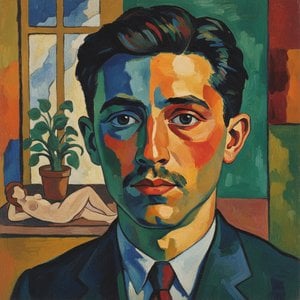
Marquet’s rise as an artist coincided with the vibrant explosion of Fauvism in early 20th-century France. He quickly found himself immersed in this revolutionary movement, exhibiting alongside fellow artists like Henri Matisse, André Derain, and Maurice de Vlaminck at the pivotal 1905 Salon d'Automne. The critics’ derisive label “les fauves” – the wild beasts – reflected both the boldness of their color palettes and their seemingly unrestrained approach to form. While Marquet embraced the vibrant hues of Fauvism, he possessed a remarkable restraint that distinguished his work from some of his contemporaries. Unlike those who reveled in purely chromatic intensity, he maintained a keen eye for drawing and light, subtly modulating colors to create harmonious compositions—a delicate balance between exuberance and control. This inherent restraint hinted at the evolution towards a more naturalistic style that would define much of his later career. Around 1910, Marquet began distancing himself from the purely expressive fervor of Fauvism, increasingly turning his attention to landscapes as his primary subject matter. This shift wasn’t merely a stylistic change; it represented a deeper engagement with the world around him. He embarked on extensive travels throughout Europe and North Africa—from the bustling harbors of Marseilles and Le Havre to the sun-drenched coasts of Spain and Italy, and finally to the exotic landscapes of Morocco. These journeys weren't simply about documenting locations; they were profound explorations of atmosphere, light, and the subtle poetry of everyday life. He meticulously observed how light transformed a scene throughout the day, capturing fleeting moments of beauty with remarkable sensitivity. His travels profoundly influenced his artistic vision, shaping his understanding of color, composition, and the relationship between man and nature.A Master of Atmosphere and Light
Marquet’s true genius lay in his ability to capture the elusive qualities of light and atmosphere—a skill that set him apart from many of his contemporaries. His landscapes are not simply representations of places; they are evocative expressions of mood, sensation, and the transient beauty of the natural world. He masterfully rendered shimmering reflections on water, the hazy glow of sunlight filtering through mist, and the subtle nuances of color that define a particular time of day or season. These weren’t merely visual details; they were integral to his artistic vision—a way of conveying not just what he saw but also *how* it felt to be there. His paintings often evoke a sense of quiet contemplation, inviting the viewer to lose themselves in the beauty and serenity of the landscape. Marquet's technique involved abbreviated brushstrokes and a muted palette—grays, blues, ochres, and subtle greens—allowing him to convey both form and atmosphere with remarkable economy. He wasn’t interested in meticulously detailing every element of his scenes; instead, he focused on capturing the essence of the moment, using color and light to suggest rather than define. This approach was deeply influenced by his admiration for Japanese art, particularly the work of Hokusai, whose use of line and color to evoke atmosphere and emotion resonated profoundly with Marquet’s artistic sensibilities. The artist wasn't interested in merely reproducing what he saw; he sought to capture the feeling of being there.Key Characteristics of Marquet’s Style
- Fauvist Beginnings: Early works demonstrate bold color palettes characteristic of Fauvism, though with more restraint than some contemporaries.
- Emphasis on Light and Atmosphere: A defining feature of his mature work, focusing on capturing the ephemeral qualities of light and its effect on landscapes.
- Muted Palette: A preference for grays, blues, and ochres to convey atmosphere and form with economy.
- Abbreviated Brushstrokes: A technique used to suggest rather than define details, enhancing the sense of movement and light.
- Influence of Japanese Art: A noted appreciation for the calligraphic simplicity and evocative power of line found in Japanese prints.
Legacy and Enduring Influence
Albert Marquet passed away on June 14, 1947, in La Frette-sur-Seine, France, leaving behind a legacy that continues to inspire artists today. His paintings are held in prestigious museums around the world—including the Musée National d'Art Moderne in Paris, the Tate Gallery in London, and numerous private collections—attesting to his enduring significance in the history of modern art. While initially recognized as a key figure in Fauvism, Marquet’s lasting influence lies not just in his stylistic innovations but also in his profound sensitivity to light, color, and the beauty of the natural world. He demonstrated that it was possible to embrace modernity without sacrificing traditional values such as draftsmanship and composition. His work reminds us of the power of observation, the importance of capturing fleeting moments of beauty, and the enduring appeal of a serene and contemplative vision. Marquet’s art remains a testament to the artist's ability to find profound meaning in the everyday—a quiet celebration of light, color, and the wonders of the natural world.Pytania i odpowiedzi
Jak zmieniała się twórczość Albert Marquet na przestrzeni lat?
Kariera Albert Marquet rozwija się etap po etapie na stronie Osiągnięcia artystyczne: jako pozioma oś czasu dzieł, pogrupowanych w rozdziały odpowiadające poszczególnym okresom twórczości.
Jak znaleźć wszystkie dzieła Albert Marquet wykonane w danej technice?
Aby znaleźć wszystkie dzieła artysty Albert Marquet wykonane w danej technice, odwiedź stronę Wszystkie techniki.
Gdzie i w którym roku urodził(a) się Albert Marquet?
Albert Marquet urodził się w Bordeaux w 1875 roku.