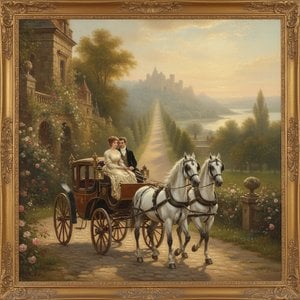
Życie zanurzone w jeździeckiej gracji i świetle Wschodu
Adolf Schreyer, urodzony we Frankfurcie w 1828 roku, był malarzem, którego życie stało się nierozerwalnie związane z potężnym pięknem koni oraz ewokatywnymi krajobrazami Wschodu. Jego artystyczna podróż rozpoczęła się w ustrukturyzowanych murach Instytutu Städel w rodzinnym mieście, a następnie objęła formacyjne studia w Stuttgarcie i Monachium – klasyczne fundamenty, na których zbudował niezwykle charakterystyczny styl. Jednak to podróże Schreyera prawdziwie rozpaliły jego twórczego ducha i zdefiniowały jego trwałe dziedzictwo. Nie był on jedynie obserwatorem tych ziem; on zanurzył się w nich, towarzysząc księciu Maksymilianowi Karlowi von Thurn und Taxis w dalekich wyprawach przez Węgry, Wołoszczyznę, Rosję i Turcję. Nie były to powierzchowne wizyty, lecz głębokie nurkowanie w różnorodne kultury, co pozwoliło Schreyerowi chłonąć atmosferę, światło, a przede wszystkim życie napotkanych ludzi. Ta wczesna ekspozycja zaszczepiła w nim fascynację zarówno majestatem życia jeździeckiego, jak i barwną mozaiką kultur Wschodu – tematami, które dominowały w jego dziele przez kolejne dziesięciolecia.Od szkiców polowych do orientalistycznych wizji
Rozwój artystyczny Schreyera przybrał kluczowy zwrot w 1854 roku, kiedy dokumentował ruchy armii austriackiej na granicy wołoskiej. Doświadczenie to, dalekie od bycia jedynie wojskowym zleceniem, dostarczyło mu bezcennego wglądu w realia konfliktu oraz rolę koni w jego przebiegu. Nie tylko rejestrował wydarzenia; on chwytał energię, chaos i surową potęgę bitwy – umiejętność, która później objawiła się w porywających przedstawieniach szarż artylerii gwardii imperialnej. Jednak jego artystyczne serce biło gdzie indziej. Po tym okresie Schreyer wyruszył w dalsze strony: do Egiptu i Syrii w 1856 roku, a następnie do Algierii w 1861 roku. To właśnie w Afryce Północnej naprawdę odnalazł swoją muzę. Nie pozostał odizolowanym obserwatorem; nauczył się języka arabskiego, jeździł z beduińskimi konnikami i stał się głęboko zintegrowany z ich stylem życia. To intymne zrozumienie pozwoliło mu przedstawiać te kultury z autentycznością rzadko spotykaną w ówczesnym malarstwie orientalistycznym. Jego płótna nie były jedynie egzotycznymi reprezentacjami, lecz szczerymi hołdami dla świata, który zawładnął jego wyobraźnią.Mistrz anatomii koni i atmosferycznego detalu
Warsztat techniczny Schreyera był równie niezwykły, co jego duch przygody. Posiadał on wyjątkowe zrozumienie anatomii konia, zrodzone nie tylko z obserwacji, ale także z osobistego doświadczenia jeźdźca. Jego konie nie były jedynie rekwizytami w scenie; były dynamicznymi, żywymi stworzeniami oddanymi z drobiazgowym detalem i anatomiczną precyzją. Ta biegłość rozciągała się również na jego krajobrazy, które często przesycone są wyczuwalną atmosferą – drżącym upałem pustyni, ogromem rosyjskiej stepu czy dramatycznym niebem nad wołoskimi równinami. Stosował bogatą paletę barw i pewne pociągnięcie pędzla, tworząc obrazy zarówno wizualnie oszałamiające, jak i emocjonalnie poruszające. Jego twórczość wyróżnia się na tle współczesnych mu artystów unikaniem nadmiernie romantyzowanych przedstawień; zamiast tego dążył do realizmu zakorzenionego w autentycznej obserwacji.Uznanie i trwałe dziedzictwo
Przez całą swoją karierę Schreyer otrzymywał znaczne uznanie dla swojego talentu. Regularnie wystawiał w paryskim Salonie, zdobywając medale w latach 1864, 1865, 1867 i 1876 – co stanowi świadectwo szacunku, jakim cieszyły się jego prace w kręgach francuskiej instytucji sztuki. Jego malarstwo trafiło do prestiżowych kolekcji w całej Europie i Ameryce, w tym do Metropolitan Museum of Art w Nowym Jorku, Kunsthalle w Hamburgu oraz Instytutu Städel we Frankfurcie. Co istotne, kilku wybitnych amerykańskich kolekcjonerów – przedstawicieli rodzin takich jak Rockefellerowie, Vanderbiltowie czy Astorowie – z niecierpliwością nabywało jego dzieła, rozpoznając ich unikalną jakość i wartość artystyczną. Dziś obrazy Schreyera wciąż zachwycają widzów swoim połączeniem historycznego detalu, wrażliwości kulturowej i technicznego geniuszu. Pozostaje on znaczącą postacią w sztuce XIX wieku, celebrowaną za zdolność uchwycenia esencji zarówno jeździeckiej gracji, jak i uroku odległych krain. Jego dziedzictwo trwa nie tylko poprzez piękno jego płócien, ale także jako przypomnienie o potędze podróży, obserwacji i prawdziwego zanurzenia w kulturze, które mogą inspirować do osiągnięcia artystycznej wielkości.Pytania i odpowiedzi
Skąd pochodzi Adolf Schreyer?
Adolf Schreyer urodził się w Niemcy.
Czy dostępna jest wirtualna wycieczka 3D po dziełach Adolf Schreyer?
Muzeum 3D artysty Adolf Schreyer to strona prezentująca dzieła artysty w wirtualnej, trójwymiarowej galerii.
Czy mogę przeglądać dzieła Adolf Schreyer według nastroju?
Prace Adolf Schreyer można przeglądać według nastroju na stronie Klimat wnętrza artystki/artysty, która grupuje dzieła według ich przypisanego nastroju.
Jak popularne są dzieła artysty Adolf Schreyer?
Statystyki dotyczące dzieł artysty Adolf Schreyer są dostępne na jego stronie Statystyki.
Gdzie można znaleźć dzieła Adolf Schreyer pogrupowane według nurtów artystycznych?
Nurty, w których tworzył/a Adolf Schreyer, można zobaczyć na stronie Wszystkie nurty artysty, która grupuje dzieła według nurtów.
W jakim mieście i kraju urodził(a) się Adolf Schreyer?
Adolf Schreyer urodził się w Frankfurt nad Menem w Niemcy.
Gdzie i w którym roku urodził(a) się Adolf Schreyer?
Adolf Schreyer urodził się w Frankfurt nad Menem w 1828.