x
Podgląd w skaliPodgląd w skali Podgląd ARPodgląd AR Zamów wydruk Zamów wydrukKup obraz wysokiej rozdzielczości Kup obraz wysokiej rozdzielczości Wyślij jako kartkęWyślij jako kartkę
Szczegóły dziełaSzczegóły dzieła Dodaj do ulubionych Dodaj do ulubionych PobierzPobierz Podobne obiektyPodobne obiekty RTGRTG Pokaz slajdówPokaz slajdów

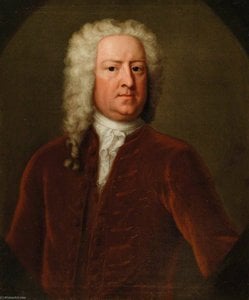
Michał Dahl - Ogólny Filip Honywood

Magnificent portrait by Michael Dahl depicting General Philip Honywood – a masterpiece of Baroque art reflecting aristocratic elegance and capturing the spirit of the English nobility.

Michael Dahl (1659-1743): Szwedzki malarz portretowy z epoki baroku, znany ze swoich wyrafinowanych portretów arystokracji i królewskiej rodziny. Odkryj jego arcydzieła!

Ręcznie malowana reprodukcja olejowa

Ręcznie malowany obraz olejny na płótnie, wykonany na zamówienie przez naszych artystów w wybranym przez Ciebie wymiarze i oprawie. (Zamów wydruk Zamów wydrukKup obraz wysokiej rozdzielczości Kup obraz wysokiej rozdzielczości)

P118B $10
P118H $10
P118W $10
P438Z $10
P508JH $12
P508YH $12
P805H $10
P805Z $10
P919BZ $10
P919G $10
P919XJ $10
P959ZH $10
P968JZ $12
W106C $8
W218G $10
W218JH $8
W218Y $10
W307PJ $10
W316G $10
W316PJ $8
W316Y $10
W398PJ $8
W4111J $10
W500HY $15
W500JH $15
W692G $12
W849H $8
W940BG $15
W953PJ $8

Standardowy rozmiar
na wymiar
CM
INCH

Wybierz spośród naszych standardowych rozmiarów, które zachowują oryginalne proporcje dzieła sztuki.

szerokość
wysokość

Możesz wprowadzić własne wymiary, aby dopasować obraz do konkretnej ramy lub przestrzeni. Jeśli wybrany rozmiar nie będzie odpowiadał proporcjom oryginału, przytniecie dzieło sztuki lub rozszerzymy je o dodatkowe elementy, ręcznie domalowane przez artystę. Przed rozpoczęciem produkcji wyślemy projekt cyfrowy do Twojej akceptacji.
Należy pamiętać, że podgląd na ekranie nie odzwierciedla rzeczywistego przycinania ani rozszerzania obrazu. Tylko projekt dokładnie pokaże ostateczną kompozycję.
Choć oferujemy możliwość zamówienia niestandardowych rozmiarów, zalecamy wybór wymiaru z gotowej listy, aby zachować oryginalne proporcje dzieła.

Przykłady możliwych zmian: Zamień twarz na zdjęcie klienta; Dodaj zwierzę domowe (np. zamień kota na psa); Ukryj wiadomość w tle; Zmień krajobraz lub elementy tła.
Po złożeniu zamówienia zespół WahooArt.com skontaktuje się z klientem drogą mailową w celu uzyskania instrukcji i prześle wizualizację projektu

Dostawa na całym świecie () w ciągu 3–4 tygodni zamiast standardowych 5 tygodni. (30 Sierpień). Bez kompromisów w kwestii jakości.

why_choose_icon
Bezpłatna ekspresowa wysyłka na cały świat
why_choose_icon
Wysokiej jakości płótno lniane
why_choose_icon
Pełne ubezpieczenie przesyłki
why_choose_icon
Gwarancja zwrotu należności celnych i podatków importowych
why_choose_icon
Gwarancja wiernego odwzorowania kolorów
why_choose_icon
Polityka 60-dniowego zwrotu (tylko w przypadku wad)
why_choose_icon
Gwarancja 100% zwrotu kosztów
why_choose_icon
Zniżka przy zamówieniu wielu produktów

Suma całkowita

$ 272

reproduction

Michał Dahl - Ogólny Filip Honywood

Technika reprodukcji

Wymiary reprodukcji

-

Cena całkowita

$ 272

Szybki podgląd

  • Location: Lakeland Arts Trust
  • Subject or theme: Military Officer Portrait
  • Dimensions: 74 x 60 cm
  • Medium: Oil on Canvas
  • Artistic style: Aristocratic grace
  • Year: 1700
  • Notable elements or techniques: Detailed portraiture; Classical style

Quiz o sztuce

Do każdego pytania dotyczy tylko jedna poprawna odpowiedź.

Pytanie 1:
What artistic movement is Michael Dahl’s ‘General Philip Honywood’ primarily associated with?
Pytanie 2:
The painting depicts a man wearing what distinctive attire?
Pytanie 3:
Where was Michael Dahl born?
Pytanie 4:
What is the primary medium used in ‘General Philip Honywood’?
Pytanie 5:
The painting's subject matter reflects a prominent aspect of Dahl's artistic career.

Michael Dahl – A Master of Aristocratic Portraiture

Michael Dahl (1659–1743) stands as a pivotal figure in the history of Swedish Baroque art and, crucially, an influential presence within the English artistic landscape. His journey began in Stockholm, where he received a formative education nurtured by his mother, Catarina Dahl – a woman whose unwavering dedication ensured that her son’s prodigious talent flourished despite considerable familial sacrifice. This early investment established Dahl on a path toward unparalleled artistic mastery, propelling him across Europe and ultimately securing his reputation as one of the foremost portraitists of his era. More than simply capturing likenesses; Dahl sought to embody character and convey emotion, achieving an extraordinary level of realism that distinguishes his work from many contemporaries.

Swedish Foundations & Artistic Training

Dahl’s formative years instilled in him a rigorous artistic discipline rooted in Swedish traditions. While precise details regarding his initial training remain somewhat elusive – sources vary slightly concerning the exact institutions he attended – it is undeniable that he honed his skills under the tutelage of masters who championed anatomical accuracy and expressive rendering. This dedication to technique—particularly evident in his meticulous observation of human anatomy—would become a hallmark of his oeuvre, informing his ability to portray subjects with remarkable depth and nuance. The influence of artists like Martin Hannibal and David Ehrenstrahl undoubtedly shaped Dahl’s artistic sensibilities during this crucial period.

The Venetian Influence & Baroque Style

Dahl's artistic trajectory took an decisive turn when he traveled to Italy – a pilgrimage that irrevocably altered his stylistic approach. Exposure to the vibrant colors, dramatic compositions, and theatrical gestures characteristic of Venetian Baroque profoundly impacted his artistic vision. Artists such as Godfrey Kneller, who had already established themselves in England, served as models for Dahl’s technique and aesthetic sensibilities. This encounter cemented Dahl's commitment to Baroque principles: opulent drapery, dynamic poses, and a masterful use of chiaroscuro—the interplay of light and shadow—became integral components of his artistic vocabulary. His paintings exemplify the grandeur and emotional intensity that defined this influential movement.

Notable Works & English Patronage

Dahl’s fame extended beyond Sweden, attracting the attention of discerning patrons in England who recognized his exceptional talent. He produced portraits of prominent figures including Queen Anne—a commission that solidified his position as a court artist—and Sir William Carew—demonstrating his versatility and ability to adapt to diverse artistic demands. These commissions underscore Dahl’s contribution to English art history, showcasing not only his technical prowess but also his capacity for capturing the essence of aristocratic life and conveying psychological complexity. His works continue to inspire admiration for their elegance and sophistication.

Symbolism & Emotional Resonance

Beyond mere visual representation, Dahl's paintings resonate with profound symbolic meaning. The careful selection of colors, fabrics, and poses served as vehicles for communicating status, virtue, and inner character—elements paramount in the Baroque tradition. Consider, for example, the use of crimson drapery to signify nobility or the gaze of the subject directed outwards, conveying confidence and contemplation. Dahl’s ability to evoke emotion—a hallmark of Baroque art—transformed his portraits into enduring expressions of human experience. He succeeded in capturing not just appearances but also the spirit of his subjects, leaving behind a legacy of artworks celebrated for their artistic merit and psychological insight.

O artyście

A Life Bridging Worlds: The Artistic Journey of Michael Dahl

Michael Dahl, a name resonating with the elegance and refinement of 18th-century portraiture, was a Swedish artist who indelibly marked his presence on the English art scene. Born in Stockholm around 1659 – sources vary slightly between 1658 and 1659 – Dahl’s trajectory wasn't one confined by national borders but rather defined by an ambitious pursuit of artistic mastery that led him across Europe and ultimately established him as a leading portraitist in England. His story is one of familial sacrifice, rigorous training, religious conversion born of opportunity, and the skillful navigation of diverse cultural landscapes. The dedication of his mother, Catarina Dahl, to nurturing his talent laid the foundation for a career that would see him paint royalty, nobility, and leave behind a legacy of exquisite paintings celebrated for their aristocratic grace.

From Swedish Foundations to Italian Influences

Dahl’s artistic education began in Sweden under Martin Hannibal in 1674, who had been brought from Italy by David Klöcker Ehrenstrahl to establish a portrait academy. This initial training provided him with foundational skills before he transitioned to study directly with Ehrenstrahl himself, indicating his promise as a student. However, Dahl’s ambition extended beyond the Swedish capital. In 1682, he embarked on an extensive educational journey across Europe, armed with a passport that allowed travel and a thirst for artistic knowledge. His arrival in London proved pivotal; he came under the tutelage of Robert White, a skilled engraver and painter, assisting him with engraving projects – including a portrait of King Charles XI of Sweden. This experience was crucial, providing practical skills and an introduction to the English art world. Yet, it was his encounter with Godfrey Kneller that truly shaped his understanding of the market. Kneller imparted not only technical expertise but also the pragmatism required to cater to public demand – a stark contrast to Ehrenstrahl’s more court-focused approach. Dahl's travels continued to Paris and then Rome, where he absorbed the Baroque aesthetic that would become characteristic of his mature work.

Rome, Conversion, and Patronage

The exiled Queen Christina of Sweden played a transformative role in Dahl’s career during his time in Rome. Recognizing the importance of access to influential circles and papal patronage, Dahl converted to Roman Catholicism at her urging. This decision opened doors that would otherwise have remained closed, allowing him to paint portraits of the Queen herself and present his work to Pope Innocent XI, who bestowed upon him a gold medal – a testament to his burgeoning talent. The conversion, while perhaps strategically motivated, underscores Dahl’s willingness to adapt and navigate complex social and religious landscapes in pursuit of artistic advancement. It was in Rome that he honed his skills further, absorbing the Baroque aesthetic prevalent during his time and developing a distinctive style characterized by rich colors, meticulous attention to detail in textures, and an overall sense of grandeur.

A Master of English Portraiture

Upon returning to England, Michael Dahl swiftly established himself as a highly sought-after portraitist. He became renowned for his elegant and refined style, capturing not merely the likeness but also the status and personality of his aristocratic sitters. His portraits are distinguished by rich colors, meticulous attention to detail in textures, and an overall sense of grandeur. He painted numerous prominent figures, including Queen Anne, Prince George of Denmark, and a constellation of members from the English nobility. Notable works include striking portraits of Sir William Carew, John Churchill (1st Duke of Marlborough), and Sir Robert Walpole. Perhaps one of his most impressive achievements is the triple portrait of the 2nd Earl of Burlington, the 1st Duke of Kingston upon Hull, and the 3rd Baron Berkeley of Stratton – a masterful display of his skill in group portraiture, showcasing his ability to balance individual characterization with compositional harmony.

Legacy and Historical Significance

Dahl’s artistic style was a compelling synthesis of Swedish, Italian, and English influences. He absorbed the technical foundations from Hannibal and Ehrenstrahl, learned market savvy from Kneller, and benefited immensely from the patronage system he encountered in Rome. His work embodies the Baroque aesthetic prevalent during his time but infused with a uniquely refined sensibility. He influenced subsequent generations of portrait painters with his elegant style and technical proficiency, leaving an enduring mark on English portraiture. Beyond his artistic contributions, Michael Dahl’s success as a Swedish artist flourishing primarily in England highlights the international nature of artistic exchange during the Baroque period. He skillfully navigated different cultural contexts, establishing himself as a leading portraitist whose legacy continues to be admired today. His portraits offer invaluable insights into the lives and appearances of the English aristocracy during the early 18th century, serving as both historical documents and enduring works of art.

Michał Dahl

Michał Dahl

1658 - 1743 , Szwecja

Krótka nota

  • Artistic Movement Or Style: Barokowy
  • Artists Or Movements Influenced By This Artist: ['18-wieczna portrecja']
  • Artists Who Influenced This Artist:
    • Martin Hannibal
    • David Ehrenstrahl
  • Date Of Birth: 1659
  • Date Of Death: 1743
  • Full Name: Michael Dahl
  • Nationality: Szwedzki
  • Notable Artworks:
    • Portret Królowej Anny
    • Sir William Carew
  • Place Of Birth: Stockholm, Szwecja
Odkryj dzieła sztuki uporządkowane według tematów, stylów i cech charakterystycznych.