


Ręcznie malowany obraz olejny na płótnie, wykonany na zamówienie przez naszych artystów w wybranym przez Ciebie wymiarze i oprawie. ( Zamów wydruk Kup obraz wysokiej rozdzielczości)





























Wybierz spośród naszych standardowych rozmiarów, które zachowują oryginalne proporcje dzieła sztuki.

Możesz wprowadzić własne wymiary, aby dopasować obraz do konkretnej ramy lub przestrzeni. Jeśli wybrany rozmiar nie będzie odpowiadał proporcjom oryginału, przytniecie dzieło sztuki lub rozszerzymy je o dodatkowe elementy, ręcznie domalowane przez artystę. Przed rozpoczęciem produkcji wyślemy projekt cyfrowy do Twojej akceptacji.
Należy pamiętać, że podgląd na ekranie nie odzwierciedla rzeczywistego przycinania ani rozszerzania obrazu. Tylko projekt dokładnie pokaże ostateczną kompozycję.
Choć oferujemy możliwość zamówienia niestandardowych rozmiarów, zalecamy wybór wymiaru z gotowej listy, aby zachować oryginalne proporcje dzieła.
Dostawa na całym świecie () w ciągu 3–4 tygodni zamiast standardowych 5 tygodni. (7 Wrzesień). Bez kompromisów w kwestii jakości.


Casa Amatller, Barcelona, Hiszpania
Wymiary reprodukcji
Josep Puig i Cadafalch's Casa Amatller stands as an emblem of Barcelona and the broader Catalan Modernista movement—a testament to Antoni Gaudí’s audacious vision for architecture. Completed between 1898 and 1900, this building isn’t merely a residence; it’s a meticulously crafted dialogue between organic forms and geometric precision, reflecting Gaudí's revolutionary approach to design.
Puig i Cadafalch drew heavily from medieval Catalan Gothic architecture—particularly the soaring arches and ribbed vaults of churches like Sainte Marie del Mar—injecting a sense of grandeur and spiritual aspiration into his project. Simultaneously, he embraced the stylistic currents of Art Nouveau, characterized by flowing lines, floral motifs, and intricate ornamentation. This fusion resulted in a style that is distinctly Modernist, yet retains echoes of Catalan tradition.
The Casa Amatller’s façade is clad in thousands of ceramic tiles—a deliberate choice by Puig i Cadafalch that goes beyond mere aesthetic considerations. These tiles aren't simply decorative; they embody Gaudí’s fascination with natural textures and patterns, mirroring the undulating surfaces of rock formations. The meticulous arrangement of the tiles contributes to a mesmerizing visual effect, creating an illusion of movement and depth—a technique perfected by Gaudí himself.
More than just a beautiful building, Casa Amatller carries profound symbolic significance. It represents Catalonia’s commitment to artistic innovation and its desire to forge a new path forward while honoring its heritage. The asymmetrical design—a deliberate departure from symmetrical classical forms—underscores Gaudí's belief in embracing irregularity as a source of creativity and beauty. Furthermore, the building’s location on Illa de la Discòrdia—amongst other equally daring architectural projects—solidifies Barcelona’s reputation as a crucible of artistic experimentation.
Standing before Casa Amatller evokes a powerful emotional response. The interplay of light and shadow across the textured ceramic tiles creates an atmosphere of contemplative grandeur, inviting viewers to appreciate the subtle nuances of color and form. It’s a building that transcends mere functionality; it communicates a spirit of optimism and artistic fervor—a legacy that continues to inspire architects and designers today.


1867 - 1956 , Spain

Explore the revolutionary world of Cubist portraiture. From Picasso's fragmented forms to Malevich's geometric abstraction, discover how this movement redefined perspective and remains a premier choice for discerning art collectors seeking modernist mastery.
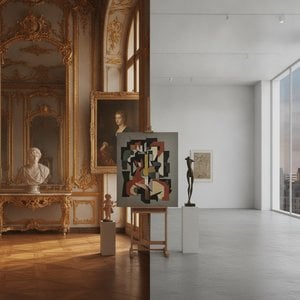
Discover the art of curation with WahooArt. From Baroque grandeur to Modernist brilliance, we offer museum-quality, hand-painted oil reproductions and bespoke commissions for elite collectors and designers seeking timeless elegance and unparalleled craftsmanship.

Embark on a luxury journey through art history with WahooArt. From Renaissance grandeur to Modernist abstraction, discover museum-quality, hand-painted oil reproductions and bespoke commissions curated for the discerning collector and elite interior designer.

 Podgląd w skali
 Wyślij jako kartkę
 Udostępnij
 Szczegóły dzieła

 Pobierz
 Podobne obiekty
 RTG
RTG Pokaz slajdów

 Rozwiń treść







 Opcja ze szkłem jest dostępna wyłącznie w rozmiarach poniżej 110 cm


