A Pastoral Vision: Unveiling Constable’s Salisbury Cathedral from the Bishop’s Grounds
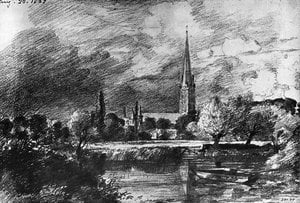
John Constable’s *Salisbury Cathedral from the Bishop’s Grounds* (1825) is more than just a depiction of an architectural marvel; it’s a poignant expression of his deep connection to the English countryside and a masterful example of Romantic landscape painting. This iconic work, currently residing at the Metropolitan Museum of Art in New York, invites viewers into a serene world where faith, nature, and human life harmoniously coexist.
Subject and Composition
The painting presents a captivating view of Salisbury Cathedral, its imposing Gothic spire rising majestically above a lush, verdant landscape. Constable strategically positions the cathedral within the Bishop’s Grounds, framing it with mature trees that soften its architectural rigidity. A gentle stream meanders through the foreground, leading the eye towards the cathedral and creating a sense of depth. Figures populate the scene – individuals strolling leisurely, adding a human scale to the grandeur of the setting. Two horses further animate the composition, suggesting movement and everyday life unfolding within this picturesque vista. Constable’s meticulous attention to detail captures not only the physical appearance of the cathedral but also its relationship with its surroundings—a cornerstone of Romantic artistic philosophy.
Style and Technique
Constable’s style is distinctly Romantic, prioritizing emotional response and an idealized portrayal of nature over strict topographical accuracy. He employed a loose, expressive brushstroke – a hallmark of his technique – to capture the fleeting effects of light and atmosphere. This approach imbues the painting with a sense of immediacy and vitality. The use of oil on canvas allows for rich textures and subtle gradations of color, particularly evident in the foliage and stonework. His masterful handling of light creates a diffused glow, evoking a tranquil and contemplative mood. Unlike earlier landscape painters who sought to represent nature objectively, Constable aimed to convey its emotional essence—a profound influence on subsequent generations of artists.
Historical Context & Commission
Completed in 1825, *Salisbury Cathedral from the Bishop’s Grounds* was commissioned by John Fisher, the Bishop of Salisbury and a close friend of the artist. This commission reflects Constable’s growing recognition and his ability to capture the essence of English identity through landscape. It is one of several paintings Constable created depicting Salisbury Cathedral, each offering a unique perspective on this iconic landmark. Interestingly, the Bishop initially requested a second version with a more cheerful sky, demonstrating the personal connection between artist and patron and highlighting the symbolic importance of light within the work. The painting’s creation coincided with a broader cultural fascination with sublime landscapes—a reaction to industrialization and urbanization that championed the beauty and power of unspoiled wilderness.
Symbolism & Emotional Impact
The cathedral itself symbolizes faith, history, and enduring human achievement. Its placement within the natural landscape suggests a harmonious relationship between humanity and nature – a central theme in Romantic art. The figures scattered throughout the scene represent everyday life and the continuity of tradition. Constable’s choice of an overcast sky, while initially criticized by his patron, adds a layer of emotional complexity, evoking feelings of melancholy, reflection, and the sublime power of nature. Ultimately, *Salisbury Cathedral from the Bishop’s Grounds* transcends mere visual representation; it communicates a profound sense of wonder and contemplation—a testament to Constable's enduring legacy as one of England’s most celebrated landscape painters.
Owning a Piece of History
- A Timeless Aesthetic: This painting offers a classic and sophisticated addition to any interior design scheme.
- Evocative Atmosphere: The serene mood and natural beauty create a calming and inspiring ambiance.
- Investment in Art History: A reproduction allows you to connect with the legacy of one of England’s most celebrated artists.
This artwork is an invitation to experience the beauty and tranquility of Constable's vision, a timeless masterpiece that continues to captivate viewers and collectors alike.
Pytania i odpowiedzi
W którym roku powstało „Salisbury Cathedral od biskupiego ogrodu” autorstwa John Constable?
Powstanie „Salisbury Cathedral od biskupiego ogrodu” autorstwa John Constable datuje się na 1825.
Czy obraz „Salisbury Cathedral od biskupiego ogrodu” autorstwa John Constable można swobodnie reprodukować?
Jeśli chodzi o prawa autorskie, "Salisbury Cathedral od biskupiego ogrodu" znajduje się w stanowi domenę publiczną – autorskie prawa majątkowe wygasły.
Czy dzieło „Salisbury Cathedral od biskupiego ogrodu” autorstwa John Constable, znajdujące się w zbiorach Metropolitan Museum of Art, może być legalnie reprodukowane?
Status praw autorskich do dzieła „Salisbury Cathedral od biskupiego ogrodu” autorstwa John Constable jest jasny: utwór znajduje się w stanowi domenę publiczną – autorskie prawa majątkowe wygasły. Jego obecność w Metropolitan Museum of Art nie zmienia tego stanu rzeczy.
Kto stworzył "Salisbury Cathedral od biskupiego ogrodu"?
Dzieło "Salisbury Cathedral od biskupiego ogrodu" przypisuje się John Constable.
Jaką nasycenie i intensywność prezentuje „Salisbury Cathedral od biskupiego ogrodu” autorstwa John Constable?
Kolory dzieła „Salisbury Cathedral od biskupiego ogrodu” autorstwa John Constable wykazują Subtelne nasycenie kolorów nasycenie przy Monochromatyczność intensywności.
Czy "Salisbury Cathedral od biskupiego ogrodu" to dobry pomysł na prezent?
„Salisbury Cathedral od biskupiego ogrodu” autorstwa John Constable jest polecane jako prezent dla Rocznica. Jako podarunek można wręczyć reprodukcję tego dzieła.
Ile lat miał(a) John Constable, tworząc "Salisbury Cathedral od biskupiego ogrodu" w 1825 roku?
Gdy w 1825 roku powstało dzieło „Salisbury Cathedral od biskupiego ogrodu”, John Constable – urodzony/a w 1776 – miał/a 49 lat.



 Zobacz w skali 1:1
 Przełącz na wersję drukowaną
 Wyślij
 Udostępnij
 Szczegóły
 Przewodnik

 Pobierz plik obrazu
 Podobne obiekty
 RTG
RTG Pokaz slajdów
 Statystyki


 Czytaj więcej






































 Opcja ze szkłem jest dostępna wyłącznie w rozmiarach poniżej 110 cm