William Brassey Hole: Liv og kunst
Tidlig liv og utdanning
- Født: Salisbury, Storbritannia (1846)
- Død: 1917
- William Brassey Holes tidlige år var preget av tragedie. Hans far, legen Richard Hole, gikk bort under koleraepidemien i 1849, da William bare var tre år gammel.
- Etter farens død flyttet familien til Edinburgh i Skottland.
- Han mottok sin utdannelse ved Edinburgh Academy og gjennomførte deretter et femårig læretid som sivilingeniør – en vei han fulgte med motvilje, da han bar på et brennende ønske om å bli kunstner.
Kunstnerisk utvikling og innflytelse
- Tidlige reiser: I 1869 la Hole ut på en seks måneder lang skissetur gjennom Italia, med start i Genova. Denne reisen viste seg å være avgjørende for å befeste hans kunstneriske ambisjoner.
- Viktig innflytelse: I Roma møtte han Keeley Halswelle, som ga ham uvurderlige praktiske råd og kritisk tilbakemelding som oppmuntret ham til å forfølge maleriet profesjonelt.
- Ved hjemkomsten til Edinburgh studerte Hole ved School of Design, og ble i 1873 tatt opp ved modelskolen til Royal Scottish Academy.
- Han ble valgt inn som assosiert medlem av akademiet i 1878 og ble senere fullverdig medlem (RSA).
- Hole ble også medlem av Royal Society of Painters-Etchers (RE) i 1885, etter at han allerede hadde blitt medlem av Royal Scottish Watercolour Society (RSW) i 1884.
Kunstnerisk stil og temaer
- Spesialisering: Hole spesialiserte seg på å male industrielle scener, historiske hendelser og bibelske fortellinger.
- Skotsk fokus: Til tross for sin engelske herkomst, viet han mye av sin energi til å skildre skotske nasjonale motiver og formål.
- Bemerkelsesverdige temaer: Hans arbeid utforsket ofte temaer som industri, historie, tro og livet til vanlige mennesker, særlig fiskerne langs Skottlands vestkyst.
- Han var en mester innen etsing, og kritikere hyllet hans evne til å overføre farge og tekstur til dette mediet.
Store verk og prestasjoner
- Sentrale malerier: Blant hans viktigste malerier finnes «End of the '4list» (1879), «Prince Charlie's Parliament» (1882), «If thou hadst known» (1885) og «The Canterbury Pilgrims» (1889).
- Vestkyst-serien: Hans malerier av fiskere, som «The Night’s Catch» og «The Fill of the Two Boats», høstet stor anerkjennelse.
- Frise for Scottish National Portrait Gallery (1898): Han malte en prosesjonsfrise som skildret over 150 figurer fra Skottlands fortid, noe som regnes som en betydelig bragd innen veggdekorasjon.
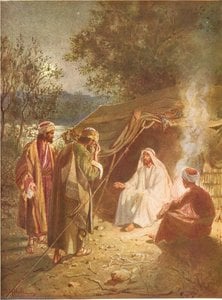
- Bibelske illustrasjoner: Rundt år 1900 reiste han til Palestina for å studere bakgrunner for bibelske malerier. Dette resulterte i 80 akvareller brukt som illustrasjoner i hans bok «The Life of Jesus of Nazareth».
- Han leverte også historiske malerier til Edinburgh City Chambers og kirkelig dekorasjon til andre bygninger.
- Illustratør: Hole illustrerte verk av Robert Louis Stevenson, J.M. Barrie og Robert Burns.
Historisk betydning og ettermæle
- William Brassey Holes arbeid gir verdifull innsikt i det 19. århundrets skotske liv, industri og religiøse overbevisninger.
- Sammensmelting av sjangre: Han lyktes med å forene historisk nøyaktighet med kunstnerisk sensitivitet, og skapte fengslende fortellinger i sine malerier.
- Etsingens mesterskap: Hans etsninger er fortsatt høyt ansett for sin tekniske dyktighet og ekspressive kvalitet.
- Holes bidrag til skotsk kunst og kultur anerkjennes gjennom hans verk som stilles ut i fremtredende institusjoner og samlinger.
Spørsmål og svar
Hvor kan jeg se kunstverkene til William Brassey Hole i kronologisk rekkefølge?
Det finnes en tidslinje over William Brassey Hole sine verk: kunstnerens Tidslinje for kunstverk-side sorterer kunstverkene etter produksjonsdato.
Kan jeg sortere William Brassey Hole sine kunstverk etter farge?
Spektralindeks til William Brassey Hole er en side som organiserer kunstnerens verk etter farge.
Hvor kommer William Brassey Hole fra?
William Brassey Hole ble født i Storbritannia.