99 Famous Late Medieval Kunstnere: The Definitive Ranking
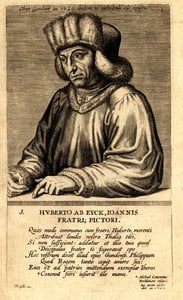
The most famous Late Medieval kunstner is Simone Martini (1284–1344), known for Maestà (Madonna with Angels and Saints) og Kunngjøringen og To Helgener. Next come Andrej Rubljov, Ambrogio Lorenzetti, Pietro Lorenzetti og Hubert Van Eyck. This ranking of the 99 most famous Late Medieval kunstnere runs from Yuan Dynasty (born 1271) to Hubert Van Eyck (born 1366), across 19 countries.
WBy the WahooArt.com curators
How this list is ranked. Artists whose works our catalogue files under Late Medieval, in the order of our fame ranking of artists. Artists without a Wikidata identifier born after 1955 are left out until verified. The Wikipedia figure next to each name is the number of our 32 languages in which Wikipedia has an article on the artist.
ItalienskBorn in SienaInternasjonal gotikkWikipedia in 28/32 languages
Saint Louis of Toulouse Crowning His Brother Robert of Anjou, 1317. Saint Louis of Toulouse Crowning His Brother Robert of Anjou, 1317. Blant hans mest fremtredende verk finner vi: Saint Louis of Toulouse Crowning His Brother Robert of Anjou, 1317.
RussiskBorn in Storfyrstedømmet MoskvaRussisk ikonmalingWikipedia in 31/32 languages
Andrei Rublev (ca. 1360 – ca. 1430) forblir en av de mest gåtefulle og dyptgående innflytelsesrike skikkelsene i den russiske kunsthistorien. I 1405 slo han seg sammen med Teofanes og Prokhor av Gorodets for å dekorere Forkynnelseskatedralen, et vendepunkt i russisk ikonmaling. Treenighetsikonet: Rublevs kanskje mest berømte verk, "Treenigheten" (ca. 1420-1428), er et vitnesbyrd om hans kunstneriske geni.
ItalienskBorn in SienaSieneseskoleWikipedia in 29/32 languages
Ambrogio Lorenzetti, født rundt 1290 i hjertet av Siena, Italia, dukket opp som en sentral skikkelse i overgangen fra middelalderlige kunsttradisjoner til den spirende renessansen. Selv om han for perioder ble skygget av samtidige som Duccio og Simone Martini, og ofte diskutert sammen med sin bror, maleren Pietro Lorenzetti, banet Ambrogio seg en unik vei – preget av en innovativ ånd og et dypt engasjement i verden rundt ham.
ItalienskBorn in SienaTidlig renessanseWikipedia in 27/32 languages
Pietro Lorenzetti (ca. 1280 – 1348) står som en skjellsettende skikkelse i sienesisk kunst, og markerer den dype overgangen fra gotisk formalisme til de spirende humanistiske idealene i den tidlige renessansen. Født i det levende kulturelle landskapet i Siena rundt 1280, utspilte Lorenzettis kunstneriske reise seg midt i en periode med betydelig intellektuell og kunstnerisk transformasjon i Toscana.
Han ble født i Maasik rundt 1385 eller 1390 og var en del av en formidabel kunstnerisk dynasti; hans familiære bånd, inkludert den berømte broren Jan og søsknene Lambert og Margaret, skapte en smeltedigel av kreativitet som for alltid ville endre retningen for europeisk malerkunst.
ItalienskBorn in FirenzeTidlig renessanseWikipedia in 23/32 languages
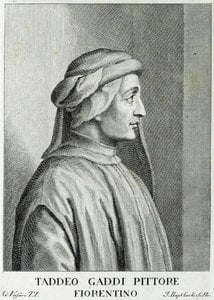
I den livlige, fremvoksende atmosfæren i 1300-tallets Firenze, en periode definert av overgangen fra middelalderen til den tidlige renessansen, trådte Taddeo Gaddi frem som en mester av lys, narrativ og arkitektonisk storhet. Som en av de mest fremtredende elevene til den legendariske Giotto di Bondone, arvet ikke Gaddi bare en stil; han utvidet sin tids visuelle vokabular.
ItalianBorn in FirenzeGothic, Early RenaissanceWikipedia in 20/32 languages
Agnolo Gaddi (født ca. 1350, død 1396 i Firenze) var en italiensk maler som var virksom fra 1369 til 1396. Han var sønn og elev av maleren Taddeo Gaddi, selv en hovedelev hos den florentinske mesteren Giotto di Bondone (1267-1337). Den siste nattverd (1395), utført av Gaddo, er et eksempel på denne blandingen av Giottesque styrke og gotisk raffinement – en scene fylt med både ærbødighet og utsøkt detalj.
GreskBorn in KonstantinopelByzantinsk ikonografiWikipedia in 22/32 languages
Han ble født i Konstantinopel rundt 1340, og selv om han ofte forbindes med Hellas på grunn av sine senere virksomheter, var Theofanes en skjellsettende skikkelse som bygget bro mellom den bysantinske kunstens siste blomstringstid og de fremvoksende tradisjonene i Russland. De politiske omveltningene på slutten av 1300-tallet førte sannsynligvis til at Theofanes forlot Konstantinopel.
ItalienskBorn in VeneziaByzantinsk innflytelse & gotisk kunstWikipedia in 15/32 languages
Paolo Veneziano (ca. 1333 – 1358) står som en monumental skikkelse i den venetianske kunsthistorien, universelt anerkjent som det viktigste venetianske maleriet i det fjortende århundre. Født inn i en kunstnerisk slekt i selve Venezia – hans far var en berømt kunstner selv – sammenfalt Venezianos korte, men briljante karriere med en transformativ periode i europeisk malerkunst.
ItalienskBorn in SienaInternasjonal gotikkWikipedia in 17/32 languages
Lippo Memmi, født rundt 1291 i hjertet av Siena, Italia, representerer et avgjørende punkt i kunsten. Hans tidlige liv var dypt forankret i kunsten; som sønn av Memmo di Filippuccio, selv maler, mottok Lippo sannsynligvis sin første opplæring i farens verksted, og tilegnet seg grunnleggende ferdigheter som senere skulle raffineres under Martinis veiledning. Ansanus (1333), skapt i samarbeid med Simone Martini for Uffizi-galleriet.
ItalienskBorn in ZevioGotisk kunstWikipedia in 20/32 languages
Altichiero da Zevio, født nær den stille byen Zevio i Verona rundt 1330, var ikke bare en kronikør av hellige hendelser, men en pioner innen den venetianske gotiske stilen. Denne forbindelsen, sannsynligvis formet gjennom en intim studie av Giottos elever som Taddeo Gaddi, gjorde det mulig for Altichiero å infundere sine verk med en dyp følelse av volum, tyngde og narrativ klarhet som var revolusjonerende for sin tid.
ItalienskBorn in ArezzoBindeledd mellom Giotto og den sienesiske skolenWikipedia in 16/32 languages
Født inn i en familie av florentinske gullsmeder, var hans egentlige navn Spinello Di Luca Spinelli, men han ble kjent for historien under tilnavnet "Aretino", som betegnet hans tilknytning til Arezzo. I sine tidlige år arbeidet han i de travle verkstedene i Firenze, hvor han bidro til monumentale verk som freskene i kirken Carmine og Santa Maria Novella.
ItalienskBorn in FirenzeTidlig renessanseWikipedia in 17/32 languages
Bernardo Daddi, født i Firenze rundt 1290 og henrettet i 1348, står som en skjellsettende skikkelse i overgangen fra sengotikken til den fremvoksende italienske renessansen. Like bemerkelsesverdig er "Sankt Stefan martyrdom" i Pinacoteca Vaticana – en predella bestående av åtte paneler malt rundt 1345. Utover disse ikoniske verkene kan Daddis innflytelse ses i en rekke arbeider spredt over institusjoner som National Gallery of Art og Walters Art Museum.
Andrea Pisano (ca. 1290 – 1348 Orvieto) står som en monumental skikkelse innen italiensk renessanseskulptur, men hans kunstneriske arv er uadskillelig knyttet til den foregående gotiske epoken og dypt preget av den revolusjonerende innflytelsen fra Giotto di Bondone.
Niccolò Di Tommaso, et navn som klinger lavmælt gjennom de fjortende århundres annaler for italiensk malerkunst, trådte frem i Firenze rundt 1346. Et avgjørende samarbeid med Nardo di Cione rundt år 1370 viste seg å være transformativt. Deres felles innsats i Strozzi-kapellet i Santa Maria Novella representerer et vendepunkt i Niccolòs kunstneriske bane.
KinesiskBorn in WuxiDe fire mestrene fra Yuan-dynastietWikipedia in 15/32 languages
Ni Zan, en berømt kinesisk maler, ble født i 1301 inn i en velstående familie i Wuxi. Til tross for at han ble født etter Kublai Khans død, hadde Ni Zans familie råd til å gi ham en streng konfusiansk utdannelse. Ni Zan regnes som en av de fire mestrene fra Yuan-dynastiet, sammen med huang gongwang, wu zhen, og wang meng.
Andrea Di Cione (Orcagna), kjent i historien under det stemningsfulle navnet Orcagna, står som en av de mest innflytelsesrike skikkelsene i florentinsk kunst i midten av det 14. århundre—en periode preget av et fascinerende samspill mellom gotiske og sen-gotiske kunsttradisjoner. Han ble født rundt 1308 i hjertet av Firenze, og vokste opp i en familie dypt forankret i byens prestisjetunge håndverkskultur.
ItalianBorn in FlorenceGothic-Late GothicWikipedia in 20/32 languages
The name Orcagna—a moniker bestowed upon him by local artisans—encompasses a remarkable figure in the history of Italian art: Andrea di Cione, a painter, sculptor, architect, and master craftsman who dominated the artistic landscape of Florence during the latter half of the 14th century. He bridged the gap between the Gothic traditions inherited from his predecessors and the emerging Renaissance style, paving the way for future generations of artists.
Født Giovanni di Jacopo di Guido da Caversaccio i Lombardia rundt 1346, utfoldet hans kunstneriske reise primært innenfor det pulserende kulturelle landskapet i Firenze under en tid med enorme endringer og innovasjon.
ChineseBorn in HuzhouYuan Dynasty Landscape PaintingWikipedia in 14/32 languages
Unlike the more restrained approaches of his contemporaries, Wang Meng’s paintings are characterized by an extraordinary density and dynamism. His brushstrokes—often described as “ropy” or “layered”—were meticulously applied in thick, overlapping patterns, creating a palpable sense of texture and movement. Wang Meng’s style was profoundly influenced by the landscape painters who preceded him – Wang Wei, Dong Yuan, and Juran – but he developed his own distinctive voice through his innovative use of brushwork and composition.
Yet, within this tradition flourished an artist of startling intensity and dramatic vision – Nicolas Bataille (c. 1330-1405). He was born around 1330 in Paris, likely as the son of an architect, a profession that may have instilled within him an appreciation for structure and design. The depiction of Babylon’s destruction reflects the prevailing fears about political instability and social decay in 14th-century France.
ItalienskBorn in VeneziaBysantinsk kunstWikipedia in 11/32 languages
Året 1336 runger gjennom Italiens kunstneriske landskap, uatskillelig knyttet til en skikkelse innhyllet i et fascinerende mysterium – Mesteren fra 1336. Mer nøyaktig kjent som Giovanni Lipini, gir dette kunstnernavnet, hentet fra et mirakuløst freskomaleri av Jomfru Maria i Santa Maria delle Grazie i Pistoia, et forlokkende glimt inn i hans opprinnelse og varige innflytelse.
However, unlike Duccio’s often exuberant and emotionally charged compositions, Segna’s paintings possess a more restrained elegance, characterized by a sense of solemnity and a focus on formal clarity. It’s believed that Segna spent time in Florence during this period, absorbing influences from the burgeoning Florentine school, which was beginning to experiment with linear perspective and naturalistic representation. Segna's artistic journey is believed to have begun under the tutelage of his uncle, Duccio di Buoninsegna, a towering figure in Sienese painting.
ItalianBorn in Colle di Val d'ElsaLate GothicWikipedia in 18/32 languages
While many painters of his era are remembered only by the fragments of their altarpieces, Cennino Cennini achieved immortality through the written word.
ItalienskBorn in SienaSienese maleriWikipedia in 13/32 languages
Ugolino di Nerio, et navn som i stor grad er fraværende fra de etablerte kunsthistoriske fortellingene, står som en skjellsettende skikkelse i det blomstrende kunstlandskapet i Siena og Firenze på 1320-tallet. Han ble født rundt 1280 inn i en familie av malere – hans far, Guido, og søsknene Muccio og Ugolino – og trådte frem som en uavhengig mester.
ItalianBorn in SienaEarly RenaissanceWikipedia in 13/32 languages
Architectural Precision: The use of structured backgrounds to ground holy figures within a tangible, albeit idealized, reality. In works such as his Virgin and Child with Saints, one can witness the evolution of his hand—moving from the more rigid, ornamental patterns of the late Gothic style toward a more robust and naturalistic approach. The historical significance of Taddeo di Bartolo lies in his role as a custodian of Sienese identity during a period of immense change.
Despite the paucity of surviving paintings attributed to Lippo di Benivieni, his influence is palpable in several significant frescoes adorning churches throughout Siena and San Gimignano. Madonna and Child Panel Painting: A monochrome panel depicting Mary holding the infant Jesus exemplifies Lippo’s mastery of technique—particularly his ability to achieve remarkable tonal gradation using tempera on wood. Furthermore, his work serves as an exemplar of early Quattrocento painting—a transitional phase between Gothic formalism and Renaissance naturalism —demonstrating Lippo’s willingness to embrace new stylistic approaches while retaining core aesthetic principles.
Like Wang Meng, Zhao Yuan embraced a dense, complex compositional structure characterized by layered mountains, gnarled trees, and meticulously rendered details. Beyond Wang Meng, echoes of earlier masters like Fan Kuan (c. 937-1020), renowned for his monumental landscapes and powerful brushwork, can also be detected in Zhao Yuan’s treatment of rock formations and atmospheric effects. His most significant debt is undoubtedly to Wang Meng (1308-1383), one of the last great masters of the Yuan dynasty.
ItalianBorn in SienaSienese SchoolWikipedia in 12/32 languages
Working alongside luminaries such as Luca di Tommè, he contributed to significant communal works, including an altarpiece for the shoemaker's guild in the cathedral of Siena, marking his first documented presence in the annals of art history.
This preference for light is not merely aesthetic; it reflects a deeper philosophical shift – a move towards celebrating the beauty and dignity of human life. He skillfully employed perspective, though not with the mathematically precise rigor of later Renaissance artists, creating a sense of depth and spatial awareness through subtle variations in scale and detail. He is considered a crucial link between the late Gothic style of his predecessors and the groundbreaking innovations of artists like Masaccio and Botticelli.
BelgianBorn in YpresEarly Netherlandish PaintingWikipedia in 15/32 languages
By integrating the sculptural solidity learned from masters like Claus Sluter with the fluid grace of the International Gothic style, Broederlam helped forge a new visual vocabulary. As the favored painter to powerful patrons such as Louis de Mâle, Count of Flanders, and later the formidable Philip the Bold, Duke of Burgundy, his work became a visual manifestation of ducal prestige.
ItalienskBorn in FlorenseFlorentinsk skoleWikipedia in 8/32 languages
Lorenzo di Bicci, født rundt 1373 i Firenze, står som en sentral skikkelse innen den spirende florentinske malerstilen i andre halvdel av det fjortende og tidligst femtende århundre. Selv om biografiske detaljer er knappe – identiteten til faren hans er innhyllet i uklarhet – fastslår akademisk konsensus solidt Lorenzo's lærlingtid under Jacopo di Cione og Andrea di Cione, kunstnere hvis stilistiske innovasjoner dypt formet hans kunstneriske bane.
ItalianBorn in FlorenceVenetian RenaissanceWikipedia in 12/32 languages
The enduring impact of Gherardo di Jacopo Starnina can be summarized through several key artistic contributions: Stylistic Synthesis: The seamless blending of Florentine emotional realism with Venetian decorative splendor.
Emerging during the turbulent and transformative reign of Philip IV, Pucelle rose from the workshops of Paris to become the preeminent manuscript illuminator of his generation.
ItalienskBorn in FirenzeToscan maleriWikipedia in 12/32 languages
Midten av det fjortende århundre i Firenze var vitne til en blomstring av kunstnerisk talent, og blant de mest betydningsfulle skikkelsene sto Andrea Orcagna – en maler, skulptør, arkitekt og administrator hvis mangefasetterte karriere etterlot et uutslettelig preg på byens visuelle landskap.
ItalianBorn in Piove di SaccoEarly Renaissance; Venetian painting; Gothic artWikipedia in 12/32 languages
Guariento di Arpo (c. 1310–1370) stands as a monumental figure of the Trecento, acting as the essential bridge between the grounded, volumetric realism of Florence and the ethereal, ornamental splendor of the Venetian Gothic tradition.
Claus Sluter (ca. 1350–1406) står som en av sin tids mest innflytelsesrike billedhuggere, og markerer et avgjørende vendepunkt mellom gotiske og renessansepregede kunsttradisjoner i Nord-Europa. Inskripsjonen av hans navn i Brüssels steinhuggarlaug rundt 1379/1380 bekrefter hans profesjonelle virke og understreker håndverkets betydning innen middelalderens kunstkultur.
Kokan Shiren (虎関師錬; 9 May 1278 – 11 August 1347), a pivotal figure in 14th-century Japan, stands as a unique confluence of artistic expression, philosophical depth, and historical scholarship.
ItalianBorn in FlorenceGothicWikipedia in 7/32 languages
His commitment to procuring marble for the cathedral underscored his understanding of artistic grandeur and civic responsibility. Furthermore, he continued to secure patronage from influential families like the Albizzi, ensuring that Florentine art would endure as a symbol of prestige and cultural achievement. The dispersed predella depicting scenes from Saint Peter’s life – a collaborative effort with Niccolò di Pietro Gerini – remains a poignant reminder of Jacopo's artistic legacy and the enduring power of Florentine Gothic art.
ItalianBorn in SienaSienese SchoolWikipedia in 13/32 languages
I hjertet av det fjortende århundrets Toscana, en periode definert av overgangen fra den eteriske nåden i gotikken til renessansens spirende humanisme, trådte Bartolo di Fredi frem som en mester av lys og narrativ. Han ble født i Siena rundt 1330, og han var mer enn bare en maler; han var en bro mellom to verdener.
GermanBorn in DortmundInternational Gothic soft styleWikipedia in 13/32 languages
In the twilight of the fourteenth century, a transformative artistic energy began to pulse through the prosperous Hanseatic city of Dortmund, finding its most profound expression in the hands of Conrad von Soest. Completed around 1420, this monumental triptych stands as a pinnacle of the International Gothic style.
Tuthmosis’s mastery lay not only in capturing likeness but also in skillfully manipulating stone. He primarily worked with fine-grained limestone, a material readily available in the quarries surrounding Amarna. The Amarna period, largely due to the work of artists like Tuthmosis, marked a significant departure from traditional artistic conventions, paving the way for subsequent developments in sculpture and portraiture.
ItalianBorn in ValmoreaItalian GothicWikipedia in 13/32 languages
In the bustling streets of Florence, where the air was thick with the scent of fresh pigment and the echoes of a changing era, a painter named Giovanni di Jacopo di Guido da Caversaccio began to make his mark. Hailing from Lombardy, he arrived in Tuscany as a man seeking his fortune, appearing in the city's records as Johannes Jacobi de Commo.
GermanBorn in MindenInternational GothicWikipedia in 13/32 languages
It is believed that Bertram was influenced by both French and Netherlandish artistic trends prevalent during his time. Despite these influences, Bertram maintained a uniquely Northern German sensibility, imbuing his work with a sense of regional identity. While sharing similarities with other artists of the period, such as Master Francke (another prominent Hamburg painter), Bertram's work possesses a distinct character—a subtle restraint in emotional expression compared to Francke’s more overtly dramatic approach.
Giorgio Vasari, the celebrated Renaissance art historian, initially placed Agostino within the orbit of Giovanni Pisano’s workshop, suggesting a formative apprenticeship under this master sculptor. However, modern scholarship proposes a more nuanced lineage, positing that his early training likely occurred with Camaino di Crescentino, father to Tino di Camaino, another influential figure in Sienese sculpture. His exact date of death remains unknown, though records indicate he was no longer living as of June 27, 1347—a period marked by the devastating impact of the Black Death.
He employed elaborate rituals, symbolic imagery, and monumental architecture – like Kitayama-dono – to portray himself as a universal monarch or dharma king, mirroring rulers in Southeast Asia. His posthumous name was Rokuon'in (鹿苑院), further cementing his place in Japanese history. Late in his career, Yoshimitsu increasingly sought to legitimize his power through the lens of Buddhist kingship.
NetherlandishBorn in ValenciennesPucellian revival
In 1386, Beaunever accepted the prestigious role of superintendent of all painting and sculpture for the Duke, a position that placed him at the heart of one of Europe's most vibrant cultural epicenters. His technical achievements are best observed in the following areas: Illuminated Manuscripts: In works such as the Psalter of Jean de Berry and his depictions of figures like King David, Beauneveu demonstrated an extraordinary ability to use light and shadow to create a sense of three-dimensional volume on parchment.
Technical Innovation: Early mastery of light, shadow, and the illusion of volume. In the annals of Italian art, Jacopo remains a luminous figure, a painter who captured the very essence of Florentine devotion. The origins of his artistry are deeply rooted in the Florentine milieu, likely shaped by the influential circle surrounding the Master of St.
JapanskBorn in IseZen-buddhismeWikipedia in 12/32 languages
Musō Soseki, en fremtredende skikkelse innen japansk kunst og spiritualitet, ble født i 1275 og gikk bort den 20. oktober 1351. For et glimt av stilen han inspirerte, kan man utforske verk som Li Yanshans "landskap i stilen til Zhan Jingfeng", som, selv om det ikke er direkte tilskrevet Musō Soseki, reflekterer den varige innflytelsen fra hans kunstneriske tilnærming.
ItalianBorn in PisaGothic ArtWikipedia in 11/32 languages
Orcagna's Legacy: Andrea Orcagna’s influence is undeniable in Traini’s compositional strategies and expressive dynamism. Orcagna championed the concept of “naturalis dispositio,” prioritizing spatial realism to communicate theological ideas effectively—a principle that Traini wholeheartedly embraced.
ItalianBorn in BolognaInternational GothicWikipedia in 12/32 languages
His legacy is found in: The Synthesis of Styles: The seamless integration of Riminese color palettes with Giottesque structural depth. As we look back upon his prolific career, Vitale remains a cornerstone of Italian art, a painter who captured the transition from the medieval soul to the Renaissance mind with unparalleled grace and spiritual power. His works, scattered across prestigious locations such as Pomposa Abbey and Udine Cathedral, serve as windows into a world where the divine and the earthly were intimately entwined.
Zain al-Din’s prominence grew during a period of significant change in India, as the power of the Mughal Empire waned and British influence expanded. This era saw the emergence of what is now known as the “Company style” of painting—a hybrid aesthetic favored by British officials and collectors who sought realistic depictions of Indian life, flora, and fauna. The Ashmolean Museum in Oxford holds several examples of his work, including exquisite depictions of mountain-rats, hanging bats, parrots, and storks—each painting a miniature world unto itself.
Born around 1357 and passing away in 1406, his life coincided with a period of significant artistic and cultural change across Europe, yet he maintained a distinctly Catalan sensibility throughout his career. The city was a vibrant hub for trade and artistic exchange, exposed to influences from Italy, France, and Flanders.
MeksikanskBorn in TenochtitlanMesoamerikansk kunst
De kunstneriske tradisjonene til aztekene sprang ut i det tidlige 14. århundre i Tenochtitlan, hjertet av Aztekriket, og var dypt forankret i arven fra tidligere mesoamerikanske sivilisasjoner. Olmekerne, med sine kolossale hoder og sofistikerte kalendersystemer, Teotihuacan-folket, kjent for sine massive pyramider og byplanlegging, og Toltekerne, mestere innen metallarbeid og skulptur, bidro alle til den rike kunstneriske veven som aztekene arvet.
Some of his most notable achievements include: Teaching on Enlightenment: A masterpiece written in running script that is currently held within the prestigious collection of the Tokyo National Museum in Japan, recognized as a National Treasure.
Born into a lineage of painters, likely the son of Martino and brother to Marco, Paolo’s very existence was woven into the fabric of Venetian artistic tradition. His formative years were steeped in the luminous, spiritual grandeur of Byzantine art, a tradition brought to the Venetian lagoons through trade and deep ecclesiastical ties to Constantinople. His ability to blend the following elements created a style that was uniquely "Venetian": Luminous Color Palettes: Drawing from the Byzantine tradition to create depth and spiritual radiance.
Serving as a supervising architect and decorator, Matteo played an instrumental role in shaping this monumental edifice, which stands as a testament to Florentine civic pride and the intellectual aspirations of the merchant class.
Through his relocation of the capital, his naval voyages, and his massive infrastructure projects like the reconstruction of the Grand Canal, Zhu Di ensured that the House of Zhu would be etched into the very foundation of Chinese history.
CatalanBorn in Avinyonet del PenedèsGothic painting
Born around 1285 in the small town of Avinyonet del Penedès, his early life remains shrouded in some mystery, yet the documented evidence reveals a trajectory marked by both diligent craftsmanship and royal favor. His ability to synthesize diverse stylistic elements—French elegance, Sienese refinement, and Giottesque drama—resulted in a visual language that was both innovative and deeply rooted in its cultural context.
ItalianBorn in ModenaLate GothicWikipedia in 15/32 languages
Tommaso Barisini, commonly known as Tommaso da Modena and sometimes referred to as Tomaso Baffini (c. 1325 – 1379), stands as one of the most prominent figures in Northern Italian painting during the mid-14th century—a period marked by burgeoning artistic innovation and profound spiritual reflection. His unwavering commitment to naturalistic representation—coupled with his masterful command of perspective—established a precedent for Renaissance artists seeking to emulate the grandeur and clarity of classical art forms.
ItalianBorn in BolognaRenaissance, Proto-Renaissance
D'Avanzi’s style occupies a fascinating position within the transition from Gothic art to the early Renaissance. He wasn’t alone in this pursuit; Altichiero da Zevio, with whom he frequently collaborated, shared similar artistic concerns.
ItalienskBorn in San Quirico d'OrciaNaturalisme, proto-renessanseWikipedia in 10/32 languages
Pietro Lorenzetti, født rundt 1280 og tragisk nok død i 1348 under den ødeleggende svartedauden, forblir en skjellsettende skikkelse i det italienske maleriets evolusjon. Hans liv, selv om det var tragisk kort, var vitne til et dramatisk skifte i kunstneriske sanseligheter i Siena, drevet frem av hans samarbeid med sin yngre bror, Ambrogio Lorenzetti, og deres engasjement i de innovative teknikkene til Giotto og Giovanni Pisano.
ItalianBorn in FlorenceEarly Italian painterWikipedia in 14/32 languages
His output includes a variety of formats, from devotional panels to architectural elements: Frescoes: The narrative cycles in the San Silvestro chapel, Santa Croce, Florence. Sculpture and Architecture: A marble statue located on the Florentine campanile and various works attributed to his hand in the Florentine school.
Yuan dynastyBorn in Jiashan CountyWikipedia in 12/32 languages
The brush of Wu Zhen moved with a particular intent, seeking to capture the essence of the natural world through landscape paintings and the delicate forms of bamboo. He achieved a rare unity known as the Three Perfections, where the boundaries between different disciplines began to dissolve. His influence reached far beyond his own lifetime, as he was recognized as one of the Four Yuan Masters, alongside Huang Gongwang, Ni Zan, and Wang Meng.
FlorentineBorn in FlorenceLater GothicWikipedia in 10/32 languages
His later Gothic style reflects this integration of Sienese elements. The tension between these traditions defines his artistic output: The foundational weight of Giotto’s legacy.
ItalianBorn in FlorenceEarly RenaissanceWikipedia in 12/32 languages
Menabuoi’s distinctive style transcends simple categorization, reflecting a complex interplay between Byzantine iconography and Florentine Proto-Renaissance aesthetics. Unlike many of his contemporaries who embraced the burgeoning realism championed by artists like Altichiero and Jacopo d'Avanzi, Menabuoi prioritized conveying spiritual emotion over meticulous anatomical accuracy—a hallmark of Giotto’s artistic vision. Giotto's Legacy: As a student of Giotto, Menabuoi absorbed Giotto’s expressive technique—characterized by elongated figures and emotionally charged gestures—establishing a crucial link between Florentine artistic tradition and Byzantine influences.
FrenchBorn in HesdinInternational GothicWikipedia in 13/32 languages
Grandes Heures: Another important illuminated manuscript commissioned by the Duke of Berry. Petites Heures: A smaller-scale book of hours, also demonstrating Jacquemart’s skill in illumination. Historical Significance: Jacquemart de Hesdin played a vital role in the artistic renewal during the late 14th and early 15th centuries.
In the heart of fourteenth-century Italy, amidst the spiritual awakening of the early Renaissance, the name Matteo Giovanetti emerged as a beacon of devotional mastery. His life’s work serves as a vital bridge between the rigid, symbolic traditions of the Gothic period and the burgeoning naturalism that would soon define the Italian Renaissance.
Unlike the flamboyant styles prevalent during Nanbokuchō, Gukyoku's approach prioritized conveying spiritual essence over visual spectacle. He favored ink wash techniques (sumi-e), utilizing varying shades of black to create textured surfaces that mirrored the natural world—particularly landscapes reminiscent of Mount Yoshino, a sacred site venerated by Zen monks. His meticulous technique and contemplative aesthetic established precedents for subsequent generations of Zen painters, emphasizing simplicity, directness, and an unwavering focus on capturing the essence of Buddhist thought.
He possessed a rare, intuitive grasp of how to marry the ancient, ethereal majesty of Byzantine iconography with the burgeoning humanism and spatial curiosity emerging from Florence. This stylistic evolution is perhaps most evident in his ability to balance: The Byzantine influence, which provided the sacred, unmoving grandeur of the divine. Whether through the intimate grace of his Madonna and Child compositions or the solemnity of his depictions of saints, Bulgarini’s work captures the spiritual heartbeat of an era.
Hsieh Ho’s approach to capturing atmospheric effects through subtle shifts in hue and tone resonated deeply with Tettō's own desire to convey emotion and spiritual depth within his works. His compositions frequently featured sweeping vistas and dynamic brushstrokes, reflecting both the natural world and the internal landscapes of Zen meditation. His bold use of color and expressive brushwork served as an inspiration for subsequent generations of artists, including those who followed in the footsteps of the Ōtōkan school.
ItalianBorn in ModenaByzantine-influenced Lombard PaintingWikipedia in 12/32 languages
Born around 1328 in Modena (Emilia), he emerged from obscurity to become arguably the first Lombard painter of considerable renown, leaving behind an impressive oeuvre that testifies to his unwavering devotion to this venerable artistic heritage. His activity spanned Lombardy, Piedmont, and Pisa in Tuscany, establishing him as a pivotal artist within the burgeoning cultural dynamism of the era.
German-BohemianBorn in Schwaebisch GuemundLate Gothic
In the heart of the Late Middle Ages, a period defined by soaring spires and profound devotion, Peter Parler emerged as one of the most influential architects and sculptors of his era. Known variously as Peter von Gemünd or Petr Parléř, his identity was inextricably linked to the Parler family, a lineage of craftsmen whose influence stretched across much of Central Europe.
Bonanat Descoll I De Santcliment var ikke bare en dyktig militær leder, men også en fremragende kunstner. Noen av hans mest fremtredende verk inkluderer utnevnelsen av Romeu Desplà som administrator og notar for arbeidet med galeiene ved Drassanes (skipsverftet) i Barcelona, som kan finnes i det maritime museum i Barcelona.
Understanding Yuan art requires delving into its complex context: the ambition of Kublai Khan to unite Eurasia under Mongol rule, coupled with a burgeoning intellectual elite eager to embrace new ideas and traditions. He actively supported artists like Wang Meng and Zhao Yuan, commissioning monumental landscapes and intricate calligraphy scrolls that celebrated imperial grandeur and Confucian ideals. The Yuan Dynasty (1271–1368), established by Kublai Khan, represents a singular moment in Chinese history – the first time a foreign power successfully ruled over all of China.
He is often credited with contributions to the equestrian statue of Cangrande della Scala, a powerful symbol of Scaliger authority, and even implicated in the design of Mastino II della Scala’s tomb within the Arche scaligere complex.
The Virgin of the Annunciation, found in various iterations across several museums, exemplifies his mature style. The composition typically depicts the Angel Gabriel kneeling before Mary, delivering the news of Christ’s birth. Yet, unlike Simone’s increasingly internationalized aesthetic, Domenico remained firmly rooted in the Sienese tradition.
Siena’s artistic climate was characterized by a distinctive emphasis on grace, refined detail, and narrative clarity – qualities that would become hallmarks of Agnolo’s own work. The influence of Nicola Pisano and his son Giovanni, prominent sculptors active in Pisa and Florence, cannot be discounted, as their innovations in depicting classical forms and emotional expression were widely admired throughout Tuscany. He frequently collaborated with painters, as seen in the Monument to Tarlati, highlighting the interconnectedness of artistic disciplines during the 14th century.
However, he also absorbed influences from Northern European sculpture traditions, particularly those emanating from France and Germany, demonstrating a cosmopolitan outlook that characterized the artistic landscape of his era.
Born in Arezzo, Italy, in 1304 as Francesco Patriarca – later adopting the name Francesco Petrarca – this artist was more than just a painter; he was a pivotal figure in the burgeoning Italian Renaissance. His family, prominent Florentine notaries, faced exile due to the turbulent power struggles between the White and Black Guelphs. Furthermore, Petracco's connection to the exiled poet Dante Alighieri – both sharing political exile from Florence – undoubtedly shaped his artistic outlook.
A significant partnership was formed with Agnolo di Ventura, culminating in their joint execution of the cenotaph of Guido Tarlati in the Cathedral of Arezzo (signed and dated 1330). Vasari also mentions collaborations on commissions from the commune of Siena, including the Porta Romana and the iconic Torre del Mangia.
Yūbai’s disciples, including Akamatsu Norimura and Akamatsu Norisuke, diligently upheld his legacy—propagating Zen philosophy and artistic traditions throughout Japan.
Sultan Al-Malik Al-Zahir Abu Sa’id Barquq, a name resonating through the annals of Mamluk Egypt, stands as a pivotal figure in the 14th-century Islamic world.
Born amidst the rolling landscapes of Certaldo in 1313, Giovanni Boccaccio emerged as a vital force in the cultural landscape of the fourteenth century. As one of the legendary "Three Crowns" of Italian literature—standing alongside the giants Dante Alighieri and Petrarch—his life served as a bridge between the medieval world and the dawning light of the Renaissance.
While the Nanboku-chō period was defined by conflict between rival courts, Kōgon’s focus on Buddhist art provided a sense of cultural continuity and spiritual stability. He successfully utilized the medium of painting to assert a form of authority that was not dependent on military might, but on moral and religious prestige. Emperor Kōgon (1313–1364) was not merely a sovereign navigating a period of profound instability; he was a visionary patron whose devotion to Buddhist iconography helped reshape the aesthetic soul of Northern Japan.
Early Life & Artistic Formation: Little biographical detail survives concerning Genkō’s formative years; he emerged from obscurity as a student of Zen at Nara Temple, establishing a foundation for his lifelong devotion to the Dharma.
Through these spiritual windows, she glimpsed a God characterized not by distant judgment, but by an overwhelming, compassionate intimacy. She famously portrayed the divine as a nurturing force, a Father whose love sustains all of creation.
ItalianBorn in FlorenceRenaissance PaintingWikipedia in 10/32 languages
The significance of Nardo di Cione lies in his ability to bridge the gap between the rigid traditions of the medieval period and the burgeoning humanism of the Renaissance. To study Nardo is to witness the evolution of the Florentine spirit: Technical Versatility: The seamless integration of sculptural depth with painterly fluidity. His early training under Maestro Piero Bargellini, a distinguished sculptor and painter, provided him with a unique dual perspective.
Each artifact—from the delicate ebony rods inscribed with sacred hieroglyphs to the iconic, shimmering golden mask —embodies an idealized vision of royal divinity.
One of his most celebrated achievements, the Coronation of the Virgin, bears a proud inscription dating the work to March 1385, serving as a permanent testament to his hand. Beyond the cathedral walls, Serafini’s influence extended into other significant religious sites, such as the Church of San Francesco in Mantua. In the twilight of the fourteenth century, amidst the architectural grandeur of Northern Italy, the name Serafino Serafini emerged as a vital, if enigmatic, force in the evolution of late medieval painting.
Beyond the physical permanence of his marble reliefs, Antonio Baboccio da Piperno’s true significance lies in the lineage of talent he helped cultivate. In the twilight of the Middle Ages, as the rigid structures of the Gothic era began to soften under the burgeoning light of the Renaissance, there emerged a master whose hands shaped the very identity of Neapolitan grandeur.
He was deeply influenced by Giotto di Bondone, whose revolutionary approach to depicting human emotion and space began to permeate the region. Giotto's innovations—a move away from the stylized, flattened forms of Byzantine art towards greater naturalism and psychological depth —were skillfully absorbed and adapted by his Pistoian disciple. While his name—a label bestowed upon him due to a fresco depicting the miracle of the Virgin Mary in Santa Maria delle Grazie, Pistoia—offers little insight into his personal identity, his paintings speak volumes about the artistic currents shaping Tuscany at the time.