Fernando Botero, 1932 – 2023

Fernando Botero: The 100 Most Famous Paintings

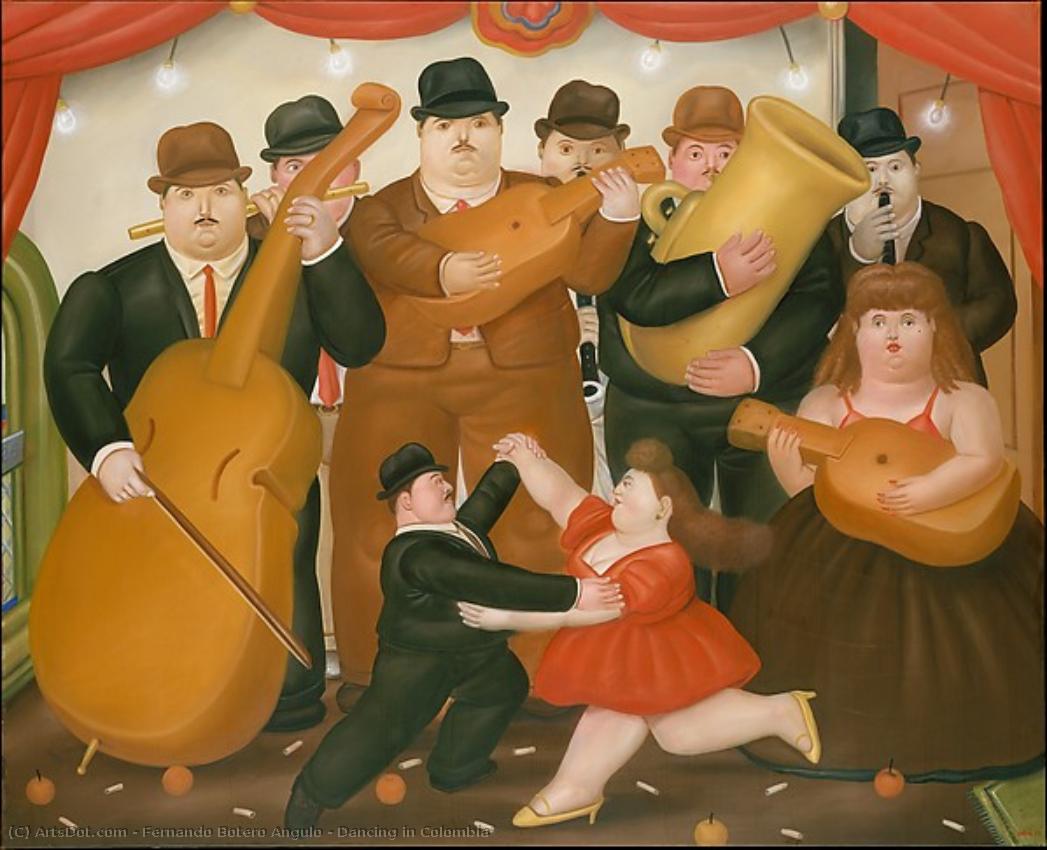
The President and First Lady is the most famous painting by Fernando Botero. la collectionneuse and Dancing in Colombia (1980) are the next two works the world knows best. From the 279 works of Fernando Botero in our catalogue, here are the 100 that collectors and museum visitors look at most, with the year, the museum and the story of each.

Ranked by our popularity score, which combines the searches, visits and orders for each work. Updated October 2026.

Portrait of Fernando Botero
Fernando Botero · 1932 – 2023
Born · died
1932 – 2023, Medellín
Movement
Boterismo
Works in our catalogue
279
Most famous
The President and First Lady
Most works at
National Museum of Colombia

Top 10: Fernando Botero's best-known paintings

The President and First Lady by Fernando Botero
1

The President and First Lady

Oil On Canvas

To stand before a work by Fernando Botero is not merely to observe paint on canvas; it is to encounter a celebration of form itself. His signature style, often termed Boterismo, immediately arrests the viewer with its magnificent exaggeration. Here, in "The President and First Lady," this characteristic volume takes center stage. The figures—the woman poised elegantly upon the horse, the attendant figures flanking the scene—are rendered with a delightful,…

la collectionneuse by Fernando Botero
2

la collectionneuse

Oil On Canvas

The gaze of the viewer meets the presence of la collectionneuse, a work that carries the unmistakable weight and volume of its creator. Fernando Botero, born in Medellín, Colombia, on April 19, 1932, breathes life into this scene through his singular way of seeing the world. The canvas holds a quiet, heavy energy that feels as though it has always existed in this specific, rounded state.

Dancing in Colombia (1980) by Fernando Botero
3

Dancing in Colombia

1980 · Oil On Canvas · Metropolitan Museum of Art, New York

In the vibrant tapestry of twentieth-century Latin American art, few works capture the exuberant pulse of a nation quite like Fernando Botero’s Dancing in Colombia. Completed in 1980, this masterful oil painting serves as a window into a world where movement and mass coexist in a joyful, rhythmic embrace. At first glance, the viewer is swept up in a scene of delightful disorder; a crowded café or social gathering teems…

la famille by Fernando Botero
4

la famille

Oil On Canvas

To stand before Fernando Botero’s depiction of la famille is to be enveloped in an atmosphere of profound, almost monumental warmth. This painting transcends a mere portrait; it is a celebration of connection, a visual ode to the enduring bond that ties generations together. The composition centers on a family unit—a mother seated between her two children, all gathered beneath the sheltering canopy of a tree. Botero masterfully captures not…

scene de famille by Fernando Botero
5

scene de famille

Oil On Canvas

To gaze upon Fernando Botero’s Scene de Famille is to be enveloped in an atmosphere of profound, yet utterly comfortable, domesticity. This painting transcends a mere depiction; it captures the very essence of togetherness—the quiet moments shared between loved ones that form the bedrock of human experience. The composition centers around a family unit of four—a man, a woman, and two children—all settled into a tableau of relaxed intimacy. Botero’s…

mona lisa by Fernando Botero
6

mona lisa

Oil On Canvas

Introduction to the Artist and his Style Fernando Botero Angulo, a renowned Colombian figurative artist, is celebrated for his unique style characterized by voluminous, exaggerated forms. His work has been exhibited worldwide and can be found in prestigious museums such as the Metropolitan Museum of Art in New York City and the Museo de Arte Moderno in Bogotá. At AllPaintingsStore.com, we offer handmade oil paintings reproductions of famous artwork, including…

Frank Lloyd et sa famille à paradise island by Fernando Botero
7

Frank Lloyd et sa famille à paradise island

Oil On Canvas

In this scene, we find ourselves on a tropical shore, observing a quiet moment shared by a family of four. Two adults and two children are positioned amidst the soft sands of paradise island, their presence anchored to the landscape. There is a certain weight to the figures; they do not merely occupy the beach but seem to emerge from it, their rounded silhouettes mirroring the organic curves of the…

les musiciens by Fernando Botero
8

les musiciens

Oil On Canvas

The scene unfolds through les musiciens, a work that carries the unmistakable presence of its creator, Fernando Botero. Created in 1986, this piece captures a moment of quiet musicality. The artist, who was born in Medellín, Colombia, in 1932, brings a specific sense of weight and volume to the figures within the frame. Every shape feels substantial, as if the air in the room has a physical density that holds…

Dog Turning a Corner (1980) by Fernando Botero
9

Dog Turning a Corner

1980 · Oil On Canvas

In the masterful hands of Fernando Botero, a simple street corner is transformed into a theatrical stage where life unfolds with exaggerated grace and exuberant color. Dog Turning a Corner invites the viewer into a sun-drenched village scene, captured with the unmistakable warmth that defines the Colombian master's vision. The painting presents a bustling tableau of small-town life, where yellow buildings glow under an unseen sun, casting a nostalgic radiance…

Walk in the hills (1977) by Fernando Botero
10

Walk in the hills

1977 · Oil On Canvas

In the vast landscape of twentieth-century Latin American art, few figures command attention with as much whimsical gravity as Fernando Botero. His 1977 masterpiece, Walk in the hills, serves as a profound window into the artist's signature aesthetic, often referred to as "Boterismo." At first glance, the painting presents a scene of quietude: a solitary figure, draped in heavy, dark garments and crowned with a black hat, stands amidst the…

The rest of the Fernando Botero ranking, 11 to 100

July 20th (1984) by Fernando Botero
#11

July 20th

1984 · National Museum of Colombia

Fernando Botero’s “July 20th,” painted in 1984, isn't merely a depiction of two figures on a street; it’s a carefully constructed tableau brimming with quiet drama and subtle…

Quatre Musiciens by Fernando Botero
#12

Quatre Musiciens

Fernando Botero Angulo's "Quatre Musiciens" is a captivating oil painting that exemplifies the artist’s signature style – a harmonious blend of bold colors, exaggerated forms, and a playful…

couple dansant by Fernando Botero
#13

couple dansant

is an oil painting by the Colombian artist Fernando Botero. The work captures a couple lost in the rhythm of dance, presenting a scene of movement and intimacy.…

monna lisa by Fernando Botero
#14

monna lisa

The gaze of the woman in monna lisa by Fernando Botero holds a quiet, heavy presence. She sits before us, draped in a black dress that anchors her…

danse en colombie by Fernando Botero
#15

danse en colombie

The painting "Danse en Colombie" by Fernando Botero Angulo is a captivating representation of the rich cultural heritage of Colombia. This vibrant artwork, available as a handmade oil…

tablao flamenco by Fernando Botero
#16

tablao flamenco

In the painting tablao flamenco by Fernando Botero, the scene captures a lively performance taking place within a club setting. At the center of the activity is a…

le chasseur by Fernando Botero
#17

le chasseur

The work before us is titled le chasseur, a painting by the Colombian artist Fernando Botero. Born in Medellín, Colombia, in 1932, Botero developed a singular visual language…

pastèques et oranges by Fernando Botero
#18

pastèques et oranges

To stand before a piece evoking the spirit of Fernando Botero’s still life compositions is to encounter an immediate sense of opulent, almost monumental presence. This painting, featuring…

tête de christ by Fernando Botero
#20

tête de christ

The work before us is titled tête de christ, a painting by the Colombian artist Fernando Botero. Born in 1932 in Medellín, Colombia, Botero developed a singular visual…

oranges by Fernando Botero
#21

oranges

In the vibrant world of Fernando Botero, even the simplest objects undergo a profound transformation. His painting, oranges, invites the viewer into a tactile universe where volume and…

nature morte à la soupe verte by Fernando Botero
#22

nature morte à la soupe verte

To stand before Nature Morte à la Soupe Verte is to be enveloped in the warm, generous embrace of Colombian artistry. Fernando Botero Angulo’s vision here transcends a…

les soeurs by Fernando Botero
#23

les soeurs

In the captivating realm of Fernando Botero’s les soeurs, the viewer is immediately enveloped by a sense of profound intimacy and exaggerated grace. The painting presents a tender…

The Widower (1968) by Fernando Botero
#30

The Widower

1968

“The Widower,” painted in 1968 by Colombian artist Fernando Botero, is a striking oil painting depicting a poignant family portrait set within the confines of a domestic interior.…

jeune fille sur l'ane by Fernando Botero
#46

jeune fille sur l'ane

jeune fille sur l'ane is an oil painting by Fernando Botero. The artist was born in 1932 in Medellín, Colombia, and maintained a presence in international art hubs…

nature morte de fruits by Fernando Botero
#73

nature morte de fruits

Fernando Botero Angulo's “nature morte de fruits” is more than just a depiction of fruit; it’s an embodiment of the artist’s singular vision, a testament to his mastery…

The Prima Donna (1967) by Fernando Botero
#78

The Prima Donna

1967 · Koninklijk Museum voor Schone Kunsten Antwerpen
Guitar Lesson (1960) by Fernando Botero
#81

Guitar Lesson

1960 · National Museum of Colombia

Fernando Botero’s “Guitar Lesson,” painted in 1960, isn’t merely a depiction of a musical scene; it’s an embodiment of the artist’s signature style – what he himself termed…

hommage à Bonnard by Fernando Botero
#83

hommage à Bonnard

The painting Hommage à Bonnard by Fernando Botero Angulo is a unique and fascinating work of art that pays tribute to the French painter Pierre Bonnard. As a…

rubens et sa femme by Fernando Botero
#84

rubens et sa femme

In the captivating realm of Fernando Botero, reality is not merely observed but reimagined through a lens of magnificent abundance. His work, rubens et sa femme, serves as…

chambre avec jeux d'enfants by Fernando Botero
#85

chambre avec jeux d'enfants

In the captivating realm of Fernando Botero, reality is not merely observed but reimagined through a lens of magnificent abundance. The painting chambre avec jeux d'enfants invites the…

le bain des évêques dans un fleuve by Fernando Botero
#86

le bain des évêques dans un fleuve

A Moment of Leisure: "Le Bain des Évêques dans un Fleuve" by Fernando Botero Angulo This captivating painting, “Le Bain des Évêques dans un Fleuve” (The Bathing of…

l'étude de vermeer by Fernando Botero
#87

l'étude de vermeer

The painting l'étude de vermeer emerges from the year 1964, a moment when Fernando Botero captures a singular presence on canvas. This work presents a portrait of a…

The subjects Fernando Botero painted most

The four subjects that return most often among these masterpieces, with the finest example of each.

Where to see Fernando Botero's paintings

The 6 museums that hold the most of the paintings on this page.

Museum City Works by Fernando Botero Paintings from this list
National Museum of Colombia, BogotáNational Museum of Colombia Bogotá 2 July 20th, Guitar Lesson
Bavarian State Painting Collections, MünchenBavarian State Painting Collections München 2 The First Lady, El Presidente
Metropolitan Museum of Art, New YorkMetropolitan Museum of Art New York 1 Dancing in Colombia
Museum of Latin American Art, Long BeachMuseum of Latin American Art Long Beach 1 Title translation: The Family
Tucson Museum of Art, TucsonTucson Museum of Art Tucson 1 Sailor Boy
Koninklijk Museum voor Schone Kunsten Antwerpen, AntwerpenKoninklijk Museum voor Schone Kunsten Antwerpen Antwerpen 1 The Prima Donna

Fernando Botero through the decades: one masterpiece for each

  1. 1950s
  2. 1960s
  3. 1970s
    Walk in the hills (1977) by Fernando Botero
    No. 10 of 100

    Walk in the hills

    Age 38 – 47

    In the vast landscape of twentieth-century Latin American art, few figures command attention with as much whimsical gravity as Fernando Botero. His 1977 masterpiece, Walk in the hills,…

  4. 1980s
    Dancing in Colombia (1980) by Fernando Botero
    #3 of 100

    Dancing in Colombia

    Age 48 – 57 · Metropolitan Museum of Art

    In the vibrant tapestry of twentieth-century Latin American art, few works capture the exuberant pulse of a nation quite like Fernando Botero’s Dancing in Colombia. Completed in 1980,…

  5. 1990s

Fernando Botero's paintings: frequently asked questions

What is the most famous Fernando Botero painting?Show the answer

The President and First Lady. Next come la collectionneuse and Dancing in Colombia (1980).

Which are the 10 most famous Fernando Botero paintings?Show the answer

The President and First Lady, la collectionneuse, Dancing in Colombia, la famille, scene de famille, mona lisa, Frank Lloyd et sa famille à paradise island, les musiciens, Dog Turning a Corner and Walk in the hills. The ranking above gives the year and the museum of each.

How many paintings by Fernando Botero are there?Show the answer

Our catalogue lists 279 works by Fernando Botero, dated from 1959 to 1992.

Where can I see the most famous Fernando Botero paintings?Show the answer

Most of them are in National Museum of Colombia (Bogotá), Bavarian State Painting Collections (München) and Metropolitan Museum of Art (New York). The table above lists the museums one by one.

In which period did Fernando Botero paint the best-known works?Show the answer

In 1960s: 10 of the 100 works on this page date from then, among them Camera degli Sposi (Homage to Mantegna) II.

What is the earliest famous Fernando Botero painting, and the latest?Show the answer

The earliest on this page is Mona Lisa, Age Twelve (1959), the latest Title translation: The Family (1992).

What subjects did Fernando Botero paint?Show the answer

Woman (14), Portrait (9) and Volume (8), among the 100 works on this page.

What did Fernando Botero paint on, and with what?Show the answer

Oil On Canvas: 22 of the 100 works on this page.

Which movement does Fernando Botero's art belong to?Show the answer

Boterismo, as the paintings on this page show.

What Fernando Botero paintings does the National Museum of Colombia hold?Show the answer

July 20th and Guitar Lesson are among the 2 works on this page held by the National Museum of Colombia, Bogotá.

Fernando Botero: biography

Tidlig liv, familie og oppvekst

Fernando Botero ble født den 19. april 1932 i Medellín, Colombia. Hans tidlige år ble formet av de stille, jevne rytmene i en husholdning som kjempet for å få endene til å møtes. Hans far, David Botero, tjente til livets opphold som selger og reiste ofte til hest for å nå sine kunder. Hans mor, Flora Angulo, arbeidet som syerske og sørget for den nødvendige støtten til familien. Disse tidlige omgivelsene ga ham en dyp følelse av tilhørighet som skulle bli værende hos ham lenge etter at han forlot byen.

I ungdommen tilbrakte Fernando Botero flere år ved en skole for matadorer. Han ble trent i bevegelsene og tradisjonene fra tyrefekterarenaen, men interessene hans trakk ham etter hvert bort fra selve arenaen. Ved 16-årsalderen hadde fokuset hans skiftet mot tegning og skissering. I 1948 ble hans første illustrasjoner publisert i søndagsbilaget til El Colombiano, noe som markerte begynnelsen på hans offentlige tilstedeværelse gjennom hans visuelle arbeid.

Kunstnerisk utdanning og europeiske reiser

I 1952 brukte Botero pengene han hadde tjent på gallerisalg til å sette kursen mot Europa. Hans første stopp var Barcelona, men han beveget seg snart videre til Madrid. Det var i Spania han begynte sine studier ved Academia de San Fernando. Han tilbrakte mye tid i Prado-museet, hvor han satt og kopierte verkene til Goya og Velázquez. Denne vanen med å studere de gamle mestrene ble en uunngåelig og konstant del av hans kunstneriske virke.

Studiene førte ham til slutt til Firenze, hvor han studerte ved Academia de San Marcos. Innen 1953 hadde han flyttet til Paris. Han tilbrakte store deler av tiden sin i Louvre, hvor han iakttok hvordan lyset og formen falt over figurene i museets saler. Disse årene i Europa var preget av en vandring mellom byer som Madrid, Firenze og Paris, mens han absorberte tyngden og nærværet i den klassiske kunsten.

Utviklingen av Boterismo-stilen

Formene i hans verker bærer på en helt egen tyngde. Denne tilnærmingen, som ofte har blitt omtalt som Boterismo, retter søkelyset mot mennesker og figurer fremstilt i store, overdrevne volum. I stedet for å fokusere på tynne, eteriske linjer, forblir oppmerksomheten rettet mot runde, korpulente former som fyller rommet med en massiv tilstedeværelse. Disse figurene besitter en viss masse som føles fysisk, nesten som om selve malingen har fått økt vekt. Han benytter ofte livlige farger og dristige konturer for å definere disse formene, noe som gjør at motivene trer tydelig frem mot bakgrunnen.

Rundt 1964 beveget denne interessen for volum seg fra lerretet og inn i tre dimensjoner. Han begynte å skape skulpturer, hvor han oversatte den samme følelsen av ekspansjon til bronse og andre materialer. Rundheten man ser i maleriene hans, fikk nytt liv i disse faste formene, noe som gjorde det mulig for de overdrevne proporsjonene å eksistere i det offentlige rom. Arbeidene forblir dypt forankret i motivets rene fysiskhet, enten det er snakk om en menneskelig skikkelse eller et dyr.

Hovedverk og kunstneriske temaer

Hans kunstneriske virke kretser ofte rundt tyngden i den menneskelige form og den stille spenningen som finnes i sosiale sammenhenger. I Mona Lisa, Age Twelve (1959) er motivet gjengitt med en særegen, avrundet tilstedeværelse som bryter med tradisjonelle proporsjoner. Dette fokuset på volum ble en metode for å utforske mer komplekse sosiale strukturer. I The Presidential Family (1967) tilbyr de overdrevne formene i figurene et subtilt blikk på de politiske elitene, der han bruker masse og volum for å kommentere de som besitter makten. Han benyttet disse formene til å adressere både livets glede og konfliktens tyngde.

Tematikken skifter ofte mellom feiring og voldens brutale virkelighet. Dancing in Colombia (1980) fanger en livlig scene med musikere og dansere, der tykke lag med maling gir figurene en taktil og tung kvalitet. I kontrast til dette konfronterte hans senere verk ofte de mørkere aspektene ved hans hjemland. The Death of Pablo Escobar (1999/2006) og hans ulike serier som tar for seg overgrepene i Abu Ghraib, viser en vilje til å bruke sin signaturstil for å konfrontere vanskelige sannheter. Selv hans senere verk, som La paloma de la paz (2016), bærer med seg en følelse av monumental tyngde, enten motivet er et menneske, et dyr eller et symbol på fred.

  • Mona Lisa, Age Twelve (1959)
  • The Presidential Family (1967)
  • Dancing in Colombia (1980)
  • The Death of Pablo Escobar (1999/2006)
  • La paloma de la paz (2016)

De siste årene og hans bortgang

De siste tiårene av hans liv ble tilbrakt i en konstant bevegelse mellom flere internasjonale knutepunkter. Han opprettholdt residenser i New York, Paris og Monte Carlo, men vendte ofte tilbake til Medellín for å bevare forbindelsen til sine røtter. Hans tilstedeværelse i det offentlige rom vokste i takt med at hans bronzeskulpturer ble plassert i parker og på torg over flere kontinenter. Selv i alderdommen fortsatte hans kunst å berøre tunge og alvorlige temaer, slik som de sosiale og politiske spenningene i Colombia og hendelsene ved Abu Ghraib-fengselet.

I sine siste år bodde han i fyrstedømmet Monaco. Han gikk bort der den 15. september 2023, i en alder av 91 år. Dødsårsaken var komplikasjoner som følge av lungebetennelse. Hans bortgang markerte slutten på en lang og betydningsfull karriere dedikert til å observere den menneskelige form og det sosiale livets kompleksitet gjennom hans helt unike linse av volum og proporsjoner.

Arv og innflytelse

Hans tilstedeværelse i det offentlige rom var konstant. I New York City okkuperer skulpturene hans steder som Park Avenue, hvor de tunge, avrundede formene eksisterer side om side med byens arkitektur. I Colombia ble han en nasjonalskatt, en skikkelse hvis verk var vevd inn i landets daglige liv. Han var den mest anerkjente og siterte kunstneren fra Latin-Amerika i sin levetid, et faktum som gjenspeiles i hvordan figurene hans ble kjente for mennesker på tvers av mange grenser.

Hans engasjement for hjemlandet var synlig gjennom hans omfattende donasjoner. I år 2000 ga han 208 kunstverk til Bank of the Republic. Denne handlingen bidro til å forme det kulturelle landskapet i Bogotá. Han delte også store deler av sin personlige samling ved å donere 123 verk og 85 verk til Museo Botero. Disse bidragene sikret at hans spesifikke måte å se verden på forble tilgjengelig for de som kommer etter ham.

  • La paloma de la paz
  • The Death of Pablo Escobar
  • Mona Lisa, Age Twelve

Hvor man kan se verkene i dag

Hans nærvær kan merkes i de stille krokene av Bogotá, spesielt i bydelen La Candelaria. Museo Botero huser en stor del av hans livsverk, en samling som vokste frem som følge av hans egen beslutning om å donere mange av sine verk til nasjonen. I Medellín holder også Museum of Antioquia en betydelig mengde av hans arbeider, noe som opprettholder forbindelsen til hans røtter. Disse rommene gir rom for et dvelende blikk på måten han håndterte volum og tyngden i sine motiver på.

Utenfor Colombias grenser kan hans malerier finnes i Metropolitan Museum of Art i New York City. Der får skalaen på hans figurer en helt annen karakter mot bakteppet av en global institusjon. Hans bronzeskulpturer har også funnet permanente hjem i det offentlige rom, hvor de inviterer folk til å vandre rundt dem i gatene i både Firenze og Medellín. Disse tunge, avrundede formene eksisterer i det fri, underlagt lyset og byens konstante bevegelse.

  • Dancing in Colombia (1980)
  • July 20th (1984)
  • Mona Lisa (ca. 1959)
  • The Death of Pablo Escobar (ca. 1999)

All 279 works by Fernando Botero →