Donatello, 1386 – 1466

De 100 mest kjente maleriene av Donatello

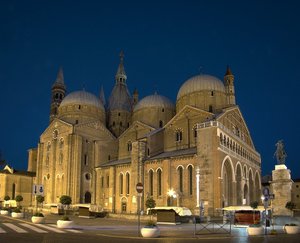
Maleriet som gjorde Donatello berømt er Madonna and Child between St Francis and St Anthony (1448); det henger i Basilica di Sant'Antonio, Padua. Cantoria (1439) og Entombment (1447) følger etter i hjertene til samlere og museumsgjester. Av de 148 verkene til Donatello i vår katalog, er disse 100 de mest beundrede, hver presentert med dato, museum og hva som gjør dem unike.

Rangert etter vår popularitetsscore, som kombinerer søk, besøk og bestillinger for hvert verk. Oppdatert October 2026. Hvert mesterverk på denne siden kan bestilles som en håndmalt oljereproduksjon av museumskvalitet eller som et kunsttrykk, i den størrelsen du velger.

Portrett av Donatello
Donatello · 1386 – 1466
Født · død
1386 – 1466, Firenze
Bevegelse
Tidlig renessanse
Verker i vår katalog
148
Mest kjente
Madonna and Child between St Francis and St Anthony (1448)
Flest verk hos
Museo dell'Opera del Duomo

Donatello: de ti mesterverkene

Madonna and Child between St Francis and St Anthony (1448) av Donatello
1

Madonna and Child between St Francis and St Anthony

1448 · Bronze · Basilica di Sant'Antonio, Padua

In the heart of the Italian Renaissance, where the shadows of antiquity met the burgeoning light of humanism, Donatello breathed life into metal with his masterpiece, Madonna and Child between St Francis and St Anthony. Created around 1448, this profound bronze sculpture serves as a window into a period of unparalleled spiritual and artistic transformation. The composition is a masterclass in symmetrical grace; at its center, the Virgin Mary cradles…

Cantoria (1439) av Donatello
2

Cantoria

1439 · Marble · Museo dell'Opera del Duomo, Firenze

To stand before Donatello’s Cantoria is to witness the very moment the Renaissance found its pulse. Completed around 1439 for the Cathedral of Santa Maria del Fiore in Florence, this monumental marble relief is far more than a functional singers' gallery; it is a breathtaking explosion of movement and spiritual ecstasy. While much of the era’s sculpture remained tethered to the static, formal traditions of the Byzantine style, Donatello broke…

Entombment (1447) av Donatello
3

Entombment

1447 · Oil On Canvas · Basilica di Sant'Antonio, Padua

To stand before Donatello's depiction of the Entombment is to be enveloped in an atmosphere so thick with grief, it feels almost palpable. This scene transcends mere narrative illustration; it is a profound meditation on loss, sacrifice, and the solemn weight of human devotion. The composition draws the viewer into the immediate aftermath of unimaginable tragedy. Jesus Christ lies within the tomb, not merely as a subject, but as the…

Miracle of the Repentant Son (1447) av Donatello
4

Miracle of the Repentant Son

1447 · Acrylic · Basilica di Sant'Antonio, Padua

Donatello’s bronze sculpture, "Miracle of the Repentant Son," transcends mere representation; it's a profound meditation on faith, remorse, and divine grace. Created in 1447 during the apex of his artistic maturity, this work embodies the burgeoning humanism and emotional depth that defined the Early Renaissance in Florence. More than just a depiction of a biblical miracle – the restoration of a severed limb by St. Anthony – it’s a study…

Crucifix (1412) av Donatello
5

Crucifix

1412 · Acrylic On Canvas · Santa Croce, Florence

Donatello's 1412 Crucifix, housed within the Basilica of Santa Croce in Florence, isn’t merely a depiction of Christ on the cross; it’s a visceral experience. This early Renaissance masterpiece transcends simple representation, plunging the viewer into the heart of Christian theology and embodying the profound tension between suffering and redemption. Crafted from richly-toned pearwood, the sculpture immediately commands attention with its remarkably realistic portrayal of the human form – a…

Annunciation (1435) av Donatello
6

Annunciation

1435 · Acrylic On Canvas · Santa Croce, Florence

Donatello’s 1435 Annunciation, housed within the Basilica di Santa Croce in Florence, isn’t merely a depiction of a biblical moment; it’s a profound meditation on grace, humility, and the transformative power of faith. Commissioned during a pivotal period of artistic innovation – bridging the Gothic and Renaissance eras – this sculpture embodies Donatello's revolutionary approach to humanism and his masterful command of classical forms. The scene unfolds with an arresting…

St George (detail) (1416) av Donatello
7

St George (detail)

1416 · Marble · Museo Nazionale del Bargello, Firenze

The marble figure of St. George, sculpted by Donatello around 1416, stands as more than just a depiction of a saint; it's a pivotal moment in the evolution of Renaissance sculpture – a testament to the artist’s innovative spirit and his profound understanding of human form and narrative. Originally gracing the north wall of Orsanmichele, Florence’s imposing guildhall, this statue immediately captivated viewers with its dynamic energy and strikingly realistic…

Herod's Banquet (1427) av Donatello
8

Herod's Banquet

1427 · Bronze · Baptisteriet i Siena, Siena

Donatello's Herod’s Banquet, crafted around 1427 for the baptismal font of Siena’s San Giovanni Baptistery, isn’t merely a depiction of a biblical episode; it’s a profound meditation on power, betrayal, and the chilling consequences of unchecked ambition. Commissioned amidst the competitive fervor of Renaissance Florence and Siena, this bronze relief stands as a testament to Donatello's burgeoning mastery – a pivotal work that showcases his innovative approach to sculpture and…

Bearded Prophet (1418) av Donatello
9

Bearded Prophet

1418 · Bronze · Museo dell'Opera del Duomo, Firenze

In the heart of the Florentine Renaissance, where the shadows of antiquity began to dance with the light of new humanism, Donatello breathed life into bronze with his Bearded Prophet. Created around 1418, this monumental figure is far more than a mere sculpture; it is a profound meditation on the weight of divine knowledge and the solemnity of faith. As one gazes upon the weathered surface of the bronze, there…

St. John the Evangelist (1415) av Donatello
10

St. John the Evangelist

1415 · Marble

St. John the Evangelist is a marble sculpture created by the artist Donatello. Dated 1410, this work depicts one of the twelve apostles of Jesus. The subject is rendered as an elderly man, presented with a face etched with lines and a gaze that suggests a state of contemplation and wisdom. This choice of representation presents the figure as a philosopher-like individual.

Flere mesterverk av Donatello, fra 11 til 100

St Mark (1411) av Donatello
#11

St Mark

1411 · Orsanmichele

Within the echoing halls of Orsanmichele in Florence, stands Donatello's sculpture of St. Mark – more than just a depiction of a biblical figure; it is a profound…

Prophet with Scroll (detail) (1418) av Donatello
#12

Prophet with Scroll (detail)

1418 · Museo dell'Opera del Duomo

To stand before this detail of a prophet is to encounter a moment suspended in time—a profound echo from the heart of the Italian Renaissance. The marble itself,…

St John on Patmos (1428) av Donatello
#13

St John on Patmos

1428

The St John on Patmos painting, created by the renowned artist Donatello in 1428, is a stunning example of Renaissance art. This masterpiece is a testament to Donatello's…

David (detail) (1409) av Donatello
#14

David (detail)

1409 · Museo Nazionale del Bargello

To stand before this detail of Donatello's David is to encounter not merely a sculpture, but a profound meditation on nascent heroism. The marble seems to breathe with…

Pietà (1447) av Donatello
#15

Pietà

1447 · Basilica di Sant'Antonio

In the quiet sanctity of the Basilica di Sant’Antonio in Padua, there exists a moment frozen in bronze, a profound intersection of divine tragedy and human vulnerability. Donatello’s…

Pulpit (on the right) (1465) av Donatello
#16

Pulpit (on the right)

1465 · Basilica di San Lorenzo

In the hallowed, sun-drenched silence of the Basilica of San Lorenzo in Florence, there exists a sculptural marvel that captures the very essence of a soul nearing its…

Prophet Jeremiah (1423) av Donatello
#17

Prophet Jeremiah

1423 · Museo dell'Opera del Duomo

To stand before Donatello’s Prophet Jeremiah is to encounter not merely carved stone, but the very weight of human contemplation. This marble masterpiece transports us into a moment…

Prophet Habakkuk (1427) av Donatello
#18

Prophet Habakkuk

1427 · Museo dell'Opera del Duomo

In the heart of Florence, within the hallowed halls of the Museo dell'Opera del Duomo, stands a figure that seems to breathe with the weight of centuries. Donatello’s…

Pulpit (1438) av Donatello
#19

Pulpit

1438 · Museum of the Cathedral

The Pulpit by Donatello emerged from the stone and the shared vision of a workshop. In 1438, the artist completed this marble structure, working alongside collaborators Michelozzo and…

Miracle of the New-born Child (detail) (1447) av Donatello
#20

Miracle of the New-born Child (detail)

1447 · Basilica di Sant'Antonio

This bronze detail captures an aged figure rendered with profound realism. The sculpture focuses on the upper torso and head, where deep wrinkles and facial contours convey experience…

Miracle of the Ass (1447) av Donatello
#21

Miracle of the Ass

1447 · Basilica di Sant'Antonio

In the heart of the Italian Renaissance, amidst the burgeoning humanism of Florence, Donatello breathed life into metal with his 1447 masterpiece, The Miracle of the Ass. This…

Cantoria (detail) (1439) av Donatello
#22

Cantoria (detail)

1439 · Museo dell'Opera del Duomo

The “Cantoria,” or Singing Gallery, crafted by the towering figure of Donatello between 1439 and 1440, isn't merely a decorative element within Florence’s Duomo; it’s an immersive experience,…

Evangelist Luke (1428) av Donatello
#23

Evangelist Luke

1428

The "Evangelist Luke" is a remarkable painting created by the renowned artist Donatello in 1428. This stunning work of art, crafted from stucco and measuring 215 x 215…

Ta den med hjem →
Pulpit (detail) (1438) av Donatello
#24

Pulpit (detail)

1438 · Museo dell'Opera del Duomo

To look closely at this detail from the pulpit is to witness a quiet revolution in stone. The marble figures emerge from their setting with a sense of…

Christ before Pilate and Caiaphas (1460) av Donatello
#25

Christ before Pilate and Caiaphas

1460 · Basilica di San Lorenzo

Donatello's 1460 bronze sculpture, “Christ Before Pilate and Caiaphas,” stands as a monumental achievement within the burgeoning artistic landscape of the Italian Renaissance. Housed in the San Lorenzo…

David (1409) av Donatello
#26

David

1409 · Museo Nazionale del Bargello

To stand before Donatello’s David is not merely to observe a sculpture; it is to witness a suspended moment of profound human potential. Carved from luminous marble, this…

St George and the Dragon (1416) av Donatello
#27

St George and the Dragon

1416 · Museo Nazionale del Bargello

Gazing upon this marble bust is to confront a moment frozen in time—a powerful confluence of classical revivalism and raw human emotion. The subject, rendered with breathtaking verisimilitude,…

Saint George (1417) av Donatello
#28

Saint George

1417 · Museo Nazionale del Bargello

In the heart of Florence, where the echoes of the Quattrocento still resonate through the cobblestone streets, stands a figure of unparalleled poise and quiet strength. Donatello’s Saint…

St John the Evangelist (detail) (1410) av Donatello
#29

St John the Evangelist (detail)

1410 · Museo dell'Opera del Duomo

Donatello's “St John the Evangelist (detail),” a remarkably preserved marble sculpture created around 1410-1411, stands as a pivotal work in the transition from the late Gothic to the…

St John the Evangelist (1410) av Donatello
#30

St John the Evangelist

1410 · Museo dell'Opera del Duomo

St John the Evangelist is a marble sculpture created by the artist Donatello. The work is dated 1410. It depicts one of the twelve apostles of Jesus, specifically…

Deposition (detail) (1465) av Donatello
#31

Deposition (detail)

1465 · Basilica di San Lorenzo

Donatello's Deposition, a pivotal work from 1465, isn’t merely a depiction of Christ being lowered from the cross; it’s a profound meditation on grief, loss, and the nascent…

Bestill et håndmalt eksemplar →
North pulpit (1460) av Donatello
#33

North pulpit

1460 · Basilica di San Lorenzo

To stand before the North Pulpit is to witness a profound moment in the evolution of Western art, where the rigid structures of the Middle Ages began to…

David (1430) av Donatello
#35

David

1430 · Museo Nazionale del Bargello

Michelangelo’s “David,” a colossal marble sculpture residing within the Galleria dell’Accademia in Florence, isn't merely a depiction of a biblical hero; it’s an embodiment of human potential, a…

Bestill et håndmalt eksemplar →
Miracle of the Avaricious Man's Heart (1447) av Donatello
#37

Miracle of the Avaricious Man's Heart

1447 · Basilica di Sant'Antonio

Within the hallowed, sun-drenched walls of the Basilica di Sant’Antonio in Padua, there exists a moment frozen in time, a bronze whisper of the divine captured by the…

Allegoric Figure of a Boy (Atys), rear view (1430) av Donatello
#38

Allegoric Figure of a Boy (Atys), rear view

1430 · Museo Nazionale del Bargello

To stand before an image evoking this bronze figure is to feel the very breath of the Renaissance wind against one's skin. This depiction, titled Allegoric Figure of…

St George (detail) (1416) av Donatello
#39

St George (detail)

1416 · Museo Nazionale del Bargello

In the heart of Florence, within the hallowed halls of the Museo Nazionale del Bargello, resides a fragment of eternal courage. Donatello’s St. George, specifically captured in this…

Cantoria (detail) (1439) av Donatello
#40

Cantoria (detail)

1439 · Museo dell'Opera del Duomo

In the heart of Florence, within the hallowed halls of the Museo dell’Opera del Duomo, lies a fragment of divine ecstasy known as the Cantoria. Created by the…

Marzocco (1419) av Donatello
#43

Marzocco

1419 · Museo Nazionale del Bargello

In the heart of the Renaissance, amidst the political tremors and cultural rebirth of 15th-century Florence, Donatello breathed life into stone to create one of the city's most…

Prophet Jeremiah (detail) (1423) av Donatello
#44

Prophet Jeremiah (detail)

1423 · Museo dell'Opera del Duomo

Donatello's “Prophet Jeremiah (detail),” a poignant study carved from pristine white marble around 1423-1427, transcends mere portraiture to become a profound meditation on faith, suffering, and the weight…

Bestill et håndmalt eksemplar →
Cantoria (detail) (1439) av Donatello
#45

Cantoria (detail)

1439 · Museo dell'Opera del Duomo

Donatello's "Cantoria," a breathtaking detail from the larger marble relief adorning the south sacristy doors of the Duomo in Florence, isn’t merely a sculpture; it’s a vibrant snapshot…

Bestill en reproduksjon →
Herod's Banquet (detail) (1427) av Donatello
#46

Herod's Banquet (detail)

1427 · Baptisteriet i Siena

In the hallowed, quiet corridors of the Siena Baptistery, there exists a moment frozen in time, captured not in paint, but in the enduring strength of bronze. Donatello’s…

Miracle of the Avaricious Man's Heart (detail) (1447) av Donatello
#47

Miracle of the Avaricious Man's Heart (detail)

1447 · Basilica di Sant'Antonio

The Miracle of the Avaricious Man's Heart is a remarkable bronze relief created by the renowned Italian artist Donatello in 1447. This stunning work of art is located…

Bearded Prophet (detail) (1418) av Donatello
#48

Bearded Prophet (detail)

1418 · Museo dell'Opera del Duomo

Donatello's "Bearded Prophet" – often referred to as “Pensieroso,” meaning “the Thinker” – stands not merely as a sculpture, but as a profound meditation on humanity’s relationship with…

Cantoria (detail) (1439) av Donatello
#49

Cantoria (detail)

1439 · Museo dell'Opera del Duomo

Donatello's Cantoria, a breathtaking marble relief sculpture from the Duomo di Firenze (Florence Cathedral), isn’t merely a decorative element; it’s a vibrant snapshot of Renaissance ambition and artistic…

Bestill et håndmalt eksemplar →
Prophet Jeremiah (1423) av Donatello
#50

Prophet Jeremiah

1423 · Museo dell'Opera del Duomo

Prophet Jeremiah is a marble sculpture created by the artist Donatello. Dated 1423, the work represents a significant religious subject through the depiction of the biblical prophet. The…

South pulpit (1460) av Donatello
#51

South pulpit

1460 · Basilica di San Lorenzo

Donatello’s Passion Pulpit, a monumental bronze ensemble housed within the Basilica of San Lorenzo in Florence, isn’t merely a religious depiction; it’s a visceral embodiment of the artist’s…

Bestill et håndmalt eksemplar →
Deposition (1465) av Donatello
#52

Deposition

1465 · Basilica di San Lorenzo

Donatello's Deposition, completed in 1465, isn’t merely a sculpture; it’s a profound meditation on loss, faith, and the raw vulnerability of humanity. Carved from rich, burnished bronze –…

St George (1416) av Donatello
#53

St George

1416 · Museo Nazionale del Bargello

Donatello’s “St. George,” sculpted in 1416 for the Museo Nazionale del Bargello in Florence, isn’t merely a depiction of a biblical hero; it’s a potent distillation of Renaissance…

Cantoria (1439) av Donatello
#54

Cantoria

1439 · Museo dell'Opera del Duomo

Within the hallowed halls of the Museo dell'Opera del Duomo in Florence resides a sculpture that transcends mere stone and marble – it is an embodiment of Renaissance…

Faith (1427) av Donatello
#55

Faith

1427 · Baptisteriet i Siena

Donatello's "Faith," crafted in bronze around 1427-1429 for the baptismal font within Siena Cathedral, stands as a pivotal work bridging the late Gothic and burgeoning Early Renaissance styles.…

Old Sacristy (1428) av Donatello
#56

Old Sacristy

1428 · Basilica di San Lorenzo

To step into the Old Sacristy within the Basilica of San Lorenzo is to leave the chaotic bustle of Florence behind and enter a realm of profound mathematical…

Annunciation (detail) (1435) av Donatello
#57

Annunciation (detail)

1435 · Santa Croce

Donatello's "Annunciation," specifically this exquisite detail from the relief adorning the Cavalcanti Chapel in Santa Croce, Florence, stands as a pivotal moment in the burgeoning Renaissance. Crafted around…

Bestill en reproduksjon →
Pulpit (on the left) (1465) av Donatello
#58

Pulpit (on the left)

1465 · Basilica di San Lorenzo

Within the serene confines of San Lorenzo church in Florence resides a sculpture that transcends mere marble; it is a profound meditation on faith, humanity, and the very…

Bestill en reproduksjon →
Prophet with Scroll (1418) av Donatello
#59

Prophet with Scroll

1418 · Museo dell'Opera del Duomo

Donatello’s “Prophet with Scroll,” crafted between 1415 and 1418, stands as a pivotal work in the burgeoning Early Renaissance of Florence. More than simply a depiction of biblical…

St John the Evangelist (1410) av Donatello
#60

St John the Evangelist

1410 · Museo dell'Opera del Duomo

Donatello’s “St John the Evangelist,” completed between 1410 and 1411, isn't merely a sculpture; it’s an invitation into a realm of contemplative grace. Carved from pristine white marble,…

Bestill et håndmalt eksemplar →
Prophet Habakkuk (1427) av Donatello
#61

Prophet Habakkuk

1427 · Museo dell'Opera del Duomo

In the hallowed, sun-drenched halls of the Museo dell'Opera del Duomo in Florence, there exists a figure that seems to breathe with the heavy weight of centuries. Donatello’s…

Entombment (1465) av Donatello
#62

Entombment

1465 · Basilica di San Lorenzo

Donatello's “Entombment,” completed around 1465 in Florence, stands as a monumental achievement within the Early Renaissance—a sculpture that transcends mere representation to embody profound human emotion and theological…

Cantoria (9) (1439) av Donatello
#63

Cantoria (9)

1439 · Museo dell'Opera del Duomo

Donatello's "Cantoria," completed in 1439 for the Duomo of Florence, isn’t merely a decorative element; it’s a vibrant embodiment of Renaissance ideals – a testament to human ingenuity,…

Ta den med hjem →
Lamentation over the Dead Christ av Donatello
#64

Lamentation over the Dead Christ

Victoria and Albert Museum

Donatello, one of the most influential artists of the Italian Renaissance, created the Lamentation Over The Dead Christ around 1455-1460. This remarkable bronze relief is currently housed in…

St George (1416) av Donatello
#65

St George

1416 · Museo Nazionale del Bargello

Donatello's *Saint George*, sculpted in 1416 during the nascent Renaissance, is more than just a marble statue; it’s a potent distillation of classical ideals interwoven with burgeoning humanist…

St John the Baptist (1438) av Donatello
#66

St John the Baptist

1438 · Basilica di Santa Maria Gloriosa dei Frari

Donatello’s “St. John the Baptist,” sculpted around 1438 in Carrara marble and now residing within the serene Chapel of St. John the Baptist at Santa Maria Gloriosa dei…

Bestill en reproduksjon →
Chellini Madonna, verso av Donatello
#68

Chellini Madonna, verso

Victoria and Albert Museum

Donatello's "Chellini Madonna," a bronze relief cast in the mid-15th century, stands as a remarkably intimate and profoundly moving work within the artist’s oeuvre. More than simply a…

St Cosmas and St Damian (1428) av Donatello
#69

St Cosmas and St Damian

1428

Two figures emerge from an ornate stone backdrop, their presence defined by a quiet, shared intensity. These men, identified as the twin saints Cosmas and Damian, are positioned…

St Mary Magdalen (1457) av Donatello
#70

St Mary Magdalen

1457 · Museo dell'Opera del Duomo

St Mary Magdalen is a sculptural work created by the Italian Renaissance sculptor Donatello. This figure is slightly larger than life size and was originally made for the…

Bust of Niccolo da Uzzano (1430) av Donatello
#71

Bust of Niccolo da Uzzano

1430 · Museo Nazionale del Bargello

Donatello's 1430s marble bust of Niccolò da Uzzano is more than just a sculpted likeness; it’s a profound meditation on leadership, duty, and the quiet strength required to…

Crucifixion (1465) av Donatello
#72

Crucifixion

1465 · Museo Nazionale del Bargello

A Moment Frozen in Time: Donatello’s Crucifixion The bronze sculpture “Crucifixion” by Donatello stands as an enduring testament to the artistic fervor of the Florentine Renaissance, capturing not…

Prophet Habbakuk (1426) av Donatello
#74

Prophet Habbakuk

1426

To stand before this marble figure is to encounter a man caught in a moment of profound spiritual tension. Created between 1423 and 1426, this sculpture of the…

The Feast of Herod (1427) av Donatello
#75

The Feast of Herod

1427

The air in the room feels heavy, thick with the tension of a moment that refuses to pass. Around a central banquet table, figures are caught in a…

St Stephen and St Lawrence (1428) av Donatello
#76

St Stephen and St Lawrence

1428

The artwork presents two figures positioned within a recessed, arched niche. These figures are rendered in a relief sculpture technique, where the forms emerge from a flat plane…

Evangelist Mark (1428) av Donatello
#77

Evangelist Mark

1428

This high-relief marble sculpture captures a moment of quiet scholarly devotion. Within an oval frame, the figure of the Evangelist is seated at a writing desk, his attention…

Herod's Banquet (1435) av Donatello
#78

Herod's Banquet

1435 · Palais des Beaux-Arts de Lille

This high-relief marble sculpture depicts a crowded, dramatic biblical scene. The composition is densely packed with figures arranged across multiple planes to create a sense of depth and…

Pulpit (1438) av Donatello
#79

Pulpit

1438 · Cathedral

A Masterpiece of Renaissance Sculpture: Donatello's Marble Pulpit Donatello’s marble pulpit, created in 1438 for the Church of San Lorenzo in Florence, stands as a pivotal work within…

Bestill et håndmalt eksemplar →
Agony in the Garden (1465) av Donatello
#80

Agony in the Garden

1465 · Basilica di San Lorenzo

Giovanni Bellini's "Agony in the Garden," housed within the venerable halls of the National Gallery, London, isn’t merely a depiction of a biblical scene; it’s a profound meditation…

Bestill et håndmalt eksemplar →
Funeral Monument to John XXIII (detail) (1435) av Donatello
#81

Funeral Monument to John XXIII (detail)

1435 · Baptistery of San Giovanni

The Funeral Monument to John XXIII (detail) is a work by the sculptor Donatello. This specific fragment captures a moment of stillness within a larger funerary structure. It…

Chellini Madonna, recto av Donatello
#82

Chellini Madonna, recto

Victoria and Albert Museum

To gaze upon the Chellini Madonna is to step into the very heart of the Florentine Renaissance, where the divine and the human intersect through the masterful hands…

Hope (1427) av Donatello
#83

Hope

1427 · Baptisteriet i Siena

Within the quiet, hallowed space of the Baptistery of San Giovanni in the Siena Cathedral, a figure emerges from the shadows of a shallow marble niche. This is…

St Mark (1411) av Donatello
#84

St Mark

1411 · Orsanmichele

In the Orsanmichele of Florence, a marble figure of St Mark emerges from its Gothic niche, marking a departure from the rigid traditions of the Middle Ages. Created…

St Rossore (1425) av Donatello
#86

St Rossore

1425 · Museo Nazionale di San Matteo

In the quiet presence of Donatello’s St Rossore, one does not merely observe a sculpture; one encounters a profound dialogue between the earthly and the divine. Created around…

Musician Angels (1447) av Donatello
#90

Musician Angels

1447 · Basilica di Sant'Antonio

In the hallowed stillness of the Basilica of Saint Anthony in Padua, there exists a moment where time seems to suspend itself, captured forever in the shimmering bronze…

Donatellos malerier etter periode

Motivene Donatello malte mest av

De fire motivene som forekommer hyppigst blant disse mesterverkene, med det fremste eksemplet på hvert av dem.

Hvor du kan se maleriene til Donatello

De 8 museene som innehar flest av maleriene på denne siden.

Museum By Verker av Donatello Malerier fra denne listen
Museo dell'Opera del Duomo, FirenzeMuseo dell'Opera del Duomo Firenze 22 Cantoria, Bearded Prophet, Prophet with Scroll (detail)
Museo Nazionale del Bargello, FirenzeMuseo Nazionale del Bargello Firenze 13 St George (detail), David (detail), David
Basilica di Sant'Antonio, PaduaBasilica di Sant'Antonio Padua 12 Madonna and Child between St Francis and St Anthony, Entombment, Miracle of the Repentant Son
Basilica di San Lorenzo, FlorenceBasilica di San Lorenzo Florence 12 Pulpit (on the right), Christ before Pilate and Caiaphas, Deposition (detail)
Piazza del Santo, PaduaPiazza del Santo Padua 6 Equestrian Statue of Gattamelata (8), Equestrian Statue of Gattamelata, Equestrian Statue of Gattamelata
Baptisteriet i Siena, SienaBaptisteriet i Siena Siena 4 Herod's Banquet, Herod's Banquet (detail), Faith
Baptistery of San Giovanni, FlorenceBaptistery of San Giovanni Florence 4 Funeral Monument to John XXIII (detail), Funeral Monument to John XXIII (detail), Funeral Monument to John XXIII (detail)
Santa Croce, FlorenceSanta Croce Florence 3 Crucifix, Annunciation, Annunciation (detail)

Donatello, tiår for tiår: det definerende maleriet for hvert tiår

  1. 1400s
    David (detail) (1409) av Donatello
    Rangering 14 av 100

    David (detail)

    Alder 14 – 23 · Museo Nazionale del Bargello

    To stand before this detail of Donatello's David is to encounter not merely a sculpture, but a profound meditation on nascent heroism. The marble seems to breathe with…

  2. 1410s
    Crucifix (1412) av Donatello
    Nr. 5 av 100

    Crucifix

    Alder 24 – 33 · Santa Croce

    Donatello's 1412 Crucifix, housed within the Basilica of Santa Croce in Florence, isn’t merely a depiction of Christ on the cross; it’s a visceral experience. This early Renaissance…

  3. 1420s
    Herod's Banquet (1427) av Donatello
    Rangering 8 av 100

    Herod's Banquet

    Alder 34 – 43 · Baptisteriet i Siena

    Donatello's Herod’s Banquet, crafted around 1427 for the baptismal font of Siena’s San Giovanni Baptistery, isn’t merely a depiction of a biblical episode; it’s a profound meditation on…

  4. 1430s
    Cantoria (1439) av Donatello
    Nr. 2 av 100

    Cantoria

    Alder 44 – 53 · Museo dell'Opera del Duomo

    To stand before Donatello’s Cantoria is to witness the very moment the Renaissance found its pulse. Completed around 1439 for the Cathedral of Santa Maria del Fiore in…

  5. 1440s
    Madonna and Child between St Francis and St Anthony (1448) av Donatello
    Rangering 1 av 100

    Madonna and Child between St Francis and St Anthony

    Alder 54 – 63 · Basilica di Sant'Antonio

    In the heart of the Italian Renaissance, where the shadows of antiquity met the burgeoning light of humanism, Donatello breathed life into metal with his masterpiece, Madonna and…

  6. 1450s
    St Mary Magdalen (1457) av Donatello
    Rangering 70 av 100

    St Mary Magdalen

    Alder 64 – 73 · Museo dell'Opera del Duomo

    St Mary Magdalen is a sculptural work created by the Italian Renaissance sculptor Donatello. This figure is slightly larger than life size and was originally made for the…

  7. 1460s
    Pulpit (on the right) (1465) av Donatello
    Rangering 16 av 100

    Pulpit (on the right)

    Alder 74 – 80 · Basilica di San Lorenzo

    In the hallowed, sun-drenched silence of the Basilica of San Lorenzo in Florence, there exists a sculptural marvel that captures the very essence of a soul nearing its…

Donatellos mesterverk: spørsmål og svar

Hvilket maleri er Donatello mest kjent for?Vis svaret

Madonna and Child between St Francis and St Anthony (1448), Basilica di Sant'Antonio, Padua. Deretter følger Cantoria (1439) og Entombment (1447).

Hvor gammel var Donatello da Madonna and Child between St Francis and St Anthony ble malt?Vis svaret

62 år gammel: Madonna and Child between St Francis and St Anthony er fra 1448, og Donatello ble født i 1386.

Hva er de ti største maleriene til Donatello?Vis svaret

Madonna and Child between St Francis and St Anthony, Cantoria, Entombment, Miracle of the Repentant Son, Crucifix, Annunciation, St George (detail), Herod's Banquet, Bearded Prophet og St. John the Evangelist. Rangeringen ovenfor viser årstallet og museet for hvert av dem.

Hvor mange verk malte Donatello?Vis svaret

Vår katalog inneholder 148 verk av Donatello, datert fra 1406 til 1465.

I hvilke museer kan jeg se mesterverkene til Donatello?Vis svaret

De fleste av dem befinner seg i Museo dell'Opera del Duomo (Firenze), Museo Nazionale del Bargello (Firenze) og Basilica di Sant'Antonio (Padua). Tabellen ovenfor lister opp museene ett etter ett.

Når malte Donatello mesterverkene?Vis svaret

I 1430s: 22 av de 100 verkene på denne siden er fra denne perioden, inkludert Cantoria.

Hva er de første og siste berømte maleriene til Donatello?Vis svaret

Det eldste på denne siden er Prophet (left of the Porta della Mandorla) (1406), det nyeste Pulpit (on the right) (1465).

Hva var Donatellos favorittmotiver?Vis svaret

Renaissance (46), Sculpture (35) og Marble (19), blant de 100 verkene på denne siden.

Hvilken teknikk foretrakk Donatello?Vis svaret

Marble: 31 av 100 verk på denne siden.

Hvilken kunstretning tilhører Donatello?Vis svaret

Tidlig renessanse, som maleriene på denne siden viser.

Hvilke mesterverk av Donatello henger på Museo dell'Opera del Duomo?Vis svaret

Cantoria, Bearded Prophet og Prophet with Scroll (detail) er blant de 21 verkene på denne siden som er i Museo dell'Opera del Duomo, Firenze sin samling.

Kan jeg eie en reproduksjon av et mesterverk av Donatello?Vis svaret

Ja. Hvert maleri på denne siden kan bestilles som en håndmalt oljereproduksjon av museumskvalitet eller som et kunsttrykk i ønsket størrelse, direkte fra maleriets egen side.

Livet til Donatello

Livet og identiteten til Donatello

Født som Donato di Niccolò di Betto Bardi, tilbrakte mannen som historien kjenner som Donatello hele sitt liv innenfor murene i Firenze, Italia. Han trådte inn i verden rundt 1386, i en tid da byen var i ferd med å omforme sitt eget ansikt gjennom stein og bronse. Hans tilstedeværelse i det florentinske landskapet var konstant, preget av en stødig hånd og et intenst fokus på motivenes fysiske virkelighet. Han var en italiensk renessanseskulptør som fullt ut forsto tyngden i materialene han formet, fra marmorens urokkelige hardhet til voksens flytende bevegelighet.

Hans virke var ikke en ensom jakt på perfeksjon, men snarere en serie svar på sin tids behov. Han beveget seg gjennom Firenzes gater, arbeidet i ulike medier og etterlot seg et spor av figurer som fanget en helt særegen, menneskelig tilstedeværelse. Selv om han var kjent for å være vennlig og høyt verdsatt av sine omgivelser, kjempet han med de praktiske sidene ved å drive en virksomhet. Han påtok seg ofte mer arbeid enn hendene hans kunne fullføre i tide, noe som førte til at han enten overlot de siste detaljene til andre eller leverte verk senere enn forventet. Denne tendensen til å binde seg til for mange prosjekter tyder på en mann som var mer opptatt av selve skapelsesakten enn av administrasjonen av et verksted.

Donatello døde i Firenze den 13. desember 1466. Han etterlot seg et livsverk som endret hvordan skulptører tilnærmet seg den menneskelige form, ved å bevege seg bort fra fortidens rigide tradisjoner mot noe mer jordnært og ekspressivt. Hans liv var uløselig knyttet til byen, og hans identitet forblir uadskillelig fra den florentinske jorden der han levde og virket.

Tidlig liv og kunstnerisk utdanning

Donatello ble født i Firenze, Italia, og vokste opp i en by som fungerte som det primære episenteret for den spirende renessansen. Dette miljøet ga den essensielle kulturelle energien som var nødvendig for hans utvikling. Han tilbrakte sine tidlige år fordypet i den lokale atmosfæren, der skiftet bort fra de rigide middelaldertradisjonene allerede var i ferd med å få fotfeste. Hans tilknytning til det florentinske landskapet var dyp, ettersom byens utviklende verdier formet hans tidlige tilnærming til form og figur.

Hans utdanning innebar en inngående studie av klassisk skulptur. Dette fokuset på antikken hjalp ham med å bevege seg mot en ny stil som prioriterte realisme og humanisme. Før han fant sin egen unike stemme, lærte han den internasjonale gotiske stilen av Lorenzo Ghiberti. Denne læringsperioden gjorde det mulig for ham å mestre håndverkets tekniske ferdigheter før han begynte å avvike fra de etablerte tradisjonene. Han arbeidet med en rekke ulike materialer, inkludert stein, bronse, tre, leire, stukkatur og voks, og han brukte ofte glass på oppfinnsomme måter for å oppnå spesifikke effekter.

Mesterens verksted, mesener og oppdrag

Donatellos hender var nesten alltid i arbeid. Han hadde en tendens til å påta seg langt mer enn hans egen tidsplan kunne romme, en rastløshet som ofte førte til at prosjekter ble ferdigstilt sent, eller at han måtte overlate de siste detaljene til andre for å nå sine mål. Dette enorme arbeidspresset krevde en konstant tilstedeværelse i hans verksted, hvor han formet historien side om side med dyktige assistenter. Et team på fire var et typisk antall for hans studio, en nødvendig støtte for å mestre de fysiske kreftene som kreves for å temme stein, bronse og leire.

Medici-familien ble hans faste støttespillere og tilbød en form for beskyttelse og mesenat som gjorde det mulig for ham å utvikle seg gjennom livets ulike faser. Hans kunstneriske rekkevidde strakte seg langt utover de trange gatene i Firenze; han reiste for å utføre viktige oppdrag i Roma, Padova og Siena. Denne konstante bevegelsen mellom byene betydde at hans kunstneriske virke aldri var bundet til ett enkelt sted, da han bar med seg både sine unike metoder og sine assistenter til de viktigste kulturelle sentrene i samtiden.

Innovative teknikker og kunstnerisk stil

Donatellos tilnærming til skulptur markerte et radikalt brudd med de rigide tradisjonene i den internasjonale gotikken. Han utviklet en stil som definerte den tidlige renessansen, preget av en søken etter en helt ny form for realisme. Dette ble ofte oppnådd gjennom en dyp forståelse av menneskekroppens anatomi og det subtile samspillet mellom lys og overflate. Hans kunstneriske virke var ikke begrenset til ett enkelt materiale; i stedet mestret han stein, bronse, tre, leire, stukkatur og voks. Han fant til og med oppfinnsomme måter å bruke glass på for å tilføre sine figurer en ekstra dimensjon av detaljrikdom.

Et av hans mest banebrytende tekniske bidrag var utviklingen av rilievo stiacciato. Dette er en ekstremt lavtrelieff-teknikk, hvor utskjæringene er så grunne at de skaper en illusjon av dybde gjennom minimale variasjoner i tykkelse. Ved å benytte denne metoden kunne han antyde perspektiv og avstand på en nesten plan flate. Verkene hans preges ofte av en fascinerende spenning mellom materialets fysiske tyngde og motivets ekspressive bevegelse. Han besatt en sjelden evne til å få marmor til å fremstå like myk som hud, eller å gi bronse en følelse av massiv, muskuløs energi.

  • David (bronse)
  • Equestrian Monument of Gattamelata
  • Saint George (marmor)

Mesterverk i skulptur

I 1416 fullførte han Sankt Georg, en marmorfigur som fanger en følelse av urokkelig mot. Skulpturen fremstiller ridderen i rustning, balansert på forfoten snarere enn i en tradisjonell contrapposto-stilling. Det er en merkbar følelse av den muskuløse kroppen som arbeider under steinens overflate. Dette verket var et av mange som ble bestilt av laugene i Firenze for å dekorere de ytre nisjene i Orsanmichele-kirken.

Hans bronseversjon av David forblir et banebrytende punkt i skulpturhistorien. Det er den første frittstående, nakne mannlige skulpturen som er produsert siden antikken. Figuren er fremstilt med et gåtefullt smil, stående med en fot plassert på det avhuggede hodet til Goliat. Mens marmorversjonen av dette motivet var et tidlig oppdrag, er bronseversjonen kjent for sin delikate, androgyne fysikk og måten den bruker ungdommens nakenhet på for å skape en kontrast til det tunge sverdet i hånden.

Senere i karrieren beveget han seg mot andre materialer og skalaer. Rytterstatuen av Gattamelata, skapt i 1453, er et massivt bronseverk plassert i Padua. Rundt 1440 produserte han Den angrende Maria Magdalena, en treskulptur utskåret i hvit poppel. Denne figuren er mager og utmagret, og bryter med de typiske fremstillingene av en vakker, ung kvinne. Utskjæringen er rå og detaljert, og viser en helt annen side av hans tekniske ferdigheter.

  • Sankt Georg, 1416
  • David (bronse), ca. 1440
  • Den angrende Maria Magdalena, ca. 1440
  • Rytterstatuen av Gattamelata, 1453

Arv og kunstnerisk innflytelse

Donatellos tilnærming til form fant ikke umiddelbar aksept i hans samtid. Hans kunstneriske reise beveget seg gjennom distinkte faser, fra en innledende fascinasjon for klassisk monumentalitet til en stadig dypere og mer intens følelsesmessig uttrykkskraft. Etter hvert som karrieren hans skred frem, vant denne stilen terreng og endte opp med å bli den mest dominerende kunstneriske retningen i regionen. Hans innflytelse strakte seg langt utover Firenzes grenser; den spredte seg til andre italienske hoff og satte dype spor hos kunstnere over hele Europa.

Måten han mestret ulike materialer på, åpnet for et enormt spekter av emosjonell dybde. Han beveget seg fra den tunge, solide tilstedeværelsen i sine tidlige marmorfigurer, mot mer nakne og nesten brutale verk i sine senere år. Dette skiftet vitner om en vilje til å utforske menneskets eksistens gjennom varierte teksturer – fra steinens glatte overflater til det teksturerte, utmagrede treverket i hans senere religiøse utskjæringer. Hans evne til å fange en følelse av bevegelse og psykologisk tyngde revolusjonerte måten skulptører nærmet seg den menneskelige skikkelsen på.

  • David (bronse)
  • Rytterstatuen av Gattamelata
  • Sankt Georg
  • Den angrende Maria Magdalena

Alle 148 verk av Donatello →