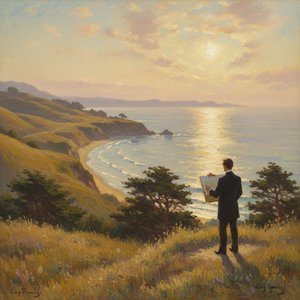
The Impressionistic Vision of Theodore Wores
Theodore Wores, a name synonymous with the luminous beauty of the American West and the delicate nuances of Pacific cultures, lived a life defined by movement and observation. Born in San Francisco in 1859, Wores was a child of the burgeoning American frontier, yet his artistic soul was deeply shaped by the grand traditions of Europe. His journey began in the local studio of Joseph Harrington, where, as a young boy of twelve, he first mastered the essential languages of color, composition, and perspective. This early foundation allowed him to navigate the prestigious halls of the Royal Academy in Munich, where the influence of masters like Jules Bastien-Lepage and Frederic Leighton infused his work with a sophisticated European Impressionistic sensibility. It was here that Wores learned to capture not just the physical form, but the very atmosphere surrounding his subjects.
As his career matured, Wores became a true global wanderer, an artist whose palette was enriched by the diverse landscapes of Japan, Hawaii, and Samoa. These travels were more than mere excursions; they were profound periods of cultural immersion that expanded his artistic vocabulary. In Japan, he found inspiration in the delicate interplay of light and shadow within temple gardens and cherry blossom groves, creating works that resonated with a quiet, meditative grace. His friendships with luminaries such as James Abbott McNeill Whistler and Oscar Wilde suggest a man deeply embedded in the vibrant intellectual and aesthetic currents of his time. Whether depicting the serene ritual of a Lei Maker or the bustling energy of a Yokohama street, Wores possessed a rare ability to translate foreign landscapes into a universal language of light and emotion.
A Legacy of Light and Cultural Dignity
Upon returning to the American West, Wores turned his gaze toward the profound dignity of Native American life and the rugged splendor of the California coast. His work during this period stands as a monumental achievement in American Impressionism, blending soft, diffused light with a deep respect for his subjects. He did not merely paint landscapes; he captured the spirit of a vanishing frontier. Through his brush, the American West was rendered with a luminous quality—where twilight hues and blossoming trees became symbols of both tranquility and resilience. His ability to weave Native American symbolism into the fabric of Impressionistic technique allowed him to create portraits that were as much about cultural heritage as they were about aesthetic beauty.
The historical significance of Theodore Wores lies in his role as a bridge between worlds. He brought the refined techniques of the Munich Academy to the untamed landscapes of the Pacific and the American frontier, creating a body of work that remains vital and evocative today. His paintings are held in some of the most prestigious collections in the world, including the Smithsonian American Art Museum and the White House, ensuring that his vision of a multifaceted, interconnected world continues to inspire. Through his mastery of light and his empathetic eye, Wores left behind an indelible record of the beauty, the struggle, and the enduring spirit of the landscapes and peoples he so lovingly documented.