Rose Maynard Barton: Et liv i akvarell
- Født: 21. april 1856, Rochefort, Irland
- Død: 1930
Rose Maynard Barton (1856-1930) var en høyt ansett anglo-irsk akvarellkunstner, berømt for sine fengslende landskap, sjarmerende gatebilder fra Dublin og London, samt sine delikate barneportretter. Hun trådte frem som en betydningsfull skikkelse i kunstverdenen og stilte ut omfattende gjennom en rekke prestisjetunge malerisamfunn.
Tidlig liv og kunstnerisk utdanning
- Familiebakgrunn: Rose ble født inn i en familie med sterke kunstneriske anlegg; hun var i slekt med Eva Henrietta og Letitia Marion Hamilton, som begge var kjent for sine kunstneriske talenter. Hennes far var advokat, mens hennes mors familie stammet fra County Galway.
- Tidlige reiser og studier (1875): Et vendepunkt inntraff i 1875 da Rose, ledsaget av sin søster Emily, besøkte Brussel for å motta tegnetimer av den franske kunstneren Henri Gervex. Dette markerte begynnelsen på hennes formelle kunstneriske reise.
- Videre opplæring: Hun foredlet senere sine ferdigheter i Paul Jacob Naftels atelier i London, et avgjørende skritt i utviklingen av hennes akvarellteknikk.
Kunstnerisk karriere og utstillinger
- Watercolour Society of Ireland (WCSI): Bartons karriere blomstret gjennom hennes jevnlige deltakelse i WCSI, hvor hun viste frem sine stadig utviklende ferdigheter.
- Royal Academy (RA) & Royal Hibernian Academy (RHA): Hennes arbeid vant bredere anerkjennelse gjennom utstillinger ved RA og RHA, noe som etablerte hennes rykte som en dyktig akvarellist. Blant hennes tidlige, bemerkelsesverdige verk var "Dead Game", utstilt ved RHA i 1882.
- Utstillinger i London: Hun stilte også ut sine verk i fremtredende London-gallerier som Japanese Gallery, Dudley Gallery og Grosvenor Gallery.
- Society of Women Artists: Som medlem av dette samfunnet var hun en aktiv pådriver for kvinnelige kunstnere innen det kunstneriske fellesskapet.
Stil og fremtredende verk
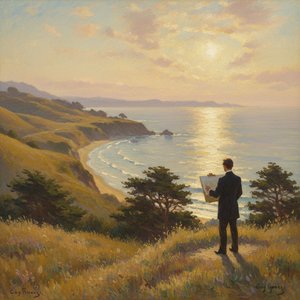
- Kjennetegn: Bartons akvareller er preget av sine delikate og uttrykksfulle kvaliteter, der hun benyttet farge og lys for å skape dybde og emosjonell resonans. Stilen hennes bar ofte preg av impresjonistiske impulser.
- Motivverden: Hun avbildet ofte landskap, gatebilder (særlig fra Dublin og London), hager og sjarmerende barneportretter.
- Viktige verk:
- Old Chelsea Wall, London – Et fremragende eksempel på hennes evne til å fange essensen i et motiv, tilgjengelig på WahooArt.com.
- The Doorway (1918) - Et verk som fremmaner barndommens uskyld mot en storslått døråpning.
- Samlinger: Hennes verker er bevart i prestisjetunge offentlige samlinger, inkludert National Gallery of Ireland, Dublin City Gallery The Hugh Lane og Ulster Museum.
Ettermæle og historisk betydning
- Bidrag til irsk kunst: Rose Maynard Barton ga et betydelig bidrag til irsk kunst gjennom sin produktive virksomhet og sine omfattende utstillinger.
- Innflytelse og anerkjennelse: Hennes tilknytning til høyt respekterte malerforeninger som RWS, RA og RHA sementerte hennes posisjon som en respektert akvarellist. Hun ble i 1911 det første kvinnelige medlemmet av Royal Watercolour Society.
- Vennskap med Mildred Anne Butler: Et livslangt vennskap med den medkunstneren Mildred Anne Butler la til rette for kunstnerisk utveksling og gjensidig støtte.
Spørsmål og svar
I hvilken historisk periode arbeidet Rose Maynard Barton?
Rose Maynard Barton arbeidet i perioden tallet. Perioden plasserer kunstnerens virke i historien.
Finnes det en komplett liste over Rose Maynard Barton sine kunstverk?
Alle verk av Rose Maynard Barton på denne nettsiden kan utforskes via kunstnerens Alle kunstverk-side.
Kan jeg bla gjennom verkene til Rose Maynard Barton etter kunstretning?
Retningene Rose Maynard Barton arbeidet innen kan ses på kunstnerens Alle retninger-side, som grupperer kunstverkene etter stilretning.
Hvor kommer Rose Maynard Barton fra?
Rose Maynard Barton ble født i Irland.
Hvilken by og hvilket land er Rose Maynard Barton født i?
Rose Maynard Barton ble født i Rochefort i Irland.
Kan jeg bla gjennom Rose Maynard Barton sine verk etter stemning?
Rose Maynard Barton sine verk kan utforskes etter stemning på artistens Stemningsrom-side, som organiserer kunstverkene etter deres tilhørende stemninger.
Hvor og når ble Rose Maynard Barton født?
Rose Maynard Barton ble født i Rochefort i 1856.