Pieter Thijs (1624 – 1677): A Flemish Baroque Master
Pieter Thijs, Peter Thijs or Pieter Thys (1624 in Antwerp – 1677 in Antwerp) stands as a pivotal figure within the Flemish Baroque artistic landscape. Born into a modest family, his early life foreshadowed a remarkable trajectory fueled by exceptional tutors—Artus Deurwerdeers and Frans Francken the Younger—who instilled him with foundational skills in cabinet painting and the stylistic nuances championed by Anthony van Dyck’s workshop.
His formative years culminated in mastery of the Antwerp Guild of St Luke in 1644–45, marking a crucial juncture where he honed his craft under Van Dyck's direct influence. This mentorship profoundly shaped his artistic vision, equipping him with techniques and sensibilities that would define his oeuvre. Notably, Thijs’s association with Gonzales Coques further enriched his artistic education, exposing him to the grandeur of Cinquecento art and cementing his commitment to meticulous observation and skillful execution.
Throughout his career, Thijs enjoyed considerable patronage from influential figures like Archduke Leopold Wilhelm of Austria and Frederick Henry, Prince of Orange, allowing him to undertake ambitious projects—including opulent tapestry designs for Huis Honselaarsdijk—and collaborate on monumental undertakings such as the decoration of Cologne Cathedral. His success stemmed partly from his father-in-law’s expansive business interests, facilitating international trade connections that secured commissions and propelled his reputation across Europe.
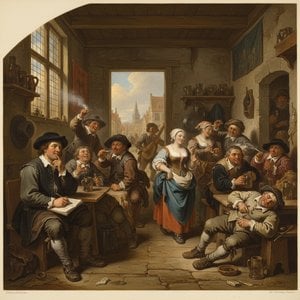
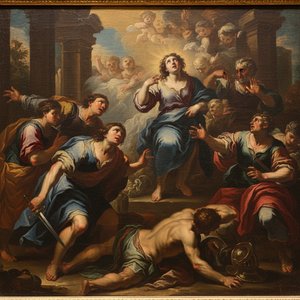
Thijs's artistic output encompassed a diverse range of genres, reflecting both his technical prowess and intellectual curiosity. He excelled in portraiture—capturing the likenesses of nobility with remarkable accuracy and conveying psychological depth—and produced evocative history paintings imbued with symbolic resonance. His distinctive style, closely aligned with Van Dyck’s aesthetic, distinguishes him as one of the last pupils of the celebrated master, ensuring his legacy endures as a testament to Baroque artistry.
Despite initial challenges stemming from attribution disputes—many works initially attributed to Van Dyck were subsequently reassigned to Thijs—scholarly research has illuminated the true extent of his artistic contribution. His meticulous attention to detail and masterful handling of pigment exemplify the highest standards of Baroque painting, securing his place among the foremost artists of his era.
His influence extended beyond his own lifetime, shaping the artistic sensibilities of subsequent generations and inspiring admiration for his unwavering dedication to craftmanship and artistic innovation. Today, Pieter Thijs’s paintings reside in prestigious museums worldwide—most notably the Mayer van den Bergh Museum—serving as enduring reminders of Flemish Baroque brilliance.