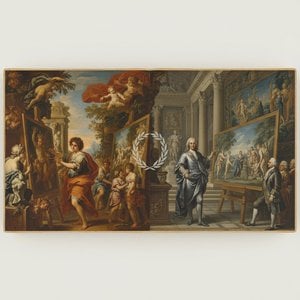
A Master of Touch: The Life and Legacy of Pascal-Joseph Taskin
Born in the small Belgian town of Theux on July 27, 1723, Pascal-Joseph Taskin emerged into a world poised between the waning grandeur of the Baroque era and the burgeoning elegance of the Rococo. Though born within the Holy Roman Empire, his destiny lay firmly rooted in France, specifically in the vibrant artistic heart of Paris. His journey to becoming one of the most celebrated harpsichord makers of the 18th century was not one of immediate acclaim, but rather a gradual ascent fueled by meticulous craftsmanship and an innovative spirit. Taskin’s early life remains somewhat shrouded in mystery; however, it is known he possessed a natural aptitude for mechanics and a keen ear for musical nuance – qualities that would define his future profession. He arrived in Paris with ambition, seeking to master the art of keyboard instrument construction.
Apprenticeship and Ascendancy: From Blanchet’s Workshop to Royal Favor
Taskin's formal training began within the esteemed workshop of François-Étienne Blanchet II, a leading harpsichord maker of the time. This apprenticeship proved pivotal, providing him with a solid foundation in traditional techniques and an understanding of the intricacies involved in building these complex instruments. He absorbed not only the practical skills of woodworking, soundboard construction, and action regulation but also the aesthetic sensibilities that characterized French harpsichords – known for their delicate tone and ornate decoration. In 1766, a remarkable turn of events propelled Taskin into prominence: he took over Blanchet’s workshop *and* married Blanchet's widow. This strategic union not only secured his professional standing but also granted him access to an established clientele, including members of the French aristocracy and court. His skill quickly became apparent, attracting commissions that solidified his reputation as a master craftsman. He was officially received into the guild in 1766, marking his full independence as a *maître*.
Innovation and Refinement: The Taskin Harpsichord
Taskin wasn’t content merely to replicate existing designs; he possessed an insatiable curiosity and a drive to improve upon the harpsichord's capabilities. He is credited with numerous innovations, most notably his development of a mechanism for altering the timbre of the instrument – essentially offering different “voices” or registers within a single harpsichord. This feature allowed performers greater expressive control and tonal variety, bridging the gap between the harpsichord’s limitations and the growing demands of contemporary music. He also experimented with piano construction, recognizing the potential of this newer instrument even as he continued to refine his harpsichords. His instruments were characterized by a lightness of touch, clarity of tone, and exquisite ornamentation – often incorporating marquetry, gilding, and painted panels that reflected the Rococo aesthetic. Taskin’s meticulous attention to detail extended beyond the mechanical aspects; he carefully selected materials, ensuring the highest quality soundboards (often spruce from the Vosges mountains) and strings. He also developed a unique method of damping, contributing to the instrument's sustained resonance.
A Courtly Presence: Patronage and Influence
Taskin’s success attracted the attention of influential patrons within the French court, including Madame de Pompadour and various members of the nobility. He received royal commissions and was appointed *facteur de harpsichords du Roi* (harpsichord maker to the King), a prestigious title that further cemented his position at the forefront of Parisian instrument making. This patronage not only provided financial security but also exposed him to the latest musical trends and aesthetic preferences, influencing his designs and innovations. He became a central figure in the Parisian musical landscape, collaborating with composers and performers who sought instruments capable of expressing their artistic visions. His workshop flourished, employing skilled artisans and producing harpsichords that were highly sought after throughout Europe.
The influence of Taskin’s work extended beyond France, inspiring instrument makers across the continent to adopt his techniques and innovations.
Historical Significance: A Bridge Between Eras
Pascal-Joseph Taskin died in Paris on February 9, 1793, a period marked by the turmoil of the French Revolution. While the political landscape shifted dramatically during his later years, his legacy as a master harpsichord maker endured. He stands as a pivotal figure in the history of keyboard instruments, representing a transition between the Baroque and Classical eras. His innovations – particularly his timbre-altering mechanism – anticipated the expressive capabilities of the piano and helped to sustain the popularity of the harpsichord during a time when it was increasingly overshadowed by its newer rival.
- Technical Mastery: Taskin’s instruments are renowned for their precision engineering, clarity of tone, and responsiveness.
- Innovative Design: His development of timbre-altering mechanisms revolutionized the harpsichord, offering greater expressive possibilities.
- Courtly Patronage: Royal commissions and appointments elevated his status and influence within Parisian society.
- Lasting Legacy: Taskin’s work bridged the gap between the Baroque and Classical eras, inspiring generations of instrument makers and musicians.
Today, surviving Taskin harpsichords are highly prized by collectors and performers alike, offering a glimpse into the exquisite craftsmanship and musical sensibilities of 18th-century France. They serve as a testament to his enduring contribution to the world of music and a reminder of the artistry that flourished under his skilled hands.