Moses Griffith: A Welsh Observer of Beauty and Detail
Born in 1747 on the windswept Llŷn Peninsula, Moses Griffith’s life was a testament to the power of observation and the quiet dedication required to cultivate artistic skill. His origins were humble – his parents, farmers of modest means – yet they unknowingly provided him with a foundation for a career that would ultimately bring him recognition as one of Wales' most significant watercolourists of the late 18th and early 19th centuries. Griffith’s story is inextricably linked to Thomas Pennant, a celebrated naturalist and writer whose tours of Britain and Wales offered Griffith an unparalleled opportunity to hone his draughtsmanship and develop a distinctive artistic voice.
Griffith's early education was rudimentary, lacking the formal training afforded to many artists of his time. However, his innate talent for drawing quickly became apparent, attracting the attention of Pennant in 1769. Pennant, recognizing Griffith’s potential, took him on as a companion and illustrator, embarking on extensive journeys across Wales and Scotland. This partnership proved transformative. Griffith wasn't merely copying landscapes; he was meticulously documenting details – the textures of stone, the patterns of foliage, the subtle shifts in light – with an almost obsessive precision. Pennant’s publications, particularly his *Tour of Wales*, benefited immensely from Griffith’s illustrations, which provided a visual record of the country’s diverse beauty and established a benchmark for topographical accuracy.
The Pennant Years: Observation and Technique
During his time with Pennant, Griffith's artistic style began to coalesce. He developed a remarkable ability to render delicate details – the intricate patterns of lichen on ancient walls, the shimmering surface of water, the individual blades of grass – with astonishing clarity. His technique relied heavily on watercolour, a medium that allowed for both spontaneity and control. Griffith’s work is characterized by a restrained palette, favoring muted greens, browns, and blues to capture the atmospheric qualities of the Welsh landscape. He employed a loose, expressive brushstroke, layering washes of colour to create depth and luminosity. Unlike many artists who sought grand vistas, Griffith focused on intimate scenes – churches, farmhouses, and rural life – revealing a deep appreciation for the everyday beauty of his surroundings.
It’s important to note that Griffith's role extended beyond mere illustration; he was an active participant in Pennant’s expeditions, contributing significantly to the intellectual and artistic atmosphere of the journeys. His meticulous drawings served not only as visual aids but also as valuable scientific records, capturing details that would have been missed by a less observant eye. This collaborative relationship fostered a unique synergy between artist and writer, resulting in a body of work that is both aesthetically pleasing and historically significant.
Beyond Pennant: Portraits and Welsh Identity
Following Pennant’s death in 1798, Griffith continued to work as an engraver and watercolourist. He secured employment with David Pennant, the son of his former patron, and produced a substantial series of watercolours depicting Welsh churches, country houses, and rural scenes. These works are particularly noteworthy for their nuanced portrayal of Welsh identity – capturing not just the physical appearance of these buildings but also the spirit and character of the communities that inhabited them.
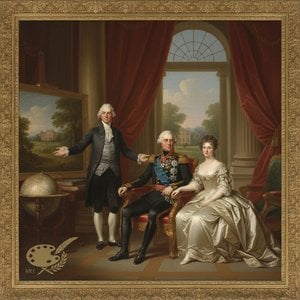
Griffith’s output expanded beyond landscape to include portraits, demonstrating a versatility in his artistic practice. His self-portraits, painted later in life, offer a poignant glimpse into the artist's evolving perspective on his own work and his place in the world. These paintings are characterized by a quiet dignity and a subtle awareness of mortality.
Legacy and Influence
Moses Griffith’s legacy lies not in grand artistic pronouncements or revolutionary techniques, but rather in his unwavering dedication to observation and his ability to capture the essence of Welsh beauty with remarkable detail. His work is now held by major institutions such as the National Museum of Wales, the British Museum, and the Victoria and Albert Museum, testament to its enduring quality and historical importance.
Griffith’s influence extends beyond his individual works; he helped to establish watercolour as a viable medium for topographical illustration and contributed significantly to the development of Welsh landscape art. His meticulous approach paved the way for later generations of artists who sought to document and celebrate the natural beauty of Wales. He remains a quietly significant figure in British art history, a testament to the power of observation, dedication, and a keen eye for detail.