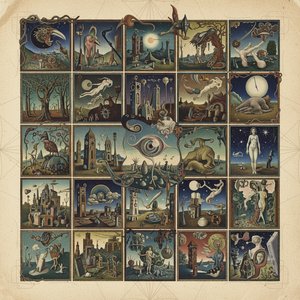
Ernst Fuchs (1930–2015): Pioneer of Fantastic Realism
Ernst Fuchs was born on February 13, 1930 in Vienna, Austria. His father, Maximilian Fuchs, son of an orthodox Jewish family, had turned down a career as a Rabbi, leaving his theological studies uncompleted. He married Leopoldine, a Christian. When the Nazis occupied Austria in March 1938, Maximilian Fuchs emigrated to Shanghai. Ernst remained in Vienna together with his mother, but Nazi legislation made it illegal for Leopoldine to raise her son. Ernst was deported to a transit camp for children of mixed racial origin. Thereupon Leopoldine Fuchs agrees to a formal divorce from her husband, thus saving her son from the extermination camp.
- Early Artistic Education: Ernst Fuchs’ artistic education began at the St Anna Painting School in his hometown of Vienna. Here, he was taught by Fritz Frölich (1910–2001), a surrealist much inspired by Pablo Picasso. This must have sown the seeds of the surreal in Fuch’s mind.
- Vienna Academy of Fine Arts: He attended the Vienna Academy of Art where he studied with Professor Albert Paris von Gütersloh who immediately recognized Fuchs’ talent and supported him with all means. Studying at the academy, Ernst Fuchs’ idols were no lesser than Egon Schiele and Gustav Klimt.
- The Founding of Fantastic Realism: Along with Arik Brauer, Rudolf Hausner, Wolfgang Hutter and Anton Lehmden, Fuchs established the „Vienna School of Fantastic Realism“ in 1946. The style of art they were creating was revolutionary, blending dreamlike imagery with meticulous observation of reality.
Influences and Artistic Style: Klimt, Schiele, Munch & Beyond
Fuchs’ artistic vision drew heavily from the masters of his time—Klimt, Schiele, Munch, Picasso—artists who explored psychological depth and visual richness. He adopted the mischtechnik (mixed technique), reviving egg tempera alongside oil paints mixed with resin, achieving a jewel-like effect reminiscent of old masters like Albrecht Altdorfer, Albrecht Dürer, Matthias Grünewald and Martin Schongauer. This meticulous approach demanded patience and precision, mirroring the dedication of artists striving for sublime beauty.
- Klimt & Schiele: Fuchs’ fascination with Klimt's decorative patterns and Schiele's expressive portraits profoundly impacted his artistic style.
- Munch & Picasso: Edvard Munch’s unsettling landscapes and Pablo Picasso’s fragmented forms served as inspiration for Fuchs’ exploration of emotion and visual distortion.
The Vienna School and Its Legacy
Ernst Fuchs' contribution to the art world was undeniable. He established the Galerie Fuchs-Fischoff to promote young artists fascinated by Fantastic Realism. Together with Friedensreich Hundertwasser and Arnulf Rainer, he founded the pintorarium. In 1974 he returned to Austria where he acquired Otto Wagner villa in Vienna-Hütteldorf. He designed stage sets for Mozart and Richard Wagner operas. Fuchs’ work continues to inspire artists today, demonstrating the enduring power of imagination and meticulous craftsmanship.
- Otto Wagner Villa: The restoration of Otto Wagner villa became a symbol of Fuchs' commitment to preserving Austrian architectural heritage.
- Opera Design: His stage designs for Mozart and Wagner operas showcased his artistic vision and technical skill.
Monumental Achievements & Artistic Vision
Fuchs’ magnum opus was undoubtedly “Psalm 69,” a monumental painting exploring themes of faith, suffering, and redemption. He created the sculpture “Queen Esther” for the entrance to Ernst Fuchs Museum in Hütteldorf. His artistic endeavors extended beyond painting and sculpture; he pursued architectural design, stagecraft, and printmaking—each reflecting his profound engagement with art history and philosophical inquiry. Fuchs’ legacy resides in his unwavering belief in the transformative potential of art and its ability to convey complex emotions and ideas.