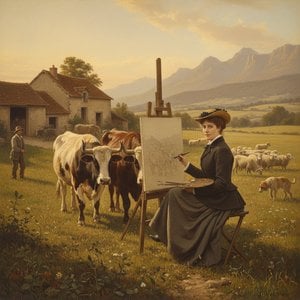
Léon W. Lefebvre: A Lille Artist Bridging History and Imagination
Léon W. Lefebvre (1848-1916) was a French artist born in Lille, Northern France—a city that would become inextricably linked to his artistic endeavors and intellectual pursuits. More than just a painter, Lefebvre was a prolific writer, historian, theater designer, and architect, shaping the cultural landscape of Lille during the Belle Époque and beyond. His legacy resides not only in his visual art but also in his dedication to preserving Lille’s heritage and fostering its artistic spirit.Early Life and Artistic Beginnings
Born into a family with roots in Lille’s merchant class, Lefebvre received an education that emphasized classical studies and humanist values—influences evident throughout his oeuvre. He initially pursued architecture, graduating from École Supérieure d'Architecture Henri Poincaré in Paris, but quickly gravitated towards painting, recognizing its capacity to convey emotion and narrative complexity. His formative years were marked by exposure to Impressionism and Symbolism, movements that profoundly impacted his artistic style and worldview. Lefebvre’s early works showcased a meticulous attention to detail combined with an expressive use of color—characteristics that would define his distinctive aesthetic.The Societé des Sciences et Arts de Lille and Historical Scholarship
Lefebvre's involvement with the Société des Sciences et Arts de Lille cemented his reputation as a scholar and cultural advocate. Serving as its treasurer from 1904 to 1910, he championed initiatives aimed at promoting artistic education and preserving Lille’s architectural heritage. This commitment extended beyond institutional roles; Lefebvre actively participated in commissions tasked with documenting Lille's history—a role that demanded both rigorous research and imaginative storytelling. His meticulous reconstructions of medieval Lille, particularly the Vieux Lille (Old Lille), stand as testaments to his passion for historical accuracy blended with artistic sensitivity.Theater Design: Shaping Lille’s Performing Arts Scene
Beyond painting and writing, Lefebvre excelled as a theater designer—a vocation that flourished during Lille’s vibrant theatrical tradition. He collaborated extensively with prominent Lille theaters, crafting sets and costumes that reflected the stylistic trends of his time while enhancing the dramatic impact of productions. Lefebvre's designs were notable for their elegance, sophistication, and skillful use of color and texture—elements that contributed significantly to the aesthetic quality of Lille’s performing arts scene. His work demonstrated a keen understanding of theatrical conventions alongside an artistic vision that prioritized visual storytelling.Legacy and Artistic Influence
Léon W. Lefebvre's influence extended far beyond Lille’s borders, establishing him as a respected figure in European art history. While his paintings—primarily landscapes and portraits—remain relatively obscure compared to his architectural projects and theatrical designs, they nevertheless embody the spirit of Impressionism and Symbolism—movements that celebrated beauty, emotion, and subjective experience. Lefebvre's dedication to preserving Lille’s cultural heritage—particularly its library—underscores his belief in the importance of artistic education and intellectual curiosity. His legacy continues to inspire artists and scholars alike, reminding us that creativity can enrich our understanding of both past and present.- Notable Works: Explore Lefebvre's landscapes and portraits for insights into Impressionistic techniques.
- Societé des Sciences et Arts de Lille Contributions: Discover his role in promoting Lille’s artistic culture and architectural preservation.
- Theater Design Achievements: Examine Lefebvre’s theatrical sets and costumes—exemplars of Belle Époque aesthetic sensibilities.