Jean-Baptiste Debret: En nyklassisk maler og pioner innen brasiliansk kunstutdanning
- Født: Paris, Frankrike (18. april 1768)
- Død: Paris, Frankrike (1848)
Tidlig liv og kunstnerisk dannelse
Jean-Baptiste Debret var en fransk maler og tegner som ble hyllet for sin nyklassiske stil. Han ble født i Paris i 1768 og mottok sin formelle kunstneriske opplæring ved den prestisjetunge franske kunstakademiet. En avgjørende innflytelse på hans utvikling var Jacques-Louis David, en berømt nyklassisistisk kunstner som også tilfeldigvis var en slektning av Debret. Under Davids veiledning foredlet Debret sine ferdigheter og absorberte prinsippene i nyklassisismen – en stil som la vekt på klassisk nøkternhet, idealiserte former og et forsterket emosjonelt uttrykk.
Karrierehøydepunkter: Suksess ved Salongen og reisen til Brasil
Debret debuterte ved Salon des Beaux-Arts i 1798, hvor han vant en andrepris. Hans tidlige verk reflekterte den nyklassisistiske estetikken, og skildret ofte historiske scener som resonnerte med datidens moralske klima. Et betydelig vendepunkt i Debrets karriere inntraff i mars 1816, da han ble en del av den franske kunstmisjonen til Brasil. Denne reisen viste seg å være transformativ, både personlig og profesjonelt.
- Den franske kunstmisjonen: Debrets deltakelse i denne misjonen understreket Frankrikes engasjement for kulturell utveksling og kunstutdanning i utlandet.
- Det keiserlige kunstakademiet: I desember 1822 etablerte han sitt atelier ved Det keiserlige kunstakademiet i Rio de Janeiro, hvor han raskt ble en høyt verdsatt lærer.
- Den første brasilianske kunstutstillingen: Debret ledet organiseringen av Brasils aller første kunstutstilling, som viste frem både hans egne verk og hans studenters arbeider – en milepæl for den spirende brasilianske kunstscenen.
Kunstnerisk stil og betydningsfulle verk
Debrets malerier er preget av sin nitidige detaljrikdom og trofasthet mot nyklassisistiske prinsipper. Motivet hans omfattet ofte historiske hendelser, portretter og scener som skildret det brasiliansende livet og kulturen. Hans arbeid gir uvurderlig innsikt i 19. århundrets Brasil.
- Nyklassisistisk innflytelse: Debrets stil er dypt forankret i den nyklassisistiske tradisjonen, noe som er tydelig i hans vektlegging av klarhet, orden og idealiserte former.
- Historiske scener: Mange av hans malerier skildrer betydningsfulle historiske øyeblikk, noe som reflekterer et ønske om å utdanne og inspirere gjennom kunsten.
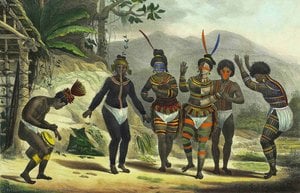
- Brasilianske motiver: Hans tid i Brasil førte til at han i økende grad fokuserte på å avbilde brasilianske landskap, urfolk og kolonitidens liv.
Bemerkelsesverdige verk av Jean-Baptiste Debret kan finnes på WahooArt-nettstedet, inkludert:
- Sacred Ceremony of D. Pedro 1 ° Emperor of Brazil in Rio de Janeiro 1 ° December 1822 – Et detaljert litografi som fanger et avgjørende øyeblikk i brasiliansk historie.
- Napoléon harangue les troupes bavaroises et wurtembourgeoises à Abensberg, 20 avril 1809 – En kraftfull fremstilling av Napoleon som taler til troppene.
- Indians Crossing A Creek – Et eksempel på hans detaljerte skildringer av urfolksliv.
- Indigenous Population Of Cantagalo, C.1826 – En akvarell som viser frem brasiliansk kultur og landskap.
Ettermæle og de senere år
Debret vendte tilbake til Frankrike i 1831 og ble valgt som medlem av Académie des Beaux-Arts. Han er kanskje best kjent for sin monumentale tresvolums serie med graveringer, Voyage pittoresque et historique au Brésil, utgitt i 1834. Dette verket fungerte som en visuell dokumentasjon av livet i Brasil under hans opphold der, og bidro betydelig til Europas forståelse av landet. Til tross for sin anerkjennelse, døde Debret fattig i Paris i 1848.
- Voyage Pittoresque: Hans publikasjon forblir en uvurderlig ressurs for både historikere og kunstentusiaster.
- Innvirkning på brasiliansk kunstutdanning: Debrets bidrag til kunstutdanning i Brasil etterlot seg en varig arv som bidro til å legge grunnlaget for utviklingen av brasiliansk kunstnerisk talent.
For ytterligere informasjon om Jean-Baptiste Debret og hans arbeid, vennligst besøk WahooArt-nettstedet eller se Wikipedia-siden om Museu Nacional de Belas Artes.
Spørsmål og svar
Hvilke kunstverk av Jean-Baptiste Debret har flest visninger?
Statistikk om Jean-Baptiste Debret sine verk er tilgjengelig på kunstnerens Besøksstatistikk-side.
Hvor kommer Jean-Baptiste Debret fra?
Jean-Baptiste Debret ble født i Frankrike.
Finnes det en komplett liste over Jean-Baptiste Debret sine kunstverk?
Utforsk alle verk av Jean-Baptiste Debret på denne nettsiden via kunstnerens Alle kunstverk-side.