Jan Frans van Bredael: A Tranquil Vision of Antwerp’s Golden Age
Jan Frans van Bredael (1686 – 1750) stands as a testament to the serene beauty and meticulous craftsmanship that characterized Antwerp during its zenith as a European artistic center. Born into a family steeped in artistic tradition, Bredael honed his skills under the tutelage of Jacob Savertijns, a prominent Flemish landscape painter who instilled in him a profound appreciation for capturing atmospheric subtleties and conveying emotion through color and light—principles that would define Bredael’s distinctive oeuvre. His life unfolded against the backdrop of a turbulent era marked by wars and political upheaval, yet he persevered in his artistic pursuits, establishing himself as one of Antwerp's leading painters and securing commissions from wealthy patrons eager to adorn their homes with landscapes imbued with contemplative grace.
- Early Life & Training: Bredael’s formative years were spent absorbing the artistic ethos of Antwerp’s guild system, where apprenticeships demanded unwavering dedication and technical mastery. Savertijns' influence extended beyond mere instruction; he fostered a deep understanding of compositional principles and a sensitivity to capturing the essence of nature—a legacy that would resonate throughout Bredael’s subsequent works.
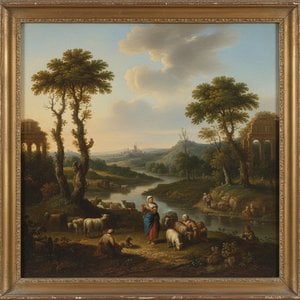
- Notable Landscapes: Bredael’s fame rests primarily on his breathtaking landscapes, particularly those depicting winter scenes in the Ardennes region. Unlike many of his contemporaries who favored dramatic vistas and heroic narratives, Bredael prioritized tranquility and understated elegance. His canvases depict snow-covered forests bathed in soft sunlight, conveying a profound sense of stillness and inviting viewers to contemplate the sublime beauty of the natural world.
- Technique & Style: Bredael’s artistic style is characterized by meticulous brushwork—a hallmark of Flemish painting—and an astonishing ability to achieve remarkable tonal gradations. He employed glazing techniques with exceptional precision, layering translucent washes of color upon opaque underpaintings to create luminous surfaces that shimmered with atmospheric haze. This masterful technique allowed him to render textures with breathtaking realism while simultaneously conveying a palpable sense of mood.
- Influences: Bredael’s artistic vision was undoubtedly shaped by the prevailing aesthetic sensibilities of his time, drawing inspiration from artists like Jacob Savertijns and Johannes Vermeer—both masters of capturing light and color in domestic interiors. However, Bredael possessed a singular talent for distilling complex emotions into deceptively simple compositions.
- Legacy & Significance: Jan Frans van Bredael’s landscapes continue to captivate audiences today with their serene beauty and technical brilliance. He represents an important voice within the Flemish Baroque tradition—a movement that championed intellectual contemplation alongside artistic virtuosity. His enduring appeal lies in his ability to transport viewers to a realm of quiet contemplation, reminding us of the profound power of art to evoke emotion and inspire wonder.
Further Exploration: For more information on Jan Frans van Bredael’s life and work, consult resources at
Museum Smidt Van Gelder in Antwerp and explore online archives dedicated to Flemish Baroque painting. Examining his paintings alongside those of contemporaries like Jacob Savertijns offers invaluable insight into the artistic landscape of Antwerp during its Golden Age.