James M. Burnet: Painter of Scottish Rural Life
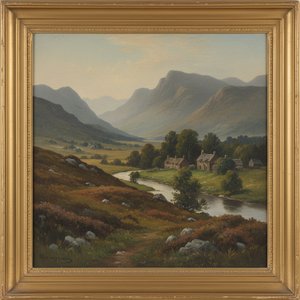
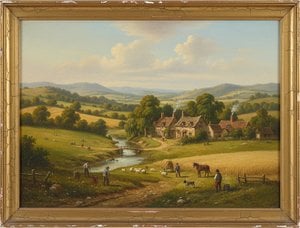
James M. Burnet (1788–1816) stands as a singular figure in 18th-century Scottish landscape painting, remembered primarily for his evocative depictions of Ayrshire and Dumfriesshire countryside—scenes imbued with an almost palpable sense of tranquility and observation. Though tragically cut short by tuberculosis at the age of twenty-eight, Burnet’s artistic legacy persists through a handful of meticulously crafted canvases that capture the essence of rural Scotland during a period of significant social change. His work represents not merely visual representation but a deliberate attempt to convey narrative—a fascination with capturing the subtleties of light and atmosphere, mirroring the approach championed by David Wilkie and informed by Dutch masters like Cuyp and Potter.- Early Life & Family Background: Born in Musselburgh, James Burnet descended from a family steeped in artistic tradition. His father, George Burnet, served as general surveyor of excise, while his mother, Anne Cruikshank—sister to anatomist William Cruikshank—provided him with an upbringing that fostered intellectual curiosity and appreciation for the arts. Notably, he was brother to John Burnet, another artist who pursued a similar path in landscape painting.
- Training & Influences: Burnet’s artistic education began at John Graham's evening classes at the Trustees' Academy in Edinburgh, where he honed his skills alongside fellow aspiring artists. Crucially, he was profoundly impacted by David Wilkie’s *Blind Fiddler*, whose compositional dynamism instilled in him a desire for dynamic movement and expressive storytelling within his own paintings. Furthermore, Burnet drew inspiration from Dutch landscape painters—particularly Cuyp and Potter—whose masterful use of light and color established precedents for capturing the natural world with remarkable accuracy and emotional resonance.
- Style & Technique: Burnet’s distinctive style characterized by a meticulous attention to detail and an unwavering commitment to realism, distinguished him from many of his contemporaries. He eschewed grand vistas or theatrical displays of emotion, instead focusing on portraying scenes of everyday rural life—cattle herds grazing peacefully in meadows bathed in golden sunlight, shepherds tending their flocks amidst rolling hills—with remarkable sensitivity. His canvases are notable for their subtle gradations of color and the careful rendering of textures, reflecting Potter’s influence and demonstrating Burnet's dedication to capturing the nuances of natural illumination.
- Notable Works & Exhibitions: Burnet’s artistic output consisted of approximately twenty paintings—primarily landscapes featuring cattle—which he exhibited at the Royal Academy between 1812 and 1814. Among his most celebrated works are *A Herd of Cattle*, *The Shepherdess*, and *Landscape with Cows*. These paintings exemplify Burnet's stylistic principles, showcasing his ability to convey both visual beauty and narrative depth.
- Legacy & Significance: Despite his premature death at the age of twenty-eight, James M. Burnet’s contribution to Scottish landscape painting remains significant. His canvases serve as invaluable records of rural Scotland during a formative period—a testament to the enduring power of observation and artistic sensitivity. Today, Burnet's paintings reside in museums across Britain, including the Victoria and Albert Museum and Tate Britain, ensuring that his evocative depictions of Ayrshire and Dumfriesshire continue to inspire admiration for their understated elegance and profound connection to the natural world.