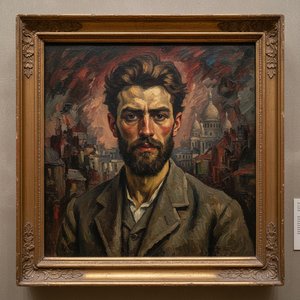
Isaac Lazarus Israëls: Et liv i Amsterdam-impresjonismen
- Født: Amsterdam, Nederland (3. februar 1865)
- Død: Haag, Nederland (7. oktober 1934)
Tidlig liv og kunstneriske begynnelse
Isaac Lazarus Israëls ble født inn i en familie med dype røtter i den nederlandske kunstverdenen. Han var sønn av Jozef Israëls, en fremtredende maler tilknyttet Haag-skolen, og Aleida Schaap. Denne kunstneriske arven fostret en tidlig kjærlighet for malerkunsten hos Isaac, som utviste et bemerkelsesverdig talent fra ung alder. Mellom 1880 og 1882 studerte han ved Den kongelige akademiet i Haag, hvor han møtte George Hendrik Breitner – et vennskap som skulle vare livet ut og sette dype spor i hans kunstneriske bane. Allerede som sekstenåring oppnådde Israëls anerkjennelse da han solgte "Bugle Practice" til kunstneren og samleren Hendrik Willem Mesdag, selv før verket var fullført. Portretter av hans bestemor og en familievenn, malt i samme år, vitnet om en teknisk ferdighet som allerede var langt over det vanlige for hans alder.
Amsterdam-impresjonisten
Israëls steg frem som en ledende skikkelse innen bevegelsen kjent som Amsterdam-impresjonismen. Inspirert av filosofien til Tachtigers – en gruppe forfattere og kunstnere som kjempet for at stilen skulle speile innholdet, og at emosjonelt ladede motiver skulle fremstilles gjennom en intens teknikk – rettet han sitt fokus mot å fange de levende scenene fra dagliglivet i Amsterdam. Han tilbrakte ofte sommerne sammen med sin far i Scheveningen, hvor han malte fargerike kystlandskap. Hans kunst reflekterte et brennende ønske om å skildre Amsterdams pulserende gater, kafeer og kabareter, og beveget seg dermed bort fra de mer tradisjonelle motivene som tidligere nederlandske mestre hadde foretrukket.
- Viktige verk: "Transport of Colonial Soldiers" (Kröller-Müller Museum), "The Coffee Sorters" (Museum Boijmans Van Beuningen), Portrett av Mata Hari (Kröller-Müller Museum)
Reiser og kunstnerisk utvikling
I 1904 flyttet Israëls til Paris, hvor han etablerte et atelier og lot seg bergta av byens unike motiver. Han utforsket sin interesse for mote ytterligere gjennom studier ved motehusene Paquin og Drecoll. Utbruddet av første verdenskrig tvang ham tilbake til Nederland, hvor han i hovedsak fokuserte på portrettmaleri. Etter krigen la han ut på omfattende reiser gjennom Europa og Asia, inkludert to år med skisser og malerier i India og Nederlandsk India. Disse opplevelsene utvidet hans kunstneriske horisont og introduserte ham for nye motiver og perspektiver som beriket hans senere produksjon.
Ettermæle og anerkjennelse
Isaac Lazarus Israëls etterlot seg en betydelig kunstnerskatt, hyllet for sine levende farger, løse penselstrøk og innsiktsfulle skildringer av det hverdagslige livet. Hans malerier er i dag bevart i prestisjetunge museer over hele verden, inkludert Van Gogh-museet og Mauritshuis. Han oppnådde internasjonal berømmelse, og vant blant annet en gullmedalje under OL i 1928 for maleriet "Red Rider". Israëls' ettermæle ligger ikke bare i hans personlige kunstneriske bragder, men også i hans bidrag til utviklingen av Amsterdam-impresjonismen, noe som sikret hans plass som en av de viktigste nederlandske malerne i sin epoke.
Spørsmål og svar
Hvor kan jeg se alle kunstverk av Isaac Israels?
Utforsk alle verk av Isaac Israels på denne nettsiden via kunstnerens Alle kunstverk-side.
Hvordan finner jeg alle verk av Isaac Israels innenfor et bestemt medium?
For å finne alle verk av Isaac Israels innen et bestemt medium, bruk kunstnerens Alle medier-side.
Hva er fødestedet og fødselsåret til Isaac Israels?
Isaac Israels ble født i Amsterdam i 1865.