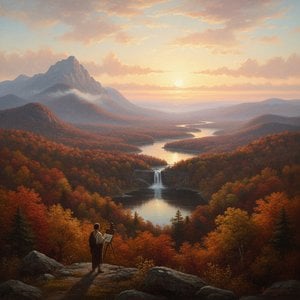
Gong Xian (1618–1689; some sources give his birth year as early as 1617 or as late as 1620; born in kunshan, jiangsu) stands as one of the eight masters of nanjing – a lineage of painters who profoundly shaped Chinese art during the Ming Dynasty’s twilight years and immediately following its fall to the Qing. While his life was marked by political upheaval and exile, Gong Xian's artistic legacy endures through breathtaking landscapes imbued with a distinctive meditative quality that continues to inspire admiration today.
Born into a scholarly family deeply rooted in Confucian ideals, Gong Xian’s early life witnessed the tumultuous events leading up to the Qing conquest of 1644. Demonstrating unwavering loyalty to the Ming court, he actively participated in anti-qing resistance movements – an act that ultimately forced him into perilous flight to safeguard his family and reputation. Spending decades in exile primarily at yangzhou, Gong Xian persevered in his artistic pursuits despite facing considerable hardship. This period fostered the development of his signature “light gong” and “dark gong” styles, techniques characterized by subtle tonal variations within ink washes that conveyed profound emotional depth and atmospheric realism.
Gong Xian’s artistic vision centered around capturing the essence of Chinese Shanshui (mountain-water) painting – a genre prioritizing spontaneity and conveying spiritual contemplation rather than mere topographical accuracy. Mountains dominated his oeuvre, rendered with meticulous detail yet imbued with an ethereal luminescence. Equally prominent were willow trees—often depicted weeping gracefully alongside rivers—serving as recurring motifs symbolizing resilience, melancholy, and the passage of time. These elements combined to create landscapes that transcended simple visual representation, inviting viewers into a realm of serene contemplation.
Beyond his mastery of technique, Gong Xian was also a prolific writer and poet, reflecting the intellectual traditions of his era. His literary works explored themes of filial piety, moral virtue, and the beauty of nature—mirroring the values upheld by the literati class during Ming and Qing times. Although he achieved considerable renown as an artist, Gong Xian tragically died impoverished – a poignant reminder of the sacrifices endured in pursuit of artistic excellence amidst turbulent political circumstances.
His influence extends far beyond his own lifetime. Gong Xian’s “light gong” and “dark gong” styles became foundational to subsequent generations of Nanjing School painters, establishing a stylistic precedent that continues to resonate within Chinese landscape art. Furthermore, his unwavering commitment to portraying the sublime beauty of nature—combined with his intellectual depth—solidifies Gong Xian's position as one of China’s most enduring artistic figures. His works are treasured for their expressive power and timeless aesthetic appeal, ensuring that his vision of Shanshui painting remains relevant and captivating for centuries to come.
Explore the captivating world of 19th-century landscape painting! Discover renowned artists like Friedrich & Monet, key movements, and find the perfect artwork to bring nature's serenity into your home. Expert insights at WahooArt.
Explore the captivating world of the Hudson River School! Discover the history, artists, and defining characteristics of this iconic American art movement. Learn about Romanticism's influence & find inspiration for your collection.
Oppdag de 10 mest ikoniske romantiske landskapsmaleriene! Fra Caspar David Friedrich til Turner – utforsk kunsthistorien, stemningen og fargepalettene. Finn museumskvalitets reproduksjoner på WahooArt.com.