The Ethereal Landscapes of Félix Klajnerman
Félix Klajnerman, a contemporary voice emerging from the storied artistic landscape of Düsseldorf, possesses a rare ability to bridge the gap between the fleeting impressions of light and the profound depths of symbolic introspection. Born in 1983, Klajnerman’s early immersion in the German art scene provided him with a rigorous foundation, yet his creative spirit has always sought something beyond mere representation. His work is not simply a window into nature, but rather a gateway into a psychological realm where the boundaries between the tangible world and the dreamscape begin to dissolve. Through his mastery of the pastel medium, he captures the ephemeral essence of light and atmosphere, creating vistas that feel simultaneously grounded in reality and suspended in time.
The artist’s development was profoundly shaped by his formative years in Düsseldorf, a city synonymous with artistic excellence and home to the prestigious Kunstakademie Düsseldorf. Studying under legendary figures such as Georg Baselitz and Anselm Kiefer, Klajnerman was exposed to the raw, emotive power of neo-expressionism. This period of his life instilled in him a vital conviction: that art must grapple with the weight of emotional truth rather than settling for the superficial imitation of external appearances. While his technical approach leans toward the delicate nuances of Impressionism, the intellectual backbone of his work is deeply rooted in the heavy, existential themes explored by his mentors, allowing him to infuse even his most serene landscapes with a sense of underlying tension and spiritual inquiry.
Technique and the Language of Pastel
At the heart of Klajnerman’s practice lies an extraordinary command of pastel pigments. Unlike many who use the medium for quick sketches, Klajnerman employs a meticulous layering technique that achieves a remarkable sense of depth and luminosity. He treats the surface of his work as a site of geological accumulation, building up textures that mimic the ruggedness of stone, the softness of foliage, and the weightless quality of mist. This tactile approach allows him to render Provençal vistas with such precision that the viewer can almost feel the warmth of the sun-drenched earth or the cool dampness of a morning fog.
His color palette is often characterized by a deliberate, muted sophistication. By avoiding garish tones, he directs the viewer's attention to the subtle shifts in value and temperature that define atmospheric perspective. This restraint serves a greater symbolic purpose; it creates a sense of quietude and contemplation. Within these expansive, light-bathed landscapes, Klajnerman frequently introduces solitary figures, often rendered in monochrome. These figures act as anchors for the viewer’s own emotions, representing humanity’s small yet profound relationship to the sublime. They stand as silent witnesses to the immensity of existence, embodying themes of solitude and the search for meaning within the vastness of the natural world.
Legacy and Artistic Significance
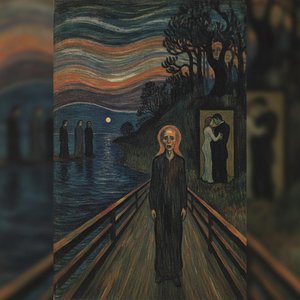
The significance of Félix Klajnerman’s work lies in his ability to synthesize disparate artistic movements into a cohesive, modern visual language. He draws heavily from the Romantic tradition, finding echoes of Caspar David Friedrich in his use of landscape to evoke spiritual longing, and the psychological intensity of Edvard Munch in his exploration of existential angst. By weaving these historical threads into a contemporary context, he creates art that feels both timeless and urgently relevant to the modern condition.
As his career continues to evolve, Klajnerman remains a vital figure in the contemporary landscape genre. His exhibitions, such as those at the Akademiegalerie München, have solidified his reputation as an artist capable of profound atmospheric nuance. Through his dedication to the expressive potential of pastel and his commitment to exploring the intersection of nature and the human psyche, Klajnerman ensures that his landscapes are not merely seen, but deeply felt, leaving an indelible mark on the landscape of modern art.