Gratis kunstkonsultasjon

x

Kort om kunstneren

  • Copyright status: Under copyright
  • Top 3 works:
    • Still Life with an Antique Head
    • Garden Tea
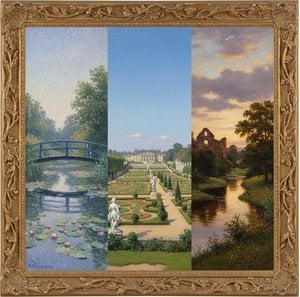
    • The Garden at Juillac
  • Nationality: England

Kunstighetsquiz

Det er kun ett riktig svar på hvert spørsmål.

Spørsmål 1:
Hva var Daphne Fedarb kjent for å male?
Spørsmål 2:
Hvilken kunstbevegelse hadde Daphne Fedarb stor innflytelse fra?
Spørsmål 3:
Hvor studerte Daphne Fedarb kunst?
Spørsmål 4:
Hvilken pris mottok Daphne Fedarb for sitt landskapsmaleri?
Spørsmål 5:
Hva var Daphne Fedarb spesielt opptatt av å gjengi i sine kunstverk?

Daphne Fedarb (1912–1992): A Quiet Observer of Beauty

Daphne Fedarb, born in 1912, was a British painter who quietly established herself as a respected figure within the Bloomsbury Group and beyond. Though she remained largely outside the limelight of her contemporaries – Virginia Woolf, Vanessa Bell, Roger Fry, and Duncan Grant – Fedarb’s distinctive style and unwavering dedication to capturing the subtleties of nature cemented her place in twentieth-century art history. Her artistic journey began with a fascination for botanical illustration, honed during her formative years studying at Kew Gardens, where she meticulously documented plant specimens with remarkable accuracy. This early training instilled in her an appreciation for detail and observation—qualities that would permeate her subsequent paintings. Early Influences: Fedarb’s artistic sensibilities were profoundly shaped by the Impressionist movement, particularly Monet's explorations of light and color. However, she possessed a unique vision that transcended mere replication; instead, she sought to convey emotion and atmosphere through her canvases. Monet’s masterful use of dappled sunlight—a technique Fedarb herself adopted—became a cornerstone of her artistic approach, allowing her to imbue her landscapes with an ethereal quality that captured the fleeting beauty of the natural world. The Bloomsbury Group Connection: Fedarb became acquainted with the Bloomsbury Group in the 1930s, engaging in stimulating discussions about art and literature. Although she wasn’t a central participant in their collaborative projects—such as “Orlando”—her presence contributed to the intellectual vibrancy of this influential circle. These conversations fostered a shared appreciation for experimentation and challenged conventional artistic norms, shaping Fedarb's worldview and informing her creative endeavors. Her fellow Bloomsbury artists recognized her talent and encouraged her exploration of new ideas. Style Characteristics: Fedarb's paintings are characterized by a restrained palette—often dominated by muted greens, blues, and browns—which perfectly complements her meticulous rendering of textures and forms. She achieved luminous effects through layering thin glazes of paint, painstakingly building up color gradations to simulate the way light interacts with surfaces. This technique—a hallmark of British landscape painting during the period—allowed Fedarb to capture the ephemeral qualities of light and shadow, transforming ordinary scenes into evocative representations of mood and atmosphere. Her work exemplifies a quiet elegance that prioritizes observation and sensitivity. Notable Achievements & Recognition: Despite her understated artistic persona, Daphne Fedarb received considerable acclaim for her work during her lifetime. Her paintings were exhibited regularly in London galleries and gained recognition from fellow artists and critics alike. Furthermore, she was awarded an Honorable Mention by the Royal Academy in 1964—a testament to her enduring contribution to British art. This acknowledgment underscored the importance of her artistic vision within the broader context of Bloomsbury’s aesthetic ideals. Legacy & Historical Significance: Daphne Fedarb's legacy resides not merely in her artistic output but also in her embodiment of a humanist aesthetic—one rooted in observation, empathy, and an unwavering devotion to capturing the beauty inherent in ordinary life. Her paintings continue to inspire admiration for their understated elegance and profound emotional resonance, serving as reminders that true artistry lies in conveying feeling rather than simply representing reality. She remains a significant figure within British art history, particularly as a representative of Bloomsbury’s quieter voices—artists who championed intellectual discourse alongside artistic innovation. Her meticulous attention to detail and her ability to distill complex visual information into harmonious compositions solidified her place as one of the most respected landscape painters of her generation.