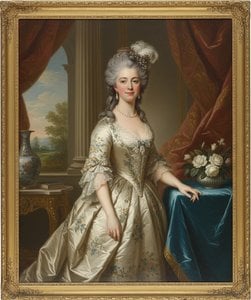
Marc-Aurèle de Foy Suzor-Coté
Marc-Aurèle de Foy Suzor-Coté, a name resonant within the annals of Canadian art history, stands as a pivotal figure who bridged the gap between academic tradition and the burgeoning currents of French Impressionism and Post-Impressionism. Born Hypolite Wilfrid Marcaurèle Côté on April 6th, 1869, in Arthabaska, Quebec – now Victoriaville – his journey was one of artistic exploration, a dedication to capturing both the beauty of the Canadian landscape and the spirit of its history. Suzor-Coté wasn’t merely a painter and sculptor; he was a chronicler of a nation finding its voice, a ‘painter national par excellence,’ as proclaimed by *La Presse* in 1929. His life, spanning until January 29th, 1937, when he passed away in Daytona Beach, Florida, was a testament to the power of artistic vision and unwavering commitment.From Rural Beginnings to Parisian Studios
Suzor-Coté’s artistic inclinations were nurtured from his earliest years within an artistically inclined family. His initial exposure came through assisting local artist Joseph-Thomas Rousseau with decorative painting projects for churches, a formative experience that instilled in him a foundational understanding of technique and composition. However, his talents weren't confined to the visual arts; he demonstrated a remarkable aptitude for music, pursuing studies at the Conservatory of Music in Paris in 1890. This period reveals a versatile spirit, one capable of excelling in multiple creative disciplines. It was ultimately painting that claimed his devotion, leading him to immerse himself in formal artistic training within the vibrant Parisian art scene of the 1890s. He attended the prestigious École des Beaux-Arts under the tutelage of Léon Bonnat and further honed his skills at the Julian and Colarossi Academies. These institutions provided a rigorous grounding in classical techniques, shaping his early academic works – approximately one hundred pieces produced during this period. Notably, “Le Grand Nu,” featuring a model who was also a friend of Auguste Rodin, exemplifies this phase, showcasing his mastery of form and anatomy. During his time in Paris, he found inspiration in the sculptures of Swedish artist Carl Milles, particularly those depicting indigenous peoples, an influence that would subtly manifest in some of his later sculptural creations.Embracing Impressionism and a Canadian Identity
Around 1906, Suzor-Coté underwent a significant artistic shift, embracing the principles of Impressionism. This transformation was characterized by a loosening of brushwork, an exploration of vibrant color palettes, and a focus on capturing fleeting moments of light and atmosphere. His travels through Brittany during this time proved particularly influential, imbuing his canvases with a sense of luminosity and atmospheric depth. He developed a distinctive style that seamlessly blended Impressionistic techniques with a uniquely Canadian sensibility – a way of seeing and representing the land that was distinctly his own. Beyond landscapes, Suzor-Coté embarked on ambitious historical paintings, most famously “Jacques Cartier rencontre les Indiens à Stadaconé en 1535” (Jacques Cartier Meets the Indians at Stadacona in 1535). This monumental work, initially met with resistance from the Canadian government, now resides proudly within the Musée national des beaux-arts du Québec, a testament to its enduring artistic and historical significance.Recognition and Enduring Influence
Suzor-Coté’s contributions to Canadian art were widely recognized throughout his lifetime. His election as a member of the Royal Canadian Academy of Arts in 1914 solidified his position within the national artistic community, while numerous exhibitions showcased his evolving body of work. A major retrospective organized by the Quebec government in 1929 celebrated his achievements, and another significant exhibition followed in 2002, presenting over 140 of his works to a new generation of admirers. His painting “Return from the Harvest Field” (1903) further cemented his national importance when it was featured on Canadian postage stamps issued in 1969. He is often referred to as the "chanteur (singer) of the epopee of New France" and a historian of Canada, reflecting his dedication to portraying Canadian history and identity through his art. Suzor-Coté’s legacy extends beyond individual paintings; he played a crucial role in establishing a distinctly Canadian artistic voice, moving beyond European influences while embracing modern techniques like Impressionism. His prolific output – an estimated 1500 works throughout his career – demonstrates remarkable productivity and versatility. Even after suffering a stroke in 1927 that limited his physical capabilities, he continued to champion his work until his death, leaving behind a rich artistic inheritance that continues to inspire and captivate audiences today.Spørsmål og svar
Hvor kan jeg se alle kunstverk av Marc-Aurèle De Foy Suzor-Côté?
Utforsk alle verk av Marc-Aurèle De Foy Suzor-Côté på denne nettsiden via kunstnerens Alle kunstverk-side.
Finnes det en virtuell 3D-omvisning av Marc-Aurèle De Foy Suzor-Côté sine verk?
Virtuelt 3D-galleri til Marc-Aurèle De Foy Suzor-Côté er en side som viser kunstnerens verk i et virtuelt tredimensjonalt galleri.
I hvilken historisk periode arbeidet Marc-Aurèle De Foy Suzor-Côté?
Marc-Aurèle De Foy Suzor-Côté var virksom i perioden tallet. Denne perioden plasserer kunstnerens virke i en historisk kontekst.