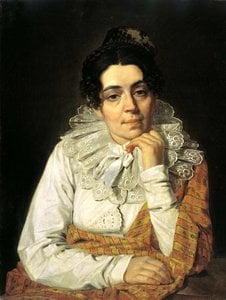
Alexei Gavrilovich Venetsianov (1780-1847): Pioneren av det russiske bondelivet i kunsten
- Født: Moskva, Russland, 1780
- Død: 1847
Alexei Gavrilovich Venetsianov står som en sentral skikkelse i russisk kunsthistorie, hyllet for sine banebrytende skildringer av bondelivet og de hverdagslige erfaringene til vanlige mennesker. Han ble født inn i en handelsfamilie av gresk herkomst i Moskva, og hans kunstneriske reise var preget av både personlige utfordringer og betydelige bidrag til utviklingen av en distinkt russisk nasjonal stil.
Tidlig liv og kunstnerisk utvikling
Venetsianovs vei begynte egentlig innen embetsverket, men lidenskapen for kunsten overvant raskt alle andre ambisjoner. Da han flyttet til St. Petersburg, begynte han å foredle sitt håndverk ved å metodisk kopiere mesterverk fra Hermitasje-samlingen og ved å flittig søke oppdrag innen portrettmaleri. En avgjørende periode i hans utvikling var læretiden under Vladimir Borovikovsky, en av tidens ledende russiske portrettmalere. Å bo i Borovikovskys hjem ga ham uvurderlig trening og eksponering for etablerte kunstneriske praksiser.
Til tross for sitt tydelige talent, møtte Venetsianov vanskeligheter med å sikre seg oppdrag som frilansportrettør, noe som belyser utfordringene kunstnere sto overfor utenfor de formelle akademiske institusjonene. Likevel oppnådde han i 1811 anerkjennelse fra Kunstakademiet, hvor han ble tildelt tittelen akademiker for sitt selvportrett og et portrett av K.I. Golovachevsky og yngre elever. Dette markerte et viktig vendepunkt i hans karriere.
Vendepunktet mot landlige scener og etableringen av egen skole
I 1819 tok Venetsianov en skjebnesvanger beslutning om å vie seg fullt ut til kunsten. Han forlot embetsverket og kjøpte landsbyen Safonkovo, hvor han slo seg ned. Dette ble et vendepunkt for hans kunstneriske fokus; livet i Safonkovo ga ham direkte tilgang til det landlige landskapet og bondesamfunnene som skulle bli de sentrale temaene i hans virke. Han observerte og skildret scener fra naturen og dagliglivet med en slik grundighet at han fanget selve essensen av 1800-tallets Russland.
Venetsianov er vidt anerkjent som den første russiske kunstneren som systematisk fremstilte bondelivet med en slik autentisitet og følsomhet. Hans verk beveget seg forbi romantiserte eller idealiserte fremstillinger, og tilbød i stedet et realistisk innblikk i deres verden. Fra 1820-tallet og utover begynte han å tiltrekke seg unge mennesker fra fattige kår, inkludert leilendinger som Grigory Soroka, for å lære dem malerkunst. Dette førte til etableringen av hans egen uformelle malerskole, et vitnesbyrd om hans engasjement for å pleie kunstneriske talenter og fremme tilgjengeligheten til kunstutdanning. Tsar Nikolai I anerkjente Venetsianovs bidrag til de nasjonale kunsttrendene og utnevnte ham til hoffmaler, noe som ga avgjørende økonomisk støtte til skolen hans.
Hovedverker og kunstnerisk stil
Venetsianovs produksjon inkluderer en rekke betydningsfulle verk, slik som "Portrett av en bondepike", "Skørdet på treskeverket", "Bondepike med kornblomster", "Vår på pløyd mark", "Sommer, innhøsting", "Zakharka", "Jente i rutete sjal", "Jente med en kalv", "Spådom", "Bondens barn med melk" og "Amme med et barn". Hans stil er preget av realisme, sans for detaljer og en naturalistisk fremstilling av lys og skygge. Han benyttet en tilnærming basert på direkte observasjon, der han fanget teksturene i klær, ansiktsuttrykk og nyansene i det landlige landskapet.
Selv om han primært er kjent for sine realistiske skildringer, viser også Venetsianovs arbeid spor av barokkens innflytelse, særlig i bruken av dramatisk lyssetting og teksturert impasto, slik man kan se i "Hode av en gammel bonde".
Arv og historisk betydning
Venetsianovs banebrytende fokus på bondelivet la selve fundamentet for utviklingen av russisk realisme i kunsten. Hans arbeid banet vei for senere generasjoner av kunstnere som søkte å skildre sosiale realiteter med ærlighet og empati. Ved å portrettere livene og kampene til vanlige russere, bidro Venetsianov betydelig til dannelsen av en distinkt nasjonal identitet i russisk kunst.
Hans liv ble tragisk forkortet i 1847 da vognen hans veltet i en ulykke. Til tross for hans relativt korte karriere, forblir hans innvirkning på russisk kunst dyp og varig.
Spørsmål og svar
Hvilke stemninger uttrykker kunstverkene til Alexei Venetsianov?
Kunstnerens Stemningsrom-side viser Alexei Venetsianov sine kunstverk sortert etter atmosfære.
Hvor mange kunstverk av Alexei Venetsianov er tilgjengelige for gjennomgang?
Du kan bla gjennom 90 kunstverk verk av Alexei Venetsianov på siden Alle kunstverk.
Kan jeg utforske Alexei Venetsianov sine verk etter fargespekter?
Alexei Venetsianov sine verk kan utforskes etter farge på kunstnerens Spektralindeks-side.