A Life Painted in Light: The World of Albert Gabriel Rigolot
Albert Gabriel Rigolot, born in Paris on November 28, 1862, was an artist whose career unfolded as a graceful dialogue between the naturalistic traditions of the Barbizon school and the alluring exoticism of Orientalist painting. His life’s work reflects a keen sensitivity to atmosphere, light, and color, whether depicting the tranquil French countryside or the vibrant scenes of North Africa that captivated his imagination. Rigolot's initial artistic grounding came within the public schools of Paris’ 16th arrondissement, fostering an early dedication to visual expression. This foundation was then meticulously built upon through formal study under Léon Germain Pelouse and Auguste Allongé – established figures who guided him toward a mastery of technique and observation. His debut at the prestigious Salon des Artistes Français in 1886 marked not just an entry into the Parisian art world, but the beginning of a sustained period of recognition and accomplishment.
From Barbizon’s Embrace to Algerian Horizons
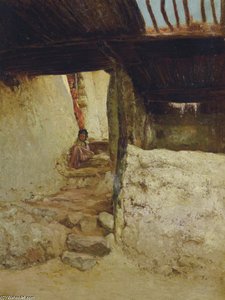
The early phase of Rigolot's artistic development was deeply indebted to the Barbizon school, a movement celebrated for its commitment to painting *en plein air* – directly from nature. Like his predecessors, Rigolot sought to capture the subtle nuances of light and atmosphere, imbuing his landscapes with a sense of authenticity and immediacy. He embraced their focus on rural life and unadorned realism, creating scenes that resonated with a quiet dignity. However, a pivotal moment arrived in 1896 when Rigolot journeyed to Algeria. This experience proved transformative, igniting a passion for Orientalist themes that would define much of his subsequent work. The vibrant colors, bustling markets, and unique cultural tapestry of North Africa offered a compelling contrast to the subdued tones of the French countryside. He became an active member of the Société des Peintres Orientalistes Français, solidifying his commitment to depicting scenes from this captivating region. This shift wasn’t merely stylistic; it represented a broadening of artistic horizons and a willingness to explore new cultural narratives.
Grand Commissions and Lasting Legacies
Rigolot's talent didn’t go unnoticed by those seeking to adorn spaces with exceptional artistry. In 1900, he was selected alongside other prominent artists to contribute to the decorative paintings within Le Train Bleu, the opulent restaurant at the Gare de Lyon in Paris. This prestigious commission showcased his versatility and ability to work on a grand scale, creating immersive environments that blended art and architecture. Beyond France, Rigolot’s influence extended to America through an unusual but significant chapter in his career. He played a crucial role in training a group of artists – Lorus Pratt, John B. Fairbanks, Edwin Evans, and John Hafen – known as the “French Art Missionaries.” These individuals were sent from Utah by the LDS Church to refine their skills for painting murals within the Salt Lake Temple. Rigolot’s guidance proved invaluable, shaping the artistic vision of these muralists and leaving a lasting mark on religious art in the American West. Recognition continued to accrue; he was awarded a Silver Medal at the Exposition Universelle in 1900 and honored as a Chevalier in the Legion d'Honneur in 1901 – testaments to his distinguished contributions to the French art world.
A Synthesis of Styles: Landscape, Orientalism, and Atmosphere
Albert Gabriel Rigolot’s artistic style is characterized by a harmonious blend of influences and techniques. His landscape paintings are notable for their tranquility and meticulous attention to detail, capturing the beauty of both France and Algeria with equal skill. He excelled at rendering atmospheric effects – mist clinging to distant hillsides, sunlight filtering through trees, shadows lengthening across fields – creating a sense of depth and realism that drew viewers into his scenes. His Orientalist works are equally compelling, showcasing vibrant colors, intricate details, and a genuine fascination with North African culture and daily life. He didn’t simply depict exotic locales; he sought to understand and convey the essence of these places, capturing their unique spirit and atmosphere.
His ability to seamlessly integrate Barbizon naturalism with Orientalist flair sets him apart as an artist who successfully bridged cultural boundaries and artistic movements.
Rigolot’s paintings are not merely representations of landscapes or scenes; they are evocations of mood, light, and the enduring beauty of the world around us.
A Lasting Impression
Albert Gabriel Rigolot passed away in Paris on April 25, 1932, leaving behind a rich artistic legacy. His work continues to resonate with viewers today, offering valuable insights into the cultural exchange between France and North Africa during the late 19th and early 20th centuries.
- His influence on American artists
through his mentorship of the “French Art Missionaries” remains a significant aspect of his historical importance.
Rigolot’s art serves as a reminder of the power of observation, the beauty of light, and the enduring appeal of both familiar landscapes and distant horizons. He was an artist who embraced tradition while remaining open to new influences, creating a body of work that is both timeless and deeply personal.