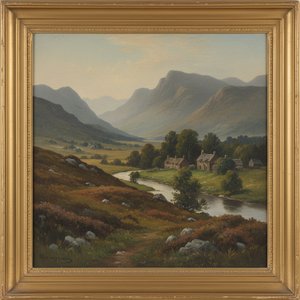
Alan Sutherland: Sculptor of Highland Spirit
Alan Sutherland (1931 – 2019) was a Scottish sculptor whose work captured the essence of Highland landscapes and commemorated significant figures, cementing his place as one of Scotland’s foremost artists of the latter half of the twentieth century. Born in Bombay, India, Sutherland’s early life instilled in him an appreciation for diverse cultures which would later inform his artistic vision.
- Early Years & Education: Sutherland's formative years were spent at Loretto School in Musselburgh, Scotland, fostering a grounding in classical education and shaping his intellectual curiosity. He pursued formal art training at Edinburgh College of Art in 1952, honing his skills in sculpture and establishing a foundation for his future endeavors.
- Career Highlights: Sutherland’s artistic career blossomed rapidly after graduation. He gained recognition as a portrait sculptor early on, accepting commissions from prominent individuals including Quentin Crisp, Lord Cameron, Sir Conolly Abel Smith, and Sir Nicholas Fairbairn QC. His masterful depictions conveyed not only likeness but also character and emotion.
- Notable Commissions: Sutherland’s reputation soared with the creation of monumental sculptures commemorating historical events and honoring national heroes. The Commando Memorial in Plymouth commemorates the bravery of British Commandos during World War II, a testament to his ability to translate complex narratives into powerful visual representations. Perhaps his most celebrated achievement was the portrait commission for His Royal Highness Prince Philip, Duke of Edinburgh, executed at Holyrood Palace – a piece that embodies regal dignity and reflects the enduring legacy of the monarchy.
- Artistic Style & Influences: Sutherland’s sculptural style is characterized by meticulous detail and an unwavering commitment to capturing atmospheric realism. He drew inspiration from classical sculpture traditions while simultaneously embracing the expressive potential of modern materials, notably bronze and stone. His work embodies a profound connection to the Scottish Highlands, reflecting their rugged beauty and conveying a deep respect for history and tradition.
- Legacy & Recognition: Sutherland’s contributions to Scottish art were acknowledged through exhibitions at prestigious institutions such as The Royal Academy London, The Chelsea Society, The Society of Scottish Artists, and Prouds Art Gallery Sydney. His enduring influence can be seen in the continuing appreciation for sculptural artistry and his role as a pivotal figure in shaping Scotland's artistic landscape.
Alan Sutherland’s sculptures stand as enduring symbols of Highland spirit—a testament to his skill, vision, and unwavering dedication to preserving Scotland’s cultural heritage.