Early Life & Artistic Foundations: Glasgow Beginnings
Daniel Macnee’s story is one deeply interwoven with the burgeoning artistic spirit of 19th-century Scotland, a narrative that begins not within grand academies but in the more humble surroundings of Fintry and the vibrant city of Glasgow. Born in 1806, his early life wasn't immediately marked by formal training; rather, it was shaped by an observant eye and a nascent talent nurtured initially through practical apprenticeships. His upbringing in Glasgow proved pivotal, exposing him to a thriving artistic community and setting the stage for a career that would ultimately see him become a leading figure in Scottish portraiture. A crucial early influence came from John Knox, a respected portraitist whose studio became Macnee’s first formal learning environment. This period wasn't merely about mastering technique; it was an immersion into the very *essence* of capturing likeness and character – skills that would define his later success.
The collaborative spirit of Glasgow’s art scene also played a significant role. Alongside fellow artists like Horatio McCulloch and William Leitch, Macnee briefly engaged in the delicate craft of snuff-box painting at Cumnock. While seemingly a minor pursuit, this experience honed his precision and attention to detail – qualities that would become hallmarks of his mature style. This early foray into commercial art also provided valuable exposure to diverse subjects and fostered a sense of artistic camaraderie, laying the groundwork for future collaborations and shared inspirations.
The Portraiture Years: Capturing Scottish Society
Macnee’s ascent as a portrait painter was remarkably swift. Returning to Glasgow after initial studies at the Trustees’ Academy in Edinburgh, he quickly established a flourishing studio, attracting a clientele that reflected the dynamism of Scottish society. His sitters weren't merely wealthy merchants and aristocrats; they were pioneers of industry, individuals shaping the nation’s progress – and Macnee captured them with an insightful sensitivity. He possessed a rare ability to convey not just physical resemblance but also the inner character and social standing of his subjects.
His portraits are notable for their psychological depth, moving beyond mere representation to offer glimpses into the lives and ambitions of those he painted. This wasn’t simply about technical skill; it was an understanding of human nature, a talent for subtle expression, and a willingness to engage with his sitters on a personal level. The demand for his work grew steadily, solidifying his reputation as one of Scotland's most sought-after portraitists. He skillfully balanced the formality expected of the genre with a growing sense of realism, reflecting the changing aesthetic sensibilities of the era.
Macnee's Landscape Work: Influences & Techniques
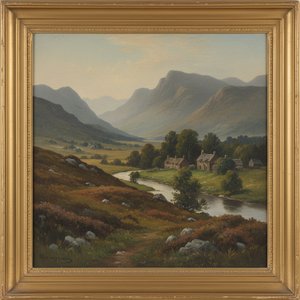
While celebrated primarily for his portraits, Macnee’s engagement with landscape painting reveals another facet of his artistic sensibility. His landscapes, though less prolific than his portraiture, demonstrate a keen observation of nature and a developing Impressionistic style. Influenced by artists like Sir George Clausen – whose luminous depictions of rural tranquility captured the spirit of the age – Macnee sought to convey not just topographical accuracy but also the *atmosphere* and emotional resonance of the Scottish countryside.
His technique involved layering delicate brushstrokes to create a sense of light and movement, capturing the fleeting effects of weather and time. He wasn’t interested in grand, dramatic vistas; rather, he focused on intimate scenes – quiet fields, sun-dappled forests, and tranquil waterways. These landscapes offer a respite from the formality of his portraiture, revealing a more personal and contemplative side to his artistic vision. The influence of Horatio McCulloch is also evident here, particularly in Macnee’s use of atmospheric perspective and subtle color gradations.
Presidency of the Royal Scottish Academy & Recognition
Macnee's dedication to the arts wasn’t confined to his studio; he actively contributed to the broader artistic community. His election as President of the Royal Scottish Academy in 1876 marked a high point in his career, signifying both professional recognition and a commitment to fostering artistic excellence. He embraced this role with enthusiasm, championing emerging artists and promoting Scottish art on a national stage.
His knighthood in 1877 further cemented his status as a leading figure in the British art world. This wasn’t merely an honorific title; it was a testament to his artistic achievements, his contributions to society, and his unwavering dedication to the principles of fine art. As President, he oversaw a period of growth and innovation within the Academy, encouraging experimentation while upholding traditional standards of craftsmanship. His leadership helped shape the direction of Scottish art for generations to come.
A Distinctive Style: Brushwork, Composition & Legacy
Daniel Macnee’s artistic style is characterized by a remarkable balance between realism and Impressionism. His brushwork, though precise, wasn't rigid; it possessed a fluidity that conveyed texture and light with exceptional sensitivity. He masterfully employed composition to draw the viewer’s eye to key elements within his paintings, creating a sense of harmony and visual balance.
In portraits, this meant carefully arranging sitters and backgrounds to emphasize their character and social standing. In landscapes, it involved selecting vantage points that captured the beauty and tranquility of the Scottish countryside. His legacy extends beyond his individual artworks; he inspired a generation of artists with his dedication to craftsmanship, his insightful portrayal of human nature, and his unwavering commitment to the arts. Today, Macnee’s paintings are celebrated for their historical significance, their artistic merit, and their enduring appeal. His work offers a fascinating glimpse into 19th-century Scottish society and continues to captivate audiences with its beauty, sensitivity, and timeless quality.
- Discover more about Daniel Macnee’s works through The National Galleries of Scotland.
- Explore similar artists and movements at WahooArt’s extensive art collection.