x
Giclée- eller lerretsprint av museumskvalitet med rask produksjon og fleksible valgmuligheter for etterbehandling.
Velg mellom våre forhåndsdefinerte størrelser som bevarer kunstverkets opprinnelige proporsjoner.
Du kan oppgi egne mål for å tilpasse en spesifikk ramme eller et bestemt område. Dersom den valgte størrelsen ikke samsvarer med det originale bildets proporsjoner, vil vi enten beskjære kunstverket eller utvide bildet med en speilet eller ensfarget kant. En digital mockup vil bli sendt til din godkjenning før produksjonen starter.
Vennligst merk at forhåndsvisningen på skjermen ikke gjenspeiler den faktiske beskjæringen eller utvidelsen. Kun mockuppen vil vise den endelige komposisjonen nøyaktig.
Selv om tilpassede størrelser er tilgjengelige, anbefaler vi å velge et mål fra den forhåndsdefinerte listen for å bevare de originale proporsjonene.

Verdensomspennende levering () på 2 uker i stedet for standard 4/5 uker. (2 July)
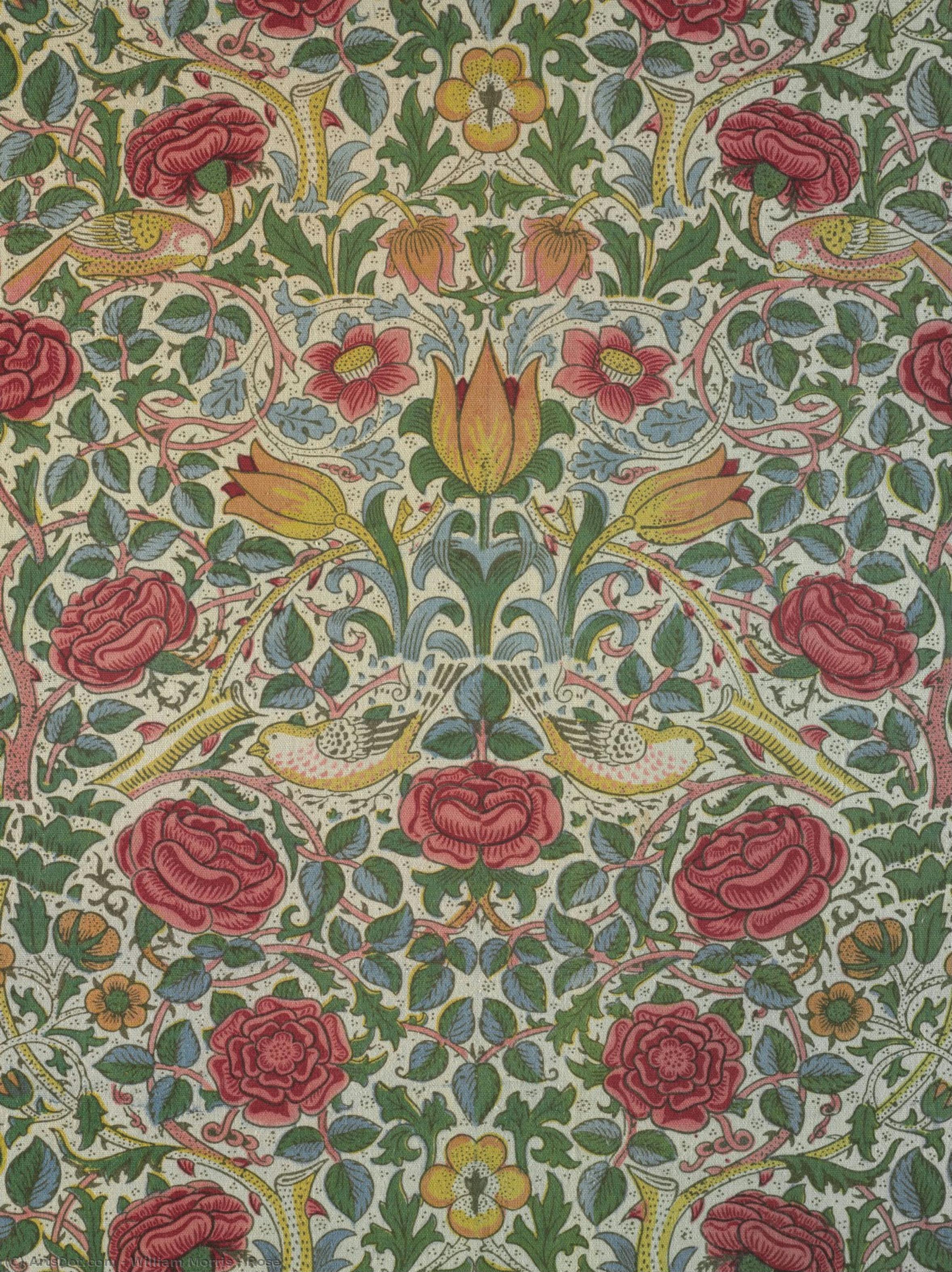
Roser
Størrelse på reproduksjon
William Morris’ “Rose” is more than just a textile; it's a whispered invitation into the heart of the Arts and Crafts movement, a testament to a profound belief in nature’s inherent beauty and moral authority. Created between 1862 and 1863, this exquisite piece captures the spirit of Victorian romanticism while simultaneously rejecting the cold uniformity of industrial production. It's a visual poem woven with meticulous detail, vibrant color, and a deep-seated yearning for a world rooted in craftsmanship and connection to the natural world.
The genesis of “Rose” lies within William Morris’s deeply personal philosophy. Born in Walthamstow, Essex, in 1834, he was profoundly shaped by his childhood spent immersed in the English countryside – a landscape that became the very foundation of his artistic vision. He didn't simply admire nature; he felt an almost spiritual connection to it, believing its organic forms held a superior moral and aesthetic value compared to the burgeoning industrial age. This conviction fueled his desire to create art that wasn’t merely imitative but rather a conduit for experiencing the sublime – the awe-inspiring grandeur of the natural world. The textile is a direct manifestation of this belief, meticulously recreating the delicate curves and textures of rose petals with an almost obsessive attention to detail.
The execution of “Rose” is a remarkable demonstration of the Arts and Crafts movement’s commitment to handcraftsmanship. The design itself draws heavily on botanical observation, showcasing an incredible level of accuracy in depicting rose florets. However, what truly elevates this textile is the technique employed – *kataegis*. This intricate process involved printing individual florets in multiple colors, allowing Morris's collaborators at Merton Abbey Studios to achieve a remarkably realistic representation of their natural coloration and subtle variations. It’s a testament to patience and skill; each petal was painstakingly recreated, demanding hours of dedicated work.
Beyond *kataegis*, the entire process underscores the movement’s rejection of mechanized production. Every thread was carefully woven by hand, ensuring exceptional quality and artistic control. The color palette is deliberately restrained – a harmonious blend of muted pinks, yellows, and creams – evoking a sense of tranquility and understated elegance. This careful selection of tones contributes to the overall feeling of serenity and invites contemplation.
The rose itself carries a rich tapestry of symbolic meaning within the Victorian era. It represented love, beauty, passion, and even secrecy – themes deeply resonant with the romantic sensibilities of the time. Within “Rose,” however, the individual roses are not merely decorative; they function as a visual metaphor for the interconnectedness of nature and the pursuit of beauty. The inclusion of a bird within the design further amplifies this symbolism, suggesting harmony between humanity and the natural world – a core tenet of Morris’s philosophy.
Furthermore, “Rose” reflects the broader Victorian fascination with folklore and mythology. Morris drew inspiration from medieval tapestries and illuminated manuscripts, imbuing his designs with a sense of historical depth and romantic allure. The textile isn't simply a pretty pattern; it’s a carefully constructed narrative, inviting viewers to step into a world of beauty, romance, and timeless symbolism.
WahooArt offers exquisite hand-painted reproductions of William Morris's "Rose," allowing you to bring this iconic textile into your home or office. Our skilled artisans meticulously recreate every detail, from the delicate textures of the petals to the subtle nuances of color, ensuring an authentic representation of this masterpiece. Whether you’re a devoted admirer of the Arts and Crafts movement, a collector of fine art textiles, or simply seeking to infuse your space with beauty and tranquility, a WahooArt reproduction of “Rose” is a timeless investment that celebrates the enduring legacy of William Morris.
Explore our collection today and discover the perfect way to experience the beauty and symbolism of William Morris's "Rose." Learn more about this iconic artwork here.
1834 - 1896 , Storbritannia
Fortell oss om prosjektet ditt, så vil våre kunsteksperter gi deg 3 personlige kunstforslag.
Vi velger ut 3 alternativer kun for deg – helt gratis!