


x


 Bestill maleri Kjøp digitalt bilde
 Send
Send
 Detaljer
 Legg til i favoritter
 Last ned bildet
 Liknende objekter
 Røntgen
 Lysbildefremvisning
Giclée- eller lerretsprint av museumskvalitet med rask produksjon og fleksible valgmuligheter for etterbehandling.





























Velg mellom våre forhåndsdefinerte størrelser som bevarer kunstverkets opprinnelige proporsjoner.

Du kan oppgi egne mål for å tilpasse en spesifikk ramme eller et bestemt område. Dersom den valgte størrelsen ikke samsvarer med det originale bildets proporsjoner, vil vi enten beskjære kunstverket eller utvide bildet med en speilet eller ensfarget kant. En digital mockup vil bli sendt til din godkjenning før produksjonen starter.
Vennligst merk at forhåndsvisningen på skjermen ikke gjenspeiler den faktiske beskjæringen eller utvidelsen. Kun mockuppen vil vise den endelige komposisjonen nøyaktig.
Selv om tilpassede størrelser er tilgjengelige, anbefaler vi å velge et mål fra den forhåndsdefinerte listen for å bevare de originale proporsjonene.
Verdensomspennende levering () på 2 uker i stedet for standard 4/5 uker. (7 July)


La ballet faserique
Størrelse på reproduksjon
James Ensor (1860-1949), a Belgian painter whose legacy extends far beyond his lifetime, stands as a pivotal figure in the transition from Symbolism to Expressionism. “La ballet faserique,” painted around 1923, exemplifies Ensor’s distinctive approach—a deliberate rejection of academic conventions in favor of confronting uncomfortable truths about human psychology and societal anxieties.
The artwork depicts a disconcerting tableau: figures gathered on the shoreline of a murky body of water, engaged in an activity that defies easy categorization. There's no discernible narrative drive; instead, Ensor presents us with a scene steeped in atmosphere and imbued with unsettling ambiguity. The muted palette—dominated by blues, greens, whites, punctuated by splashes of pink and brown—creates a dreamlike haze that underscores the painting’s emotional resonance.
Ensor's stylistic choices are revolutionary for his time. He abandons realistic representation, opting instead for simplified forms and deliberate distortions. Shapes lack sharp edges, contributing to a sense of unease and disorientation. Lines are fluid and imprecise, mirroring the subconscious mind’s unpredictable movements. Notably, Ensor employs flattened perspective—a technique that diminishes depth, prioritizing surface texture and emphasizing the canvas's flatness.
The painting’s execution is characterized by meticulous layering of paint, a hallmark of Ensor’s method. Thick brushstrokes are visible throughout the composition, revealing the artist’s tactile engagement with the medium. These strokes blend seamlessly together, creating a velvety surface that enhances the artwork's textural quality and contributes to its overall mood. Oil paints were undoubtedly utilized, reflecting the prevailing artistic practices of the era.
“La ballet faserique” is rife with symbolic imagery. The figures themselves are rendered in shadowy hues, concealing their identities and hinting at hidden anxieties. They appear to participate in a ritualistic gathering—a gesture that speaks to Ensor’s preoccupation with themes of disguise and concealment. Recurring motifs like masks – a prominent feature in Ensor's oeuvre – serve as visual metaphors for the masks we wear in everyday life, obscuring our true selves and reflecting the darker aspects of human nature.
Ultimately, “La ballet faserique” compels viewers to confront uncomfortable truths about existence. Ensor’s masterful manipulation of color and form generates a palpable sense of dread—a feeling that transcends mere visual observation. The painting's unsettling beauty lies in its ability to capture the pervasive influence of darkness within moments of apparent serenity. It remains a testament to Ensor’s unwavering commitment to exploring the complexities of human psychology and his profound understanding of the power of art to provoke contemplation.


1860 - 1949 , Belgia
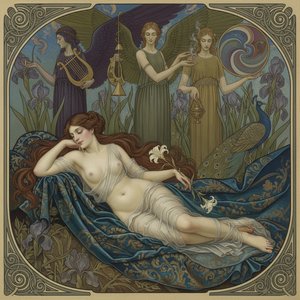
Explore the captivating world of Herbert James Draper, a master of Victorian Neoclassical painting. Discover his sensual mythological scenes, symbolic depth & influence on the Aesthetic Movement. Learn more at WahooArt.

Explore the captivating world of Symbolism! Discover key artists, psychological themes & its lasting impact on modern art. Expert insights for collectors and enthusiasts at WahooArt.

Explore the captivating world of Beatrice Parsons, a pioneering British abstract expressionist. Discover her journey from garden watercolors to evocative color field paintings and learn about her place within art history.

Explore the captivating art of Tivadar Csontváry Kosztka, a Hungarian visionary bridging Symbolism & Expressionism. Discover his unique 'sunway' style and profound themes – available as museum-quality reproductions at WahooArt.

Utforsk 10 ikoniske mesterverk fra tysk ekspresjonisme! Oppdag Munch, Kirchner og Kandinsky – historiene bak fargene, teknikkene & følelsene. Finn museumskvalitets kunsttrykk for ditt hjem på WahooArt.com.


Hold deg oppdatert med de siste kunstnyhetene, eksklusive tilbud og dekorasjonsideer.
Fortell oss om prosjektet ditt, så vil våre kunsteksperter gi deg 3 personlige kunstforslag.
Vi velger ut 3 alternativer kun for deg – helt gratis!
 Del med andre


 Vis hele teksten







 Glassalternativet er kun tilgjengelig i størrelser under 110 cm


