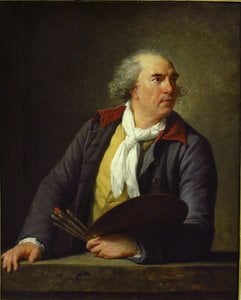
Gratis kunstkonsultasjon

x
Bestill trykk Bestill trykkBestill maleri Bestill maleri SendSend
DetaljerDetaljer Legg til i favoritter Legg til i favoritter Last ned bildetLast ned bildet Liknende objekterLiknende objekter RøntgenRøntgen LysbildefremvisningLysbildefremvisning

Villa Sachetti

Admire 'Villa Sachetti' by Hubert Robert, a captivating French landscape painting showcasing Roman ruins in a 'capriccio' style. Explore this evocative artwork and its historical context.

Hubert Robert (1733-1808): En fransk maler kjent for sine stemningsfulle landskapsmalerier og fantasifulle ruinbilder. Oppdag hans kunst!

Kjøp et høyoppløselig, forbedret digitalt bilde som er langt bedre enn forhåndsvisningen på nettet.

Hver fil er omhyggelig klargjort av våre egne spesialister ved hjelp av avanserte verktøy og profesjonell manuell retusjering. Vi sørger for at hvert bilde har eksepsjonell klarhet, presis fargegjengivelse og fine detaljer.

Den endelige filen leveres via e-post innen 72 timer, optimalisert for umiddelbar bruk i profesjonelle, redaksjonelle og trykte miljøer. Dette er den samme kvaliteten som benyttes av ledende designstudioer, utgivere og gallerier.

Digitalt bilde

Last ned en høyoppløselig fil for personlig bruk, utskrift og kreative prosjekter.

Totalbeløp

$9.99

Inkludert i alle bestillinger av digitale bilder

Ekspert digital levering, garantert

Når du velger WahooArt.com, får du ikke bare et bilde – du mottar et profesjonelt forbedret digitalt kunstverk, skapt med presisjon og med en garantert tilfredshetsgaranti. Her er alt som automatisk følger med din bestilling:

shipping_icon
Rask digital levering

Din høyoppløselige digitale bildefil sendes til din e-post innen 72 timer etter bestilling – klar til umiddelbar bruk.

canvas_icon
KI-forbedret digital fil

Ditt kunstverk blir profesjonelt optimalisert ved hjelp av avanserte AI-verktøy og manuell redigering, noe som sikrer maksimal detaljrikdom, klarhet og fargegjengivelse.

insurance_icon
Gratis livslang nyutlevering

Har du ved et uhell slettet eller mistet filen din? Ingen bekymring – vi sender den på nytt når som helst, helt gratis.

tax_icon
Ingen importavgifter – noen gang

Nyt ditt kunstverk umiddelbart uten toll, avgifter eller leveringskostnader – digitale nedlastinger er alltid avgiftsfrie.

color_icon
Garantert fargenøyaktighet

Vi sikrer at ditt digitale bilde gjenspeiler de originale fargene så nøyaktig som mulig ved hjelp av profesjonelle verktøy og fargehåndtering.

return_icon
60 dagers tilfredshetsgaranti

Hvis du ikke er fornøyd med ditt digitale bilde, vil vi revidere det eller refundere 100% innen 60 dager – uten spørsmål.

guarantee_icon
100% Penggaranti

Ikke fornøyd? Få full refusjon innen 60 dager etter at du har mottatt din digitale fil – uten spørsmål.

discount_icon
Rabatt ved storkjøp

Kjøp 3 bilder, spar 10% - Kjøp 5, spar 15% - Kjøp 10+, spar 20%. Ideelt for kreative prosjekter, gallerier og byråer.

Lignende kunstverk


Om kunstneren

A Painter of Ruins and Visions: The World of Hubert Robert

Hubert Robert, a name inextricably linked to the evocative beauty of ruins and the romantic allure of bygone eras, stands as a singular figure in 18th-century French art. Born in Paris in 1733, his life unfolded against a backdrop of profound artistic transformation—a journey from the ornate elegance of the Rococo to the nascent spirit of Neoclassicism, culminating in the dramatic upheaval of the French Revolution and its aftermath. Robert’s genius wasn't merely in replicating decay; it resided in crafting meticulously detailed visions that resonated with both a poignant nostalgia for the past and an anticipatory gaze towards the future. His artistic odyssey began within the structured confines of formal training, initially under the tutelage of sculptor Michel-Ange Slodtz, who recognized Robert’s innate talent but wisely steered him toward painting, sensing a deeper calling—a capacity to capture light, atmosphere, and the subtle poetry inherent in form.

Roman Reveries: Shaping an Artistic Identity

The defining moment in Robert's artistic development arrived with his extended sojourn to Rome between 1754 and 1765. This period wasn’t simply a vacation; it was a crucible where his artistic identity was forged. Accompanying Étienne-François de Choiseul, the young ambassador of France to the Papal court, Robert immersed himself in the city's ancient heart—a world saturated with history and architectural grandeur. For over a decade, Rome became his open-air studio, its crumbling temples, majestic arches, and overgrown gardens fueling an imagination that would forever shape his artistic vision. He didn’t merely document what he saw; he actively reimagined it, infusing the ruins with a sense of melancholic beauty—a poignant awareness of time's relentless passage. His early works, often categorized as *capricci*, reflected this approach. These fanciful compositions juxtaposed classical ruins with contemporary life, creating dreamlike scenarios that hinted at Robert’s unique ability to blend observation and imagination. Crucially, he spent considerable time working alongside Giovanni Paolo Panini, a master of topographical painting who specialized in rendering Roman ruins. While Robert initially imitated Panini's meticulous style, he quickly transcended mere replication, developing his own distinctive voice characterized by an unparalleled sensitivity to light, atmosphere, and the subtle nuances of form. His sketchbooks from this period—filled with hundreds of drawings—offer invaluable insights into his artistic process, revealing a keen eye for architectural detail and a profound understanding of landscape composition. The influence of Piranesi, another artist fascinated by Roman ruins, is also evident in Robert’s work, particularly his depictions of labyrinthine interiors and the interplay of light and shadow within ancient structures.

Parisian Acclaim and Royal Patronage

Robert's return to Paris in 1765 marked a significant shift in his career trajectory. He swiftly gained recognition within the artistic establishment, securing admission to the Académie Royale de Peinture et de Sculpture with “The Port of Rome, Ornamented with Different Monuments of Architecture, Ancient and Modern.” This success propelled him into the spotlight, attracting the attention of discerning collectors and art critics alike. His subsequent exhibitions at the Salon—the official annual exhibition of the French Academy—garnered widespread acclaim, captivating audiences with his evocative depictions of ruins and picturesque landscapes. The critic Denis Diderot, a leading figure of the Enlightenment, famously praised Robert’s paintings for their ability to transport viewers to another time and place—a testament to the artist's remarkable skill in evoking atmosphere and emotion. This burgeoning popularity led to royal patronage, with commissions for decorative projects within grand palaces and gardens, as well as appointments as “Designer of the King’s Gardens” and later, “Keeper of the King’s Pictures.” He became a highly sought-after artist, not only for his easel paintings but also for his innovative designs for elaborate garden layouts—a reflection of the prevailing taste for *capriccio* painting, which appealed to collectors fascinated by history, archaeology, and the picturesque. Robert elevated this genre beyond mere decorative art, imbuing it with a unique sensibility that combined historical accuracy with imaginative vision.

Revolution, Resilience, and Lasting Legacy

The French Revolution presented an unprecedented challenge for Robert, as for many artists of his time. While navigating the turbulent political climate, he demonstrated remarkable resilience, continuing to paint prolifically despite the upheaval. He even faced a brief period of imprisonment during the Reign of Terror—a harrowing experience that undoubtedly informed some of his later works. Following the Revolution, Robert was appointed curator of the newly established Muséum Central des Arts—the future Musée du Louvre—a significant recognition of his expertise and dedication to preserving France’s cultural heritage. He played a crucial role in organizing and cataloging the museum's burgeoning collection, ensuring that its artistic treasures were safeguarded for future generations. Hubert Robert died in Paris in 1808, leaving behind an extraordinary body of work—a testament to his unique vision and enduring legacy. His paintings continue to captivate viewers with their evocative beauty, blending historical accuracy with imaginative vision and solidifying his place as a pivotal figure bridging the Rococo and Neoclassical periods, and anticipating aspects of Romanticism with his fascination for history and imagination.
  • Key Influences: Giovanni Paolo Panini, Piranesi, the architectural landscape of Rome.
  • Major Themes: Ruins, landscapes, *capriccio* paintings, historical memory, the passage of time.
  • Artistic Style: Meticulous detail, atmospheric perspective, evocative lighting, blending observation with imagination.
Hubert Robert

Hubert Robert

1733 - 1808 , Frankrike

Kort om kunstneren

  • Artistic Movement Or Style: Romantikk, Neoklassisisme
  • Artists Or Movements Influenced By This Artist: ['Romantikk']
  • Artists Who Influenced This Artist:
    • Giovanni Panini
    • Piranesi
  • Date Of Birth: 22 mai 1733
  • Date Of Death: 15 apr 1808
  • Full Name: Hubert Robert
  • Nationality: Fransk
  • Notable Artworks:
    • Port av Roma
    • Galatea's flykt
    • Louvrens galleri
  • Place Of Birth: Paris, Frankrike