Zhou Zuoren: Bridging Tradition and Cinema – A Legacy of Observation
Zhou Zuoren (周 konuda), born Zhou Kuishou (周櫆壽) on January 16, 1885, in Shandong Province, China, stands as a pivotal figure in the intersection of Chinese calligraphy, poetry, and documentary filmmaking. His life’s work embodies a singular dedication to capturing the essence of rural China and conveying its complexities through both artistic expression and cinematic storytelling—a contribution that continues to resonate within the broader context of 20th-century cultural history.
- Early Life & Education: Zhou Zuoren's formative years were marked by exposure to Confucian scholarship, instilled in him by his father, a respected educator. This intellectual grounding profoundly shaped his worldview and fueled his lifelong pursuit of understanding the human condition through philosophical contemplation.
- Literary Beginnings – The Influence of Xu Zhimo: Like many intellectuals of his era, Zhou Zuoren was deeply moved by the poetic sensibilities championed by Xu Zhimo (許志摩), whose melancholic verses explored themes of disillusionment and longing. This influence is evident in Zhou Zuoren’s own poetry—characterized by a meticulous attention to detail and an understated elegance that reflects Xu Zhimo's aesthetic.
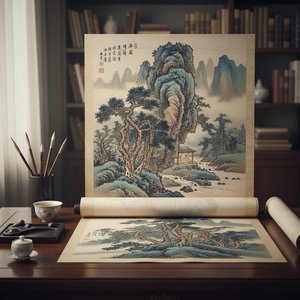
Zhou Zuoren’s artistic output extended beyond the written word, establishing him as one of China’s foremost practitioners of Xingshu calligraphy. His style prioritized clarity and precision, mirroring his belief in conveying profound ideas with unwavering honesty. He meticulously studied brushstrokes and ink washes, striving to capture not merely visual likeness but also the spirit of the subject—a technique that distinguishes his work from more decorative forms of calligraphy.
- Documentary Filmmaking – Pioneering Cinematic Observation: Zhou Zuoren’s true breakthrough arrived with his pioneering cinematic endeavors. Beginning in the 1930s, he embarked on a series of ambitious documentaries aimed at documenting rural life and capturing the rhythms of daily existence—a remarkable feat considering the technological limitations of the time. These films stand apart from conventional narratives by prioritizing observational realism, eschewing staged performances and instead presenting scenes as they unfolded naturally.
- Notable Films: Among his most celebrated works are “The Village” (鄉村生活), filmed in 1937, which offers a poignant portrayal of peasant life during the prelude to the Sino-Japanese War. Similarly, "The Old Road" (古道風雨) documented the hardships faced by farmers navigating challenging conditions—a film lauded for its unflinching honesty and empathetic depiction of human resilience.
Zhou Zuoren’s legacy transcends mere artistic achievement; he fundamentally reshaped Chinese filmmaking by advocating for a humanist approach rooted in meticulous observation. His films continue to inspire filmmakers today, demonstrating the power of cinema as a tool for social commentary and cultural preservation. He passed away on May 6, 1967, leaving behind an indelible mark on both the literary landscape and the cinematic tradition of China.