A Life Immersed in Elegance: Wang Zhideng and the Refinement of Late Ming Art
Wang Zhideng, born in the vibrant city of Suzhou in 1535, was more than simply a painter; he embodied the cultivated spirit of the late Ming dynasty. He flourished during a period marked by both artistic innovation and social upheaval, a time when scholars increasingly sought solace and expression through poetry, calligraphy, and painting. Unlike artists solely dedicated to their craft, Zhideng moved seamlessly between these disciplines, viewing them as interconnected facets of a refined life. His biography is not one of dramatic struggle or groundbreaking revolution, but rather a testament to the power of subtle beauty and intellectual camaraderie. He wasn’t merely *creating* art; he was living it, breathing it into every brushstroke and carefully chosen character. Suzhou, a center of commerce and culture, provided fertile ground for his development, fostering an appreciation for delicate aesthetics that would become hallmarks of his style.
The Scholar-Artist: Poetry, Painting, and the Pursuit of Harmony
Zhideng’s artistic journey was deeply intertwined with his poetic sensibilities. He wasn't a painter who occasionally wrote poetry; he was a poet whose vision found expression through painting. His verses often served as inspiration for his landscapes, orchids, and bamboo—subjects imbued with symbolic meaning resonant within the scholar-artist tradition. Bamboo, in particular, represented resilience and integrity, qualities highly valued by the literati class. Orchids, similarly, signified humility, refinement, and noble character. His paintings weren’t intended to be mere representations of nature but rather vehicles for conveying philosophical ideas and emotional states. This approach reflects a broader trend within Ming dynasty art—a shift away from purely representational styles towards more expressive and personal forms. He excelled in the *xieyi* style – literally “writing the idea” - emphasizing capturing the essence of his subject matter with swift, fluid brushwork rather than meticulous detail.
This emphasis on spontaneity and inner expression distinguished him from earlier generations of painters.
Collaborations and Social Circles: The Influence of Yiji Ma Shouzhen
Wang Zhideng’s life was enriched by a vibrant social network, particularly his close friendship with the renowned yiji (courtesan) Ma Shouzhen. Their collaboration extended beyond mere artistic exchange; they co-created paintings and poems, often incorporating each other's perspectives and talents. Ma Shouzhen herself was a celebrated poet and calligrapher, and their joint works offer fascinating insights into the intellectual and aesthetic sensibilities of the time. These collaborations weren’t unusual for the period—yiji were frequently accomplished artists and patrons of the arts—but the depth and documented nature of Zhideng's relationship with Ma Shouzhen are particularly noteworthy.
Their paintings often feature poetic inscriptions by both artists, creating a harmonious blend of visual and literary expression. It’s believed that many of his works were gifted during social gatherings, highlighting the role art played in fostering relationships and demonstrating cultural refinement.
A Delicate Brush: Style and Technique
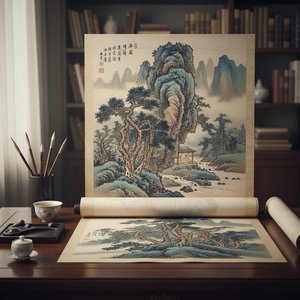
Zhideng's paintings are characterized by their delicate brushwork, subtle use of color, and serene compositions. He favored light washes and understated tones, creating a sense of atmosphere and tranquility. His landscapes, though often depicting grand scenes, possess an intimate quality—a feeling of being immersed in nature rather than simply observing it from afar. He masterfully employed the principles of *shan shui* (mountain-water) painting, utilizing empty space to create depth and evoke a sense of vastness.
- His orchid paintings are particularly admired for their graceful lines and subtle variations in tone.
- Bamboo stalks appear almost weightless, conveying a sense of resilience and flexibility.
- Calligraphy is seamlessly integrated into his paintings, often serving as poetic inscriptions or commentary on the scene depicted.
He didn’t strive for photorealistic accuracy; instead, he sought to capture the *spirit* of his subjects—their essence and underlying energy. This approach required a deep understanding of both nature and artistic technique, as well as a cultivated sense of aesthetic judgment.
Legacy and Historical Significance
While not achieving the widespread fame of some of his contemporaries, Wang Zhideng occupies an important place in the history of late Ming art. He represents a particular strand within the scholar-artist tradition—one that emphasized refinement, intellectual camaraderie, and the interconnectedness of poetry, painting, and calligraphy. His works offer valuable insights into the cultural values and aesthetic sensibilities of the time, particularly the importance placed on harmony, balance, and inner expression.
His collaborations with Ma Shouzhen provide a unique glimpse into the social world of Ming dynasty China. Today, his paintings are treasured for their delicate beauty and subtle power—a testament to the enduring legacy of an artist who lived a life immersed in elegance and refinement. His influence can be seen in the works of later artists who sought to capture the essence of nature through expressive brushwork and poetic sensibility.